LOS BAÑOS, Laguna — Science and technology applications in supply chain transparency took center stage at a recent seminar organized by the Southeast Asian Regional Center for Graduate Study and Research in Agriculture (Searca).
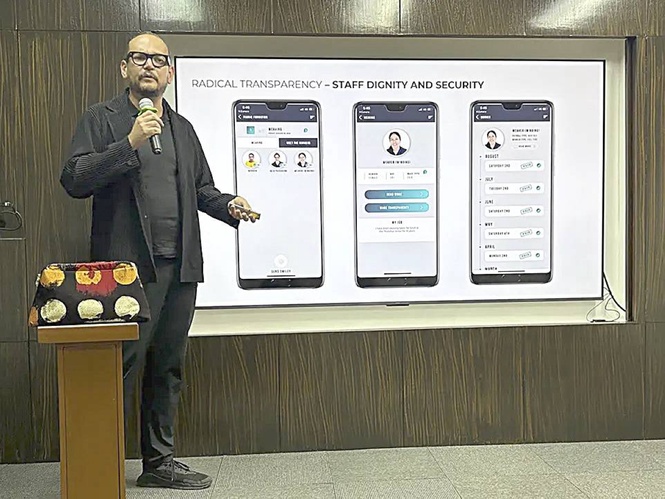
Held on Aug. 17, 2026, as part of Searca’s Agriculture and Development Seminar Series (ADSS), the session featured Robert Meeder, strategic director and co-founder of The Institute for Future Creations, who spoke on “From Compliance to Competitive Advantage: Transparency, Digital Product Passports, and the Future of Responsible Trade.”
The discussion focused on the European Union’s Digital Product Passport (DPP) system, whose registry was launched in July 2026. Under the new framework, all products marketed in Europe will be required to carry a scannable digital identity by 2030, detailing material origin, supply chain history and end-of-life options. The requirement, while intended to promote sustainability and traceability, is expected to pose compliance challenges for small craft producers and micro, small and medium enterprises (MSMEs) from the Global South exporting to Europe.
Meeder said science-based tools can help producers not only meet the requirement but convert it into market value.
In Sri Lanka, he cited the case of a textile enterprise with 600 weavers facing possible displacement due to a cotton shortage. His team explored alternative fiber sources and found that fiber from banana pseudostems — commonly regarded as agricultural waste and often burned after harvest — could be processed into textile material. The resulting fabric reduced cotton consumption by 70 percent.
The innovation led to the development of the “Banana Bag” in collaboration with Selyn Textiles and a Danish designer. According to Meeder, the bag was integrated with a radio frequency identification (RFID) tag linked to a blockchain ledger, making it, to his knowledge, the first handloom product with blockchain integration.
He clarified that blockchain, in this context, refers not to cryptocurrency but to a distributed digital ledger that records each step of production. The system provides what he described as radical transparency, documenting fiber sourcing, dyeing, weaving by artisans, finishing, and community and environmental impact.
One application was wage transparency, where payments to weavers were documented to verify fair compensation. The process also highlighted wage disparities between Europe and South Asia, requiring contextualization against local living wage benchmarks. Meeder said this underscored the importance of defining what data are disclosed and why, to ensure that transparency is purposeful.
A second case was presented from Armenia’s carpet sector. Local producers had shifted to imported synthetic polyester yarns due to cost pressure, while an estimated 80 to 90 percent of wool from domestic livestock was being discarded and burned, generating avoidable emissions.
Through the ArmWool Project with Lingon and We Are Legacy, Meeder worked on reviving wool craft using discarded wool and developing a DPP-aligned certification. The initiative was supported by a digital platform that communicates product heritage, production process, community benefits, material composition and certifications through a consumer-facing interface.
“We Are Legacy” was described as using storytelling to influence consumer behavior by linking verified data to the product’s history and impact.
“Our dream is that if you have two products here: one had the data and the storytelling while the other didn’t, you would be willing to pay for the product with the data because you could see the story and trust it,” Meeder said.
He noted that consumers are increasingly seeking verified accounts of how products are made, making transparent data and narrative important components of marketing.
Meeder closed with his statement: “Not all crafts are equal, but all craft communities have an equal right to grow.”
The ADSS, co-organized by Searca and several units of the University of the Philippines Los Baños including the College of Human Ecology, College of Economics and Management, Office of the Vice Chancellor for Innovation and Enterprise Management, Business Affairs Office and the Institute of Plant Breeding, serves as a regular forum for dialogue on agricultural and rural development within and beyond the Los Baños science community.
For small agricultural and craft producers, the cases show how science and technology can address both regulatory compliance and resource efficiency, to turn discarded biomass into raw material and data into market trust.