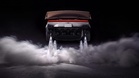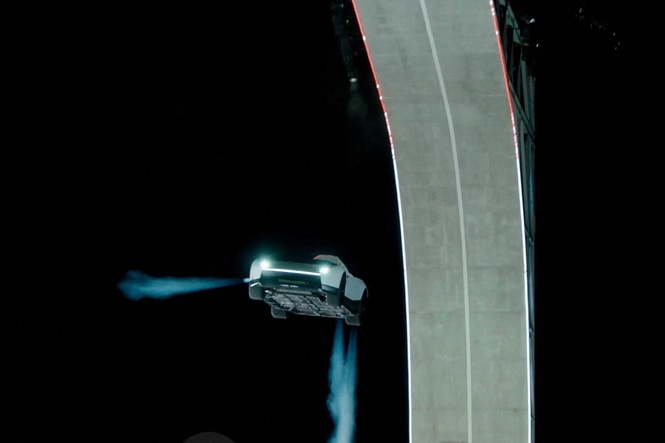
Tesla’s latest “Roadster” flying car is not actually able to drive on public roads.
The company has unveiled a new vehicle that is able to take off, fly around and flip, before landing and driving on the ground. It uses technology borrowed from SpaceX’s rockets as well as fans to finally deliver on the decades-old promise of cars that are also able to fly around the air.
The car is scheduled to go into production in 2028, Tesla chief executive Elon Musk said. For now, the flying “Rocket” version of the car is only available to order through an “invite-only” process, Tesla says, and it is not clear how much it will actually cost.
But it appears that, despite its name, the car will not actually be able to drive on public streets. The Roadster’s product page makes clear that the flying model is “not approved for public road use”.
In the launch event, Mr Musk was unclear about whether the car would actually be allowed on the road or whether Tesla would be looking for it to be approved for public use. At one point during its introduction, an audience member asked whether the vehicle would be “street legal”, and Mr Musk replied that it depends on your street, but it will be a viable car”.
“This will be an actual car that's on the roads,” he said during another part of the launch event. “I'm not sure it's necessarily legal in all jurisdictions, but there will be such a car that someone can own.”
Mr Musk and Tesla focused heavily during the event on the car’s performance in closed environments, claiming that the car will “crush every track record that has ever existed”. Such private land may be the only place that the car will actually be permitted to drive.
Tesla has had trouble selling its more ambitious vehicles in the past. The large Cybertruck for instance has been on sale since 2023 – but is not available to buy in most countries because of safety concerns.
At the moment, flying vehicles are usually regulated by local aviation authorities, such as the FAA in the US and the CAA in the UK. Those organisations have been looking at how to regulate new kinds of flying vehicles – primarily in relation to drones and the kinds of “electric vertical takeoff and landing” aircraft that some companies plan to use as flying taxis – but there is not a clear regime in place for flying vehicles such as those that Tesla has now promised to sell.
A spokesperson for the UK’s Civil Aviation Authority has for instance said that the manufacturer of any flying vehicle must “demonstrate that it meets the relevant safety, equipment and operational standards expected of aircraft that are operated privately”. Drivers must also be “suitably qualified to operate the aircraft within the intended airspace”.
Read MoreEx-employees of Musk’s defunct DOGE are now profiting in the private sector
Elon Musk says he will rename his company ‘SpaceXSI’ because of Trump