
Soon, Tesla will be using their complex Optimus robots to handle the menial task of plugging in the charging cable of Cybercabs.
Tesla’s purpose-built Robotaxis can navigate city streets and pilot themselves directly into Supercharger bays without human intervention, but completing the final step of the energy loop still presents a physical hurdle: plugging in the cable.
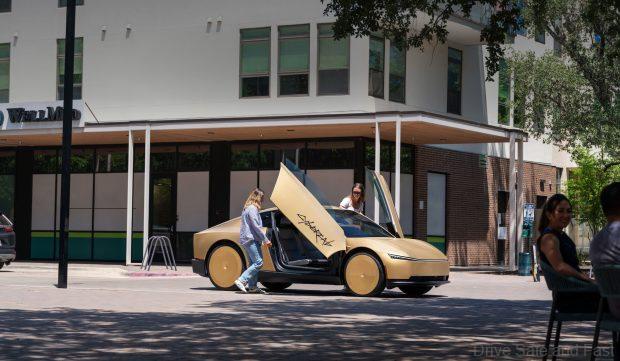
Speaking in an in-depth interview with automotive teardown consultancy Munro Live, Tesla Vice President of Vehicle Engineering Lars Moravy and Cybercab Program Lead Eric Earley revealed that the company intends to assign Optimus robots to Supercharger hubs to physically plug in autonomous Cybercabs while long-term automated infrastructure is deployed.
Human Attendants Handling Current Test Fleets
For now, Tesla’s driverless test fleets rely on old-fashioned human labor.
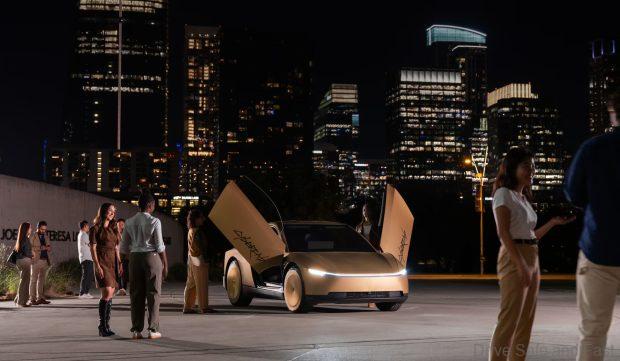
Footage captured at a public Supercharger facility in Austin, Texas, showed Tesla staff manually plugging in incoming Cybercabs and autonomous Model Y test mules. In several instances, human attendants were also observed manually re-parking vehicles that failed to position themselves close enough to the charging stalls for the relatively short NACS cables to reach.
Unlike passenger-focused models in Tesla’s consumer lineup, the production Cybercab does not support AC destination charging. It relies entirely on DC fast-charging infrastructure.
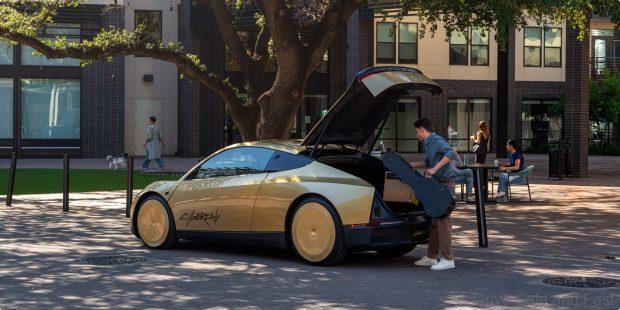
To bridge the gap between autonomous driving capability and existing Supercharger hardware, engineers retained a physical North American Charging Standard (NACS) inlet neatly tucked inside the rear bumper. As Moravy and Earley clarified, preserving the physical port was necessary so autonomous fleets could leverage Tesla’s vast, established Supercharger network immediately rather than waiting for ground-up infrastructure overhauls.
Optimus as a Stopgap: Hands-Free Inductive Charging Remains the End Game
Using humanoid robots with five-finger dexterity to plug in thick, water-cooled charging cables is designed strictly as a transitional bridge. The permanent, long-term operational model for the Cybercab relies completely on high-power wireless resonance charging.
The Cybercab was engineered from the drawing board to support high-efficiency inductive underbody charging pads, eliminating mechanical moving parts, robotic snakes, or worn physical connectors altogether. Regulatory milestones are already falling into place:
- FCC Regulatory Clearance: Tesla secured Federal Communications Commission (FCC) approval for its high-power automotive wireless charging hardware earlier this year, certifying the electromagnetic safety and frequency emissions of its ground pads.
- Austin 80-Bay Hub: Tesla is currently advancing plans to construct a massive dedicated Robotaxi depot in Austin equipped with 80 inductive wireless charging pads.
Once high-frequency wireless infrastructure is fully commissioned across depot hubs, the entire fleet turnaround cycle—from docking and battery replenishment to thermal preconditioning—will operate without human oversight or robotic assistance, bringing the autonomous ride-hailing vision closer to frictionless commercial scale.
The post Tesla To Deploy Optimus Humanoid Robots To Plug In Driverless Cybercabs first appeared on DSF.my.