
Malaysia’s electric vehicle (EV) boom may look impressive on paper, but growing problems in neighbouring Thailand are now serving as a cautionary tale that policymakers and consumers cannot afford to ignore.
Across the border, Thailand is facing rising dissatisfaction among EV owners, exposing cracks in the country’s support ecosystem despite aggressive efforts to promote electric mobility. Economists now warn that Malaysia could face similar frustrations if the country focuses too heavily on selling EVs without strengthening the infrastructure and industrial ecosystem needed to support them.
Data from Thailand’s Office of the Consumer Protection Board and the Thailand Consumers Council revealed that 1,348 EV-related complaints have been recorded since 2024. The complaints range from insufficient after-sales service and poor spare parts availability to maintenance delays and inadequate repair capabilities.
Economist Samirul Ariff Othman said the Thai experience highlights a crucial lesson for Malaysia: EV adoption must go beyond pushing vehicle sales.
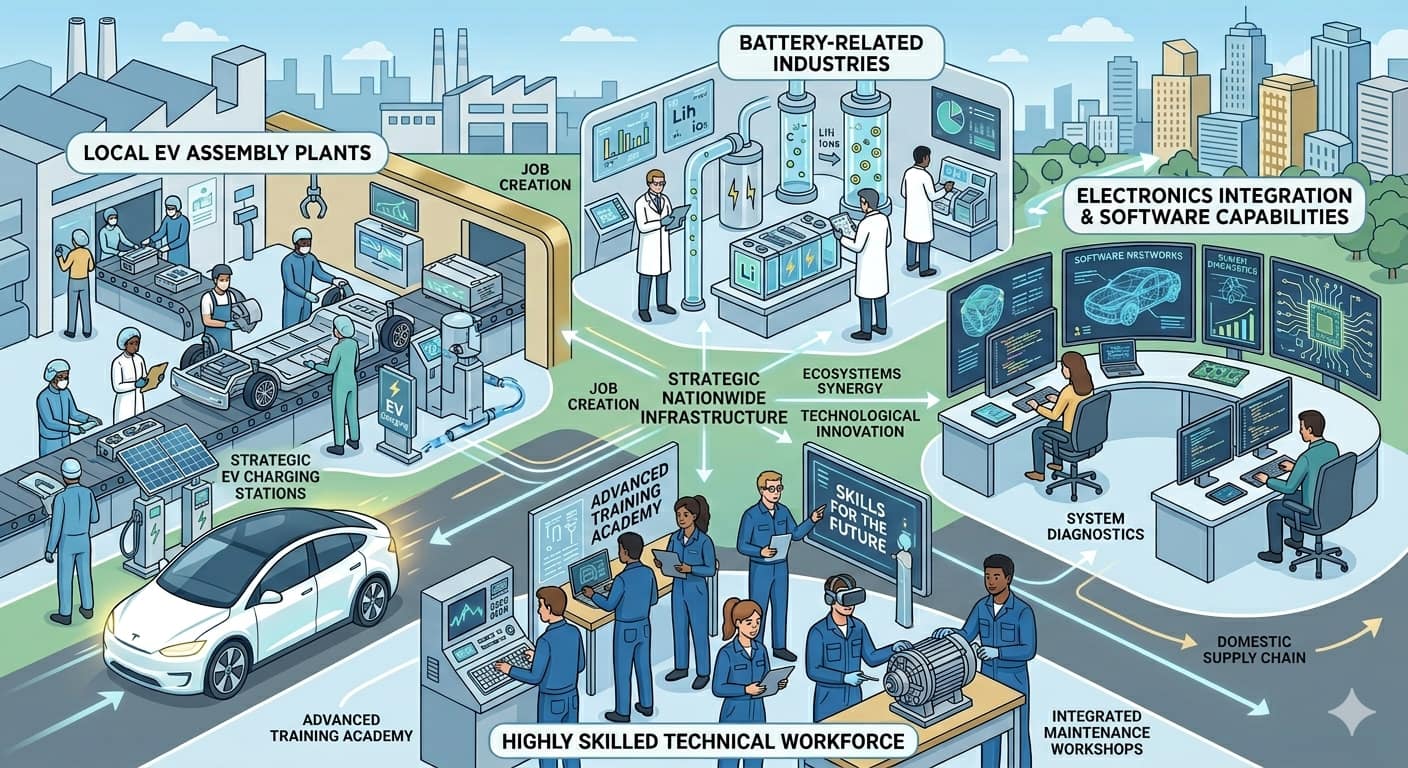
According to him, EVs require a complete ecosystem that includes reliable charging infrastructure, trained technicians, battery diagnostics, software support, warranty enforcement, servicing expertise and sufficient spare parts supply.
He warned that rapid adoption without corresponding ecosystem growth could eventually lead to widespread consumer frustration.
Malaysia’s EV market has expanded rapidly over the past few years. Data from the Malaysian Automotive Association showed that EV sales surged from only 278 units in 2021 to 30,848 units in 2025. In just the first quarter of 2026 alone, 14,591 new EVs were sold, representing a staggering 113.7% year-on-year increase.
The strong growth has largely been driven by tax incentives, competitive pricing and the influx of foreign EV brands into the Malaysian market.
However, while vehicle sales continue to climb, concerns remain over whether the country’s support infrastructure is keeping pace.
As of April this year, Malaysia had 5,619 public charging bays nationwide, including 1,898 DC fast chargers. Although this translates to a 10-to-1 EV-to-charger ratio, the majority of facilities remain concentrated in urban areas, leaving rural towns and smaller districts with limited accessibility.
Industry players have also repeatedly raised concerns about expensive battery replacement costs, inconsistent servicing quality and the lack of repair readiness outside major cities.
Samirul stressed that Malaysia must avoid becoming merely a consumer market for imported EVs without developing strong local industrial capabilities.
He argued that the real economic value of the EV transition lies not simply in having more electric cars on the road, but in building local assembly operations, battery-related services, electronics integration, software expertise and skilled technical jobs.
This, he noted, explains why the investment, trade and industry ministry has increasingly emphasised localisation requirements and investment commitments from foreign automakers entering the Malaysian market.
Earlier this year, the ministry clarified that conditions tied to local assembly proposals were part of a broader national industrial strategy aimed at strengthening domestic automotive capabilities.
Still, economist Geoffrey Williams cautioned against turning localisation policies into overly restrictive measures that could discourage foreign investors and reduce competition.
Williams warned that excessive protectionist policies may ultimately hurt Malaysian consumers by limiting affordable options and reducing market choices.
He stressed that the EV market, like any other industry, is ultimately driven by price and quality.
The debate now centres on finding the right balance - attracting investment while ensuring Malaysia develops a sustainable long-term EV ecosystem capable of supporting consumers and generating industrial value.
Thailand’s experience has shown that selling EVs is only the beginning. Without proper support systems, strong technical capability and long-term planning, today’s green mobility revolution could easily become tomorrow’s costly public frustration.
By: Kpost
Information Source:
Kpost (ckhorsk@gmail.com) is a content creator under the Newswav Creator programme, where you get to express yourself, be a citizen journalist, and at the same time monetize your content & reach millions of users on Newswav. Log in to creator.newswav.com and become a Newswav Creator now!
The User Content (as defined on Newswav Terms of Use) above including the views expressed and media (pictures, videos, citations etc) were submitted & posted by the author. Newswav is solely an aggregation platform that hosts the User Content. If you have any questions about the content, copyright or other issues of the work, please contact creator@newswav.com.