
As a practicing Hindu, I felt it opportune to put my thoughts to paper about this religious observance, two days before the holy day. The original significance of many religious festivals has, over time, been forgotten by some who now treat them as days of merrymaking, participating in important rituals more as a sport than as acts of devotion.
Thaipusam is dedicated to Lord Murugan. While some describe it as Lord Murugan’s birthday, I was taught as a child by my parents that Thaipusam signifies the day Lord Murugan was bestowed the Vel—his divine spear—by his mother, Goddess Parvati, so that he could defeat the demon Soorapadman. In another interpretation, the Vel represents wisdom, while Soorapadman symbolises ignorance, ego, and evil.
Thus, when we offer prayers on Thaipusam, we beseech God—here represented by Lord Murugan—to help us become better human beings: to rid ourselves of negative forces such as ego, greed, and avarice, and to replace them with wisdom, honest endeavor, gratitude, and an appreciation of the blessings already present in our lives. Especially as we age, many of us realize that ego and greed have brought no one lasting peace or joy, whereas contentment and humility often do. Naturally, many devotees also pray for successful outcomes to the challenges they face in life.
Thaipusam, therefore, is a day of penance (tapas), self-discipline, restraint, gratitude, and, for some, the fulfilment of vows (nerthi kadan). In preparation for the holy day, many devotees observe a vegetarian diet for several days and refrain from alcohol and sexual activity as a means of purifying the body and mind. To reiterate, Thaipusam is not a festival of merriment but one of inner purification—a reminder that spiritual victory begins with conquering one’s own ego, desires, and weaknesses.
It is for this reason that I feel disturbed when I see young people beating drums, singing pop songs, and dancing outside temples or along chariot processions on the holy day. Such behavior suggests a lack of understanding—or teaching—of the deeper significance of Thaipusam.
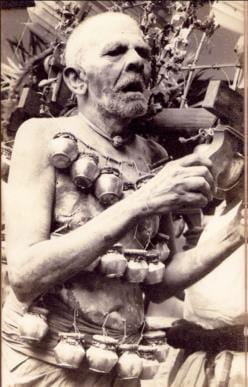
This brings me to the rituals performed on the day. Some devotees carry kavadis, which may range from simply carrying a pot of milk to more intense forms involving body piercing with hooks and needles. My late maternal grandfather, Tata Chithambaram Pillai, well into his late seventies, would have his body pierced with about fifty hooks, from which small pots of milk were suspended. I was told that he had been wayward in his younger years, and this was his way of atoning for his shortcomings and undertaking penance.
Kavadi bearing and piercing rituals symbolize carrying the burdens of life with humility and are expressions of intense devotion and surrender. For many, they also represent deep gratitude to the Almighty for favorable outcomes to challenges faced in previous years. My only comment is that whatever ritual one chooses to practice should reflect inward discipline, not outward spectacle. Religious observance is meant to transform the devotee, not to entertain the crowd.
Then there is the ritual of breaking coconuts, practiced not only by Hindus but by non-Hindus as well. In some cities, lorryloads of coconuts are broken, leaving streets littered in the aftermath. I often feel that many who break large numbers of coconuts have forgotten the ritual’s significance, replacing intention with excess.
The coconut is a powerful metaphor: the hard shell represents the ego; the white flesh, inner purity; and the water, the divine essence. Breaking one coconut mindfully is sufficient. When hundreds are smashed casually, it appears less like ego-destruction and more like ego-display. Ironically, excess in a ritual meant to humble the self can undermine its very purpose. It is my hope that those who read this article will reflect on excess when performing rituals this Thaipusam.
Finally, I come to the issue of greetings expressed on the holy day. Many well-intentioned non-Hindu friends wish me “Happy Thaipusam.” While I am grateful for their goodwill, the phrase is conceptually awkward. More appropriate greetings might be: “May your prayers be fulfilled on Thaipusam” or “Wishing you a meaningful Thaipusam.”
Let this Thaipusam be a meaningful one—where we reflect on ourselves and strive to become better human beings, in a world where basic norms of good behaviour and conduct are increasingly being sacrificed at the altar of greed and avarice.
Dr. Kannan Pasam (kannan.pasam@gmail.com) is a content creator under the Newswav Creator programme, where you get to express yourself, be a citizen journalist, and at the same time monetize your content & reach millions of users on Newswav. Log in to creator.newswav.com and become a Newswav Creator now!
The User Content (as defined on Newswav Terms of Use) above including the views expressed and media (pictures, videos, citations etc) were submitted & posted by the author. Newswav is solely an aggregation platform that hosts the User Content. If you have any questions about the content, copyright or other issues of the work, please contact creator@newswav.com.