
Somebody's found a way to put a price tag on common sense.
I spotted a Macau scam call myself once, purely because of a small VoIP lag in the audio, that half-second delay that gives away a call being routed through the internet rather than a real local line. I hung up before the script even got going. I also run Whoscall on my phone, free, no subscription, and it catches most of the obvious junk before it even rings through.
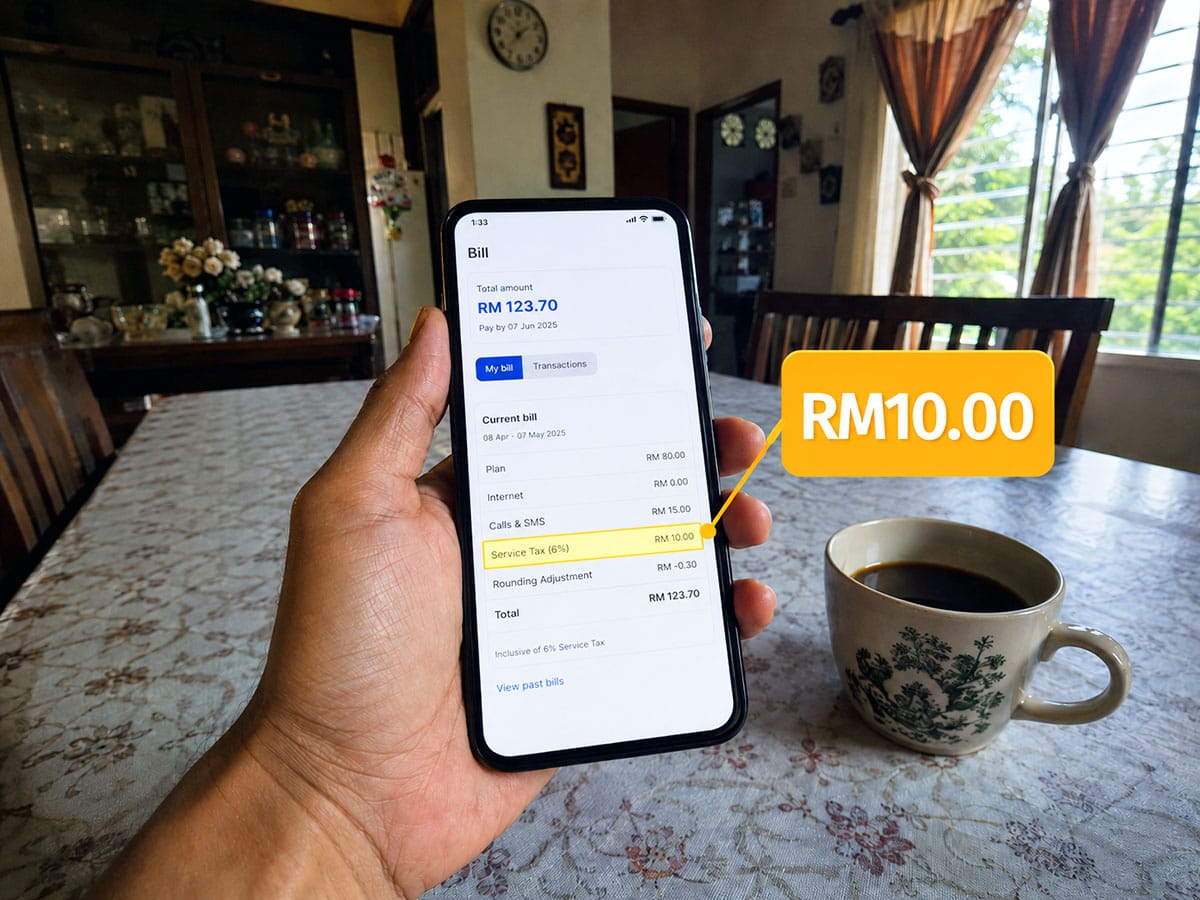
So when I found out some telcos in Malaysia are now charging customers RM10 a month for "scam protection," my honest reaction wasn't relief that help was finally available. It was irritation. The tools already exist. Somebody's just found a way to put a price tag on common sense.
The fee that shouldn't need to exist
According to a report covered by The Vibes, some telcos are bundling call filtering, suspicious SMS alerts, and phishing website blocking into a paid add-on running around RM10 a month, marketed as an extra layer of protection against scams. Consumer advocates weren't having it. UiTM's Dr Mohamad Yusof Darus argued that digital security "should not be commodified for profit," calling it a moral obligation rather than a paid service.
FOMCA's CEO T Saravanan went further, saying consumer safety is simply part of the cost of doing business, a duty telcos already owe their customers for maintaining a secure network in the first place.
I'm inclined to agree with both of them, and not because RM10 is a huge sum. It's the principle sitting underneath it. A telco already controls the network your calls and texts travel through. Asking you to pay extra to have that same network filter out the obvious garbage is a bit like a security guard charging you for locking the door they were already supposed to lock.
Why this is happening now
To be fair to the telcos, the scam problem they're responding to is real and getting worse, not smaller. Malaysia recorded 47,854 online scam cases between January and September 2025 alone, totalling RM1.919 billion in losses.
That's a genuine crisis, and telcos do sit on infrastructure that could meaningfully help. But there's a difference between building better fraud detection into your core service, and repackaging basic filtering as a premium tier you have to actively opt into and pay for.
One is a company taking responsibility. The other is a company monetising a problem it already has some hand in enabling, since scam calls and texts travel over the very networks these telcos operate.
The scrutiny is already building. Following the backlash, Communications Minister Fahmi Fadzil publicly asked MCMC to investigate exactly which telcos are charging this fee and whether the practice is actually justified. That's a good sign the pressure is landing somewhere, but it also tells you this fee wasn't loudly announced or explained in the first place. Most people wouldn't know to look for it unless someone told them to check.
The quiet, recurring nature of it
This is the same trick as a lot of small monthly charges that slip past unnoticed. RM10 doesn't feel like a decision when it's buried in a bundle alongside your data allowance and call minutes. It just becomes part of a bill total you glance at and pay without reading line by line. Multiply that across however many million postpaid subscribers are quietly paying it, and a fee that felt trivial per person adds up to a genuinely large amount of money collected for something that arguably should have been standard from day one.
What I'd actually tell a friend who spots this on their bill
Call your telco and ask directly whether it's optional. Don't assume it's bundled permanently just because it showed up on your statement. If they confirm it's an add-on and you don't want it, ask them to remove it on the spot. And if you get pushback, or the answer feels evasive, escalate it.
The proper channel runs through the Communications and Multimedia Consumer Forum first, and if that goes nowhere, MCMC itself takes formal complaints through its own portal. It sounds like a lot of effort over RM10, and maybe for one person it is. But scrutiny only builds when enough people actually ask the question out loud instead of quietly paying it.
In the meantime, you don't need to wait on any telco to protect yourself. A free app like Whoscall catches most of what a paid add-on claims to catch, and the sharpest scam filter available to any of us is still just paying attention.
A half-second of lag on a call, an urgent message from a "bank" asking you to click something, these are the same red flags they always were. No RM10 fee changes that. It just charges you for noticing what you probably could have noticed yourself.
Kamarul Azwan (k.azwan@gmail.com) is a content creator under the Newswav Creator programme, where you get to express yourself, be a citizen journalist, and at the same time monetize your content & reach millions of users on Newswav. Log in to creator.newswav.com and become a Newswav Creator now!
The User Content (as defined on Newswav Terms of Use) above including the views expressed and media (pictures, videos, citations etc) were submitted & posted by the author. Newswav is solely an aggregation platform that hosts the User Content. If you have any questions about the content, copyright or other issues of the work, please contact creator@newswav.com.