

When Knowledge Isn’t Enough

From a young age, many of us were taught to believe that financial success is primarily determined by intelligence. The path seemed clear: do well in school, gain entry into a reputable university, secure a high-paying job, and financial stability would follow. This belief, ingrained deeply in academic-driven cultures, shaped the aspirations of students and parents alike. Yet, when we examine real-world outcomes, it becomes evident that intelligence alone does not guarantee long-term financial well-being.
In fact, some of the smartest individuals make the most regrettable financial decisions. This happens not due to a lack of knowledge, but because they underestimate the role of behavior. Financial success, as it turns out, has more to do with self-awareness and discipline than with degrees or intellect. The gap between what we know and how we behave is often what makes the greatest difference.
The Janitor and the Executive
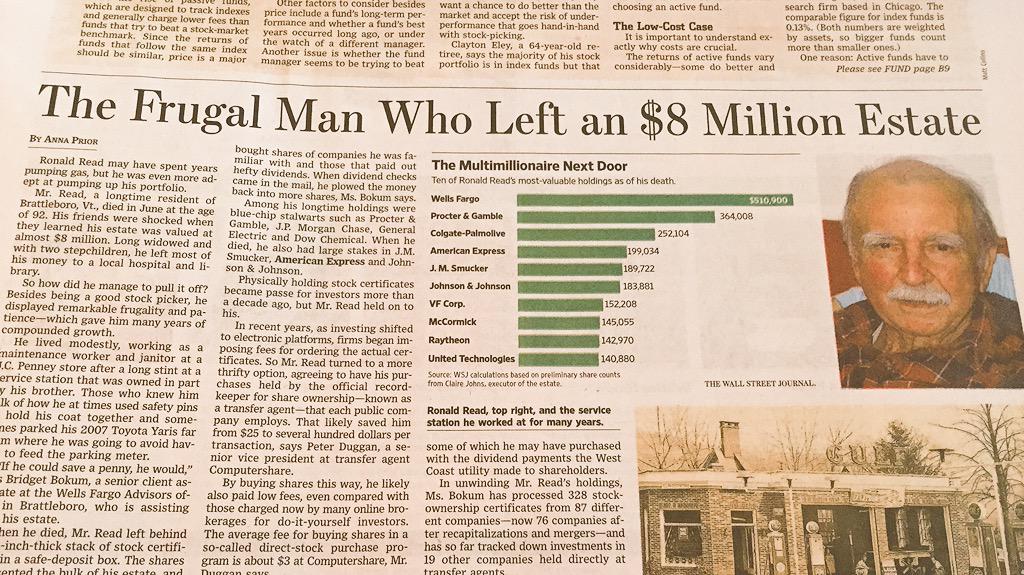
The story of Ronald Read illustrates this truth vividly. Read lived a quiet and simple life in Vermont, working as a janitor and gas station attendant. He wore flannel shirts, drove a second-hand car, and was known for his modest lifestyle. No one suspected that, over several decades, he had been quietly building a fortune. When he passed away at age 92, it was revealed that he had accumulated over eight million dollars, most of which he generously donated to charity.
Ronald Read’s path to wealth was not the result of a lottery win, an inheritance, or an advanced degree. He simply spent less than he earned, saved consistently, and invested prudently. His wealth was not visible. It was built silently, sustained by patience and a long-term mindset.
In contrast, Richard Fuscone, a Harvard MBA and former executive at Merrill Lynch, experienced a vastly different outcome. He achieved early financial success and retired in his forties. With his newfound freedom, he built a mansion equipped with eleven bathrooms, two elevators, two swimming pools, and extravagant monthly expenses. However, when the 2008 financial crisis struck, his finances crumbled. Over-leveraged and unable to manage the costs of his lifestyle, he filed for bankruptcy, and his home was repossessed by the bank.
These two stories reveal a crucial truth: financial outcomes are not determined by educational background or professional title, but by personal behavior and choices. The quiet discipline of Ronald Read built lasting wealth, while the unchecked ambition of Richard Fuscone led to financial ruin.
This pattern is not uncommon. Jesse Livermore, once one of America’s most successful stock traders, lost everything through reckless speculation and ultimately took his own life. Rajat Gupta, a former CEO of McKinsey with a personal net worth exceeding one hundred million dollars, was imprisoned for insider trading after attempting to increase his wealth further. In both cases, intelligence was not lacking. What was missing was clarity around what constituted “enough.”
What Wealth Really Means
In his book The Psychology of Money, Morgan Housel explains that wealth is not defined by what we spend, but by what we choose not to spend. It is the invisible buffer, the savings, the investments, and the peace of mind, that rarely appears on social media or in conversations. Unfortunately, in today’s image-driven world, visible spending is often mistaken for success.
When someone drives an expensive car, others may assume they are wealthy. However, most observers admire the vehicle itself, not the individual behind the wheel. Social validation based on material possessions is fleeting and unreliable. More importantly, attempting to gain respect through consumption is not only ineffective, it is financially damaging.
True wealth is quiet. It allows individuals to make decisions based on purpose rather than pressure. It provides the freedom to pursue meaningful work, spend time with family, and prioritize health and relationships. It cannot be measured by the size of a house or the brand of a handbag, but by the level of independence a person has in their daily choices.
So why do so many intelligent individuals make unwise financial decisions? Often, it is because they never take time to define what is “enough.” They earn more, spend more, and continue to chase a moving target. In the absence of intentional restraint, even high incomes can disappear quickly. In money, as in life, wisdom lies not in how much you can accumulate, but in knowing when you already have what you need.
Rethinking the Role of Education
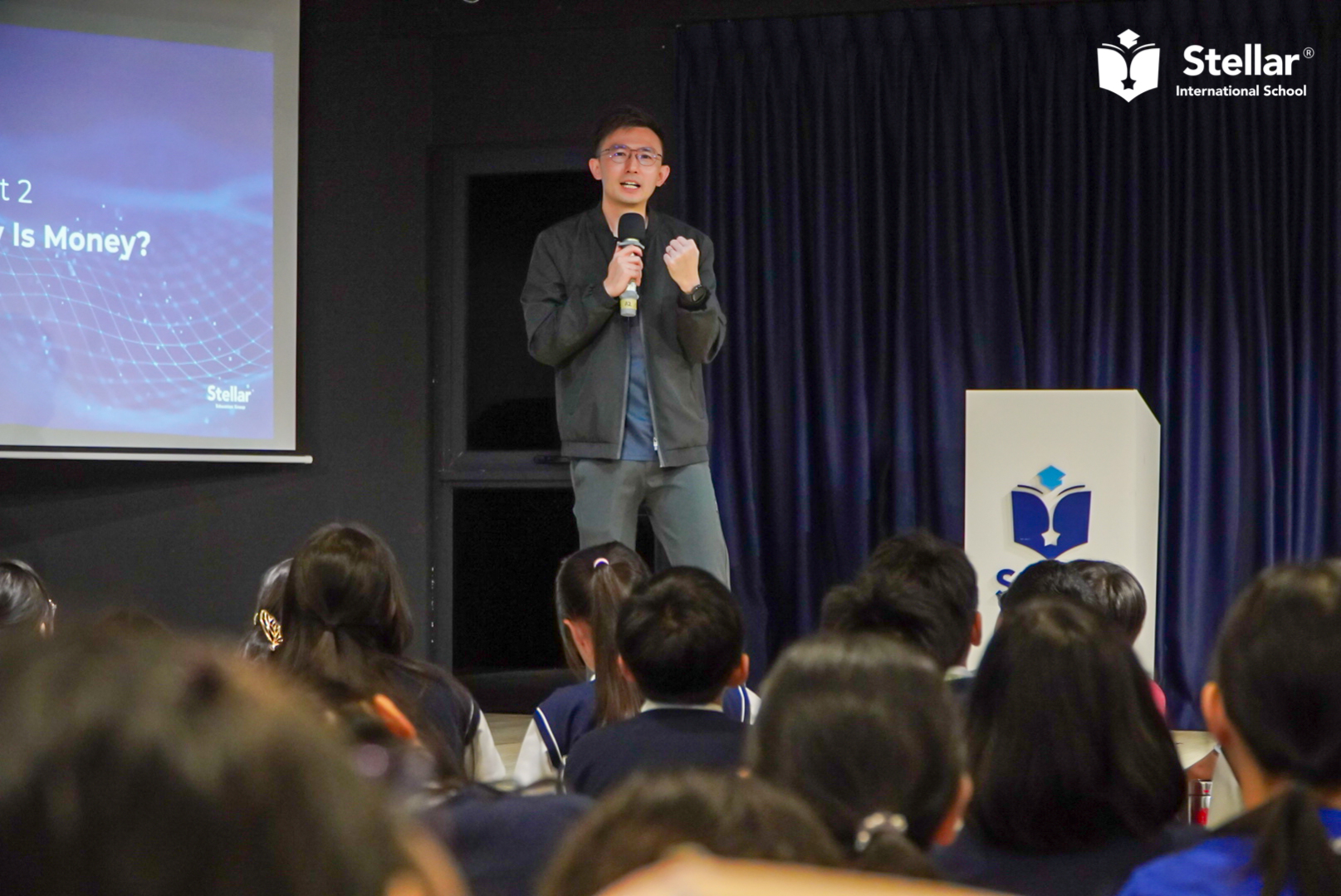
At Stellar Education Group, we teach that the true purpose of education is not limited to academic success. That said, this remains a journey we are still undertaking. Like many in the region, we were shaped by a system that prized test scores and academic performance above all else. For years, this was seen as the most secure path toward a better future.
However, we are working actively to expand that definition. We believe education must serve four interconnected purposes: personal, cultural, social, and economic. If our efforts stop at academic achievement, we may produce high performers, but not necessarily whole individuals. A more complete approach requires us to address the economic dimension of education with intentionality and clarity.
The economic purpose of education includes five vital components:
1. Economic Independence
We aim to develop students who are not only employable, but capable of managing their personal finances with responsibility. Financial literacy, in this context, is not about wealth accumulation for its own sake, but about freedom, self-sufficiency, and stewardship.
2. Workforce Development
Our STARS framework — Self-Awareness, Teachability, Attitude, Relationships, and Significance, prepares students not just to join the workforce, but to thrive in it. Beyond technical competence, they are taught how to navigate real-world challenges with emotional intelligence and clarity.
3. Economic Growth
Students who learn how to save, invest, and manage risk are more likely to create value for others. As they mature into entrepreneurs, leaders, and contributors, they generate ripple effects that strengthen communities and promote sustainable growth.
4. Adaptability to Change
In a global economy shaped by rapid technological change, resilience and adaptability are essential. A financially wise individual can withstand economic shifts, recalibrate when needed, and build long-term security, even in uncertain environments.
5. Reduced Inequality
While income levels vary, behavioral skills can be taught to anyone. A student from a humble background who learns how to manage money wisely has the same opportunity to build wealth as someone born into privilege. Financial education becomes a tool of empowerment, reducing disparities and increasing access to opportunity.
A Southeast Asian Reflection

In many Southeast Asian cultures, visible status is often seen as a marker of success. Expensive cars, large homes, and impressive titles carry significant weight in social circles. There is nothing inherently wrong with these achievements. However, when they are pursued without discernment, they can create the illusion of wealth while masking financial vulnerability.
We have an opportunity, perhaps even a responsibility, to reshape this narrative. We must teach our children that living within one’s means is not a sign of weakness, but of wisdom. The market stall vendor who saves diligently may be building a more sustainable future than the professional who spends everything to maintain appearances.
The goal is not to reject ambition, but to ground it in purpose. We must show that success without peace is incomplete and that visible status does not always reflect invisible strength.
A Practical Invitation
If there is one step to take after reading this reflection, it is to clarify what “enough” means for you. What level of income, comfort, or lifestyle brings genuine peace? What are you spending to impress others, and what are you saving to build freedom?
Teach your children, and yourself, that restraint is not deprivation. It is dignity. Financial choices rooted in values will always outlast those rooted in comparison. Margin is not a constraint, but a source of strength.

Most importantly, let us remember that true wealth is not the opposite of poverty. It is the opposite of constant comparison.
The Reverse That Redefines It All
Many intelligent people spend their lives chasing success in visible ways. The wisest among us learn to build lives of quiet strength. In a world that constantly pressures us to earn more, buy more, and prove more, it takes courage to stop and ask: Do I already have what I need?
Perhaps the real measure of financial wisdom is not how much we gain, but whether we can walk away from the race entirely, with peace, freedom, and enough.
Daniel Loh (daniel@stellar.edu.my) is a content creator under the Newswav Creator programme, where you get to express yourself, be a citizen journalist, and at the same time monetize your content & reach millions of users on Newswav. Log in to creator.newswav.com and become a Newswav Creator now!
The User Content (as defined on Newswav Terms of Use) above including the views expressed and media (pictures, videos, citations etc) were submitted & posted by the author. Newswav is solely an aggregation platform that hosts the User Content. If you have any questions about the content, copyright or other issues of the work, please contact creator@newswav.com.