.png)
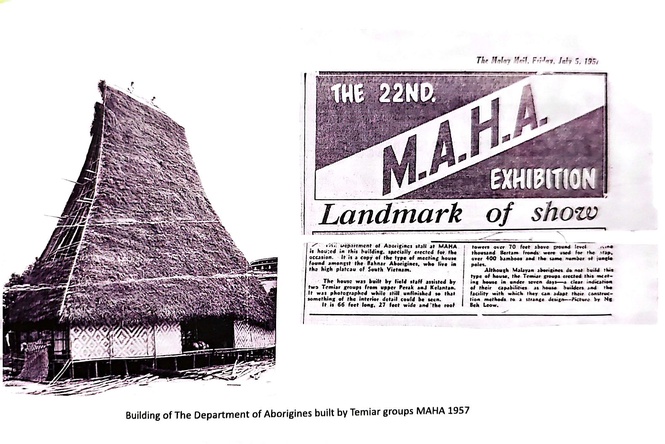
The Malaysian Agriculture, Horticulture & Agro-Tourism Exhibition (MAHA) will showcase its 100th Year plus Show in September 2024 at The Malaysia Agro Exposition Park Serdang (MAEPS). The MAHA Show and Trade Exhibition is a mega agricuture exhibition in the country over a hundred years old today since it’s inception in the year 1923.
The first MAHA Show and Trade Exhibition was held at the Selangor Turf Club Race Course grounds in Kuala Lumpur in 1923 managed by the Malayan Agri-Horticulture Association which took on the acronym of the Association’s name -M.A.H.A. for the Show. The association itself was formed in October 1922 as a Non-Government Organization (NGO), supported by the Department of Agriculture under the British Administration whose members were botanists and scientists. The then District Officer of Klang, F.W. Douglas (later Dato’) became its first President and was the President for next 14 years. Dato’ F.W. Douglas known as the ‘grand old man of Klang’ in all those years had spared no effort in trying to improve agricultural standards in Malaya. After his retirement in 1928 he remained in Malaya and became the Private Secretary to His Royal Highness Baginda Sultan Sir Alaeddin Suleiman Shah the Sultan of Selangor who reigned from 1898 until 1938.
The aim of the exhibition at its inception was two-prong first it was to encourage the Agriculture sector, particularly the small farmers, to diversify, improve their production of food and other cash crops, and thereby increase their income and living standards. Second, it was to showcase the various developments made in agriculture research that could possibly be useful to help improve yield and productivity of the sector. (Ref: MAHA Magazine 1923). The original aims and the raison d’être of the exhibition remain the same, the core messages are familiar; get involved, help reduce dependence on food import, improve yields and incomes with technology.
The MAHA Shows were immensely popular and were a source of tremendous fun and excitement, attracting not only those involved in the agriculture sector but the public at large, who could purchase varieties of fruits, vegetables, flowers (mainly orchids) and the thousands of fanciful items the exhibitors displayed and also partake in the activities organised during the show. New fruit varieties, handicrafts, orchids, SMI products, planting materials, veterinary and aqua products were constantly introduced, branded, displayed, popularised and sold at the MAHA shows.
Popular dishes and delicacies of Malaysia were highlighted to give entrepreneurs an opportunity to expand their business base through franchise. SME products branded with attractive modern packaging were launched to gauge customer response and for hypermarkets to source for the popular products at the exhibition. A mini zoo was also a permanent feature of the MAHA Shows until the early sixties. The MAHA shows served as showroom for the rural products which otherwise at that time period would not have gone out of the confines of their villages to a wider urban and world markets. During the 1930s it was reported that some of these products were brought to the prestigious Empire Exhibition in the United Kingdom and were sourced by big retail outlets in the UK. The winning products exhibited at the early MAHA shows were exported to Britain to be included in festive hampers and holiday gifts.
During the early periods of the exhibition budding artists from the rural areas showcased their creativity in rural landscape drawings and live painting sessions at the MAHA shows winning national recognition for the hidden talents and reaping good earnings at the show. Magic shows, acrobatics and other public performances including singing competitions were added attractions at the MAHA shows.
Our Malaysian icon, P. Ramlee was actually first discovered by Malay Film Productions, when he performed and sang at the local Agriculture Show organised by MAHA in Butterworth, Penang in 1948. He was spotted by B.S. Rajhans a film director from India who was scouting for talent throughout Malaya on behalf of Shaw Brothers Malay Film Production Ltd. Singapore.
Philately too played a major role in propelling MAHA into a major national event. Postmarks, postal slogans and definitive issues marked the exhibition from the 1920s as milestones in MAHA’s journey through the century.
During the early days the railways and steamships played an important role for bringing in the people from all over the country and Singapore. Federated Malay States Railway (KTM - Kereta Api Tanah Melayu) and the Straits Steamship offered discounts and special packages for visitors from all over the country to the MAHA show.
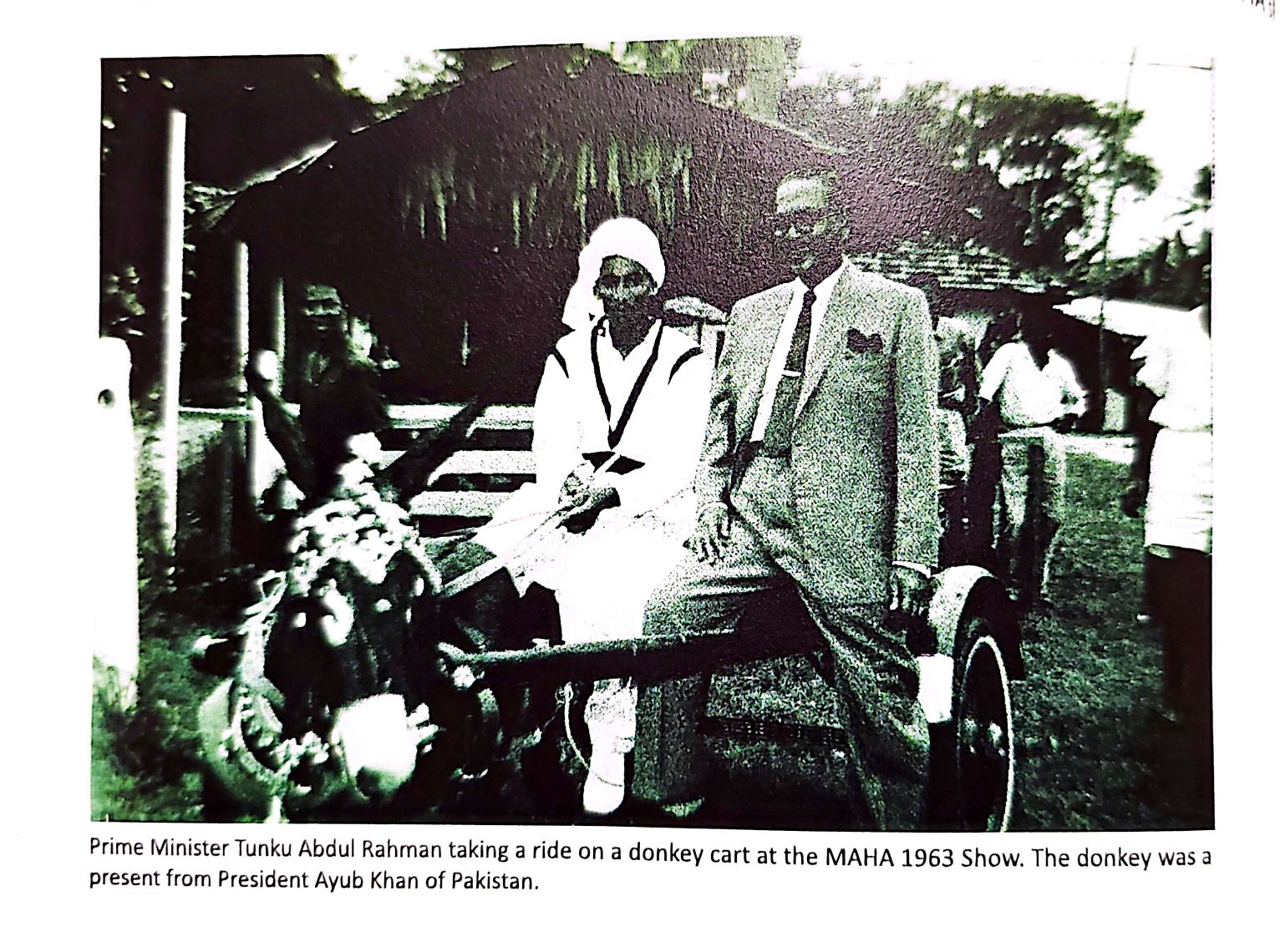
In 1964 the government granted a 20-acre site along the 8th mile Old Klang Road adjoining Petaling Jaya as a permanent site for MAHA Shows. It was officially opened by the Prime Minister YTM Tengku Abdul Rahman Putra Al-Haj where he declared that this permanent site for MAHA Exhibitions will put an end to moving about each year from place to place. By 1965 some key private companies in Malaysia had started showing interest in the exhibition by way of active participation and sponsorship of events at the show. In 1966 the Deputy Prime Minister of Malaysia YAB Tun Abdul Razak opened the Rothmans Pavilion at the MAHA site . The Rothmans Pavilion was the first of its kind made by a Malaysian company for public use in the country. MAHA had its 33rd Exhibition in 1968 and was the last Exhibition at this site. To many people in Klang Valley the MAHA Show and Trade Exhibition is nostalgia of an earlier era about 60 years ago, when they visited the the show at the 8th Mile Old Klang Road MAHA site which is today known as Kampung Medan.
After 1968 the MAHA Exhibition was replaced by the Farmers’ Day celebrations. In 1974 the government announced that Farmers Day will be celebrated on the 6th August every year. In 1999 after an absence of 31 years MAHA made its official return on July 7, 1999 when the 34th MAHA Exhibition was launched at the National Sports Complex in Bukit Jalil, Kuala Lumpur. In 2006, MAHA held its 38th Exhibition with the Theme ‘Agricuture is Business’ at the new permanent site in the well known agriculture enclave of Serdang where MARDI and University Putra Malaysia ( formerly known as Universiti Pertanian Malaysia -UPM) are situated. The site is known as The ‘Malaysia Agro Exposition Park Serdang (MAEPS).
Over the years since the show’s inception in 1923, MAHA Exhibitions had undergone its ups and downs, criticisms and budget constrains ; boycott by certain quarters at one time; less interest in the show due to dwindling interest in agriculture with the emphasis on manufacturing and industrialisation in the early 70s; but the MAHA Show rebounded and re-emerged as a super brand packaged in a new format with new ideas, innovations and a wider scope relevant to modern times.
Reference Materials from:
- The National Archives of Malaysia, Kuala Lumpur;
- The Straits Times Archives Singapore;
- Resource Centre, New Straits Times Press (NSTP) Kuala Lumpur;
- Philatelic Society of Malaysia, Kuala Lumpur;
- Jabatan Penerangan Putra Jaya;
Md. Shariff Abd Aziz is a content creator under the Newswav Creator programme, where you get to express yourself, be a citizen journalist, and at the same time monetize your content & reach millions of users on Newswav. Log in to creator.newswav.com and become a Newswav Creator now!
The User Content (as defined on Newswav Terms of Use) above including the views expressed and media (pictures, videos, citations etc) were submitted & posted by the author. Newswav is solely an aggregation platform that hosts the User Content. If you have any questions about the content, copyright or other issues of the work, please contact Newswav.