
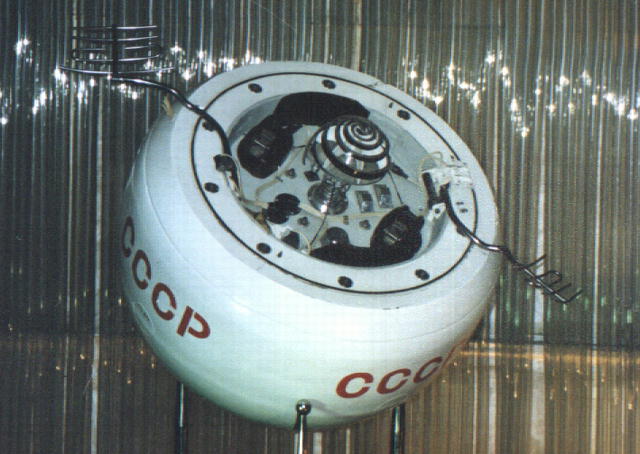
In the vast silence of space, a Cold War relic is making its final descent. Cosmos 482, a Soviet-era Venus lander stranded in Earth’s orbit for the past 53 year, since 1972, is slowly spiraling toward a fiery reunion with its home planet.
What was meant to be a pioneering mission to unlock the secrets of Venus has instead become a haunting symbol of humanity’s early—and perilous—quest to conquer the cosmos.
Now, as its decaying orbit signals an inevitable crash landing, expected entering Earth's atmosphere on May 10, 2025, scientists and space enthusiasts alike are asking: What remains of this “ghost probe,” and could its return pose a risk to humans, property on Earth?
A Mission Born in the Shadow of the Space Race
Launched on March 31, 1972, from the Baikonur Cosmodrome in Kazakhstan, Cosmos 482 was the Soviet Union’s bold follow-up to the successful Venera 8 mission, which had touched down on Venus just days earlier.
Designed by the Lavochkin Design Bureau, the probe carried a spherical, 495-kilogram lander built to withstand Venus’s crushing atmospheric pressure and scorching 470°C surface temperatures.
Its goal was to analyze the planet’s toxic clouds, infer geological composition, and cement Soviet dominance in the Cold War space race.
But just minutes after liftoff, disaster struck. A malfunction in the Molniya-M rocket’s Block L upper stage left the probe trapped in a useless elliptical orbit around Earth.
Soviet officials immediately labeled it “Cosmos 482”- a generic designation for the failed mission - and passed it on. The probe, however, did not disappear and continued to orbit the earth for quite some time.
A Zombie Satellite in Earth’s Orbit
For decades, Cosmos 482 has circled Earth like a phantom. Initially orbiting at an apogee of 735.3 kilometres and a perigee of 181.3 kilometres , atmospheric drag has steadily pulled it closer.
Today, the probe’s remnants—including a bus module and the hardened Venus lander—complete an orbit every 112 minutes. Most of the spacecraft burned up during re-entry long ago, but experts speculate the lander, shielded by titanium and designed for planetary entry, may still survive.

Tracking data suggests the debris could re-enter Earth’s atmosphere between 2025 and 2040, though pinpointing the exact date and location is nearly impossible. “It’s a game of celestial roulette,” says space debris researcher Dr. Alice Gorman. “The lander’s durability means some pieces might make it to the surface.”
Could a Soviet Artifact Crash Land on Earth?
The prospect of a 53-year-old Soviet probe crash landing raises both intrigue and concern. While most space debris burns up harmlessly, Cosmos 482’s lander was built to endure extreme conditions.
If intact, it could weigh up to 500 kilograms—comparable to a small car. The chances of it hitting populated areas are astronomically low, but its unknown radioactive or toxic components (common in early Soviet tech) have sparked debates about liability under the Outer Space Treaty.
Yet for historians, the probe’s return is a poetic full-circle moment. “It’s a time capsule from the Cold War,” says space archivist Dmitry Payson. “A reminder of how close we came to turning space into a junkyard—and how much work remains to clean it up.”
Legacy of Ambition and Risk
Cosmos 482’s story is one of ambition, ingenuity, and unintended consequences. While its mission to Venus failed, it inadvertently became a test subject for orbital decay and the long-term risks of space debris—a problem now magnified by modern megaconstellations like SpaceX’s Starlink.
As the probe’s orbit continues to decay, it serves as a stark warning: every launch leaves a mark, and not all ghosts stay in the past. Whether it burns up in a brilliant flash or survives to land in a remote field, Cosmos 482’s final act will close a chapter on humanity’s relentless—and sometimes reckless—reach for the stars.
Tahanazar al-Qadree is a content creator under the Newswav Creator programme, where you get to express yourself, be a citizen journalist, and at the same time monetize your content & reach millions of users on Newswav. Log in to creator.newswav.com and become a Newswav Creator now!
The User Content (as defined on Newswav Terms of Use) above including the views expressed and media (pictures, videos, citations etc) were submitted & posted by the author. Newswav is solely an aggregation platform that hosts the User Content. If you have any questions about the content, copyright or other issues of the work, please contact creator@newswav.com.