
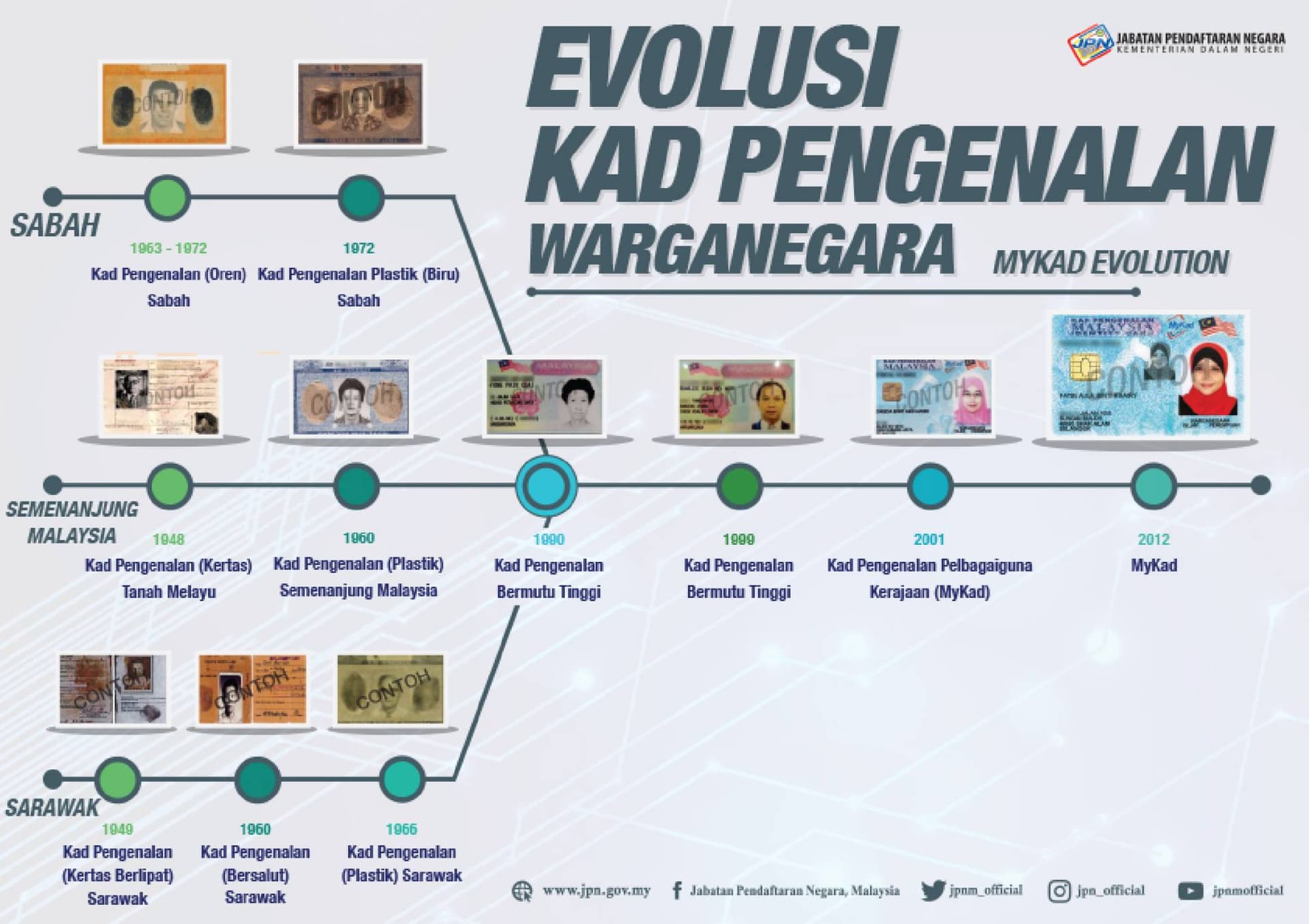
In 1948, the identity card was a crude piece of paper designed to distinguish friend from foe during a colonial insurgency. In 2026, it is a high-tech biometric gateway, a digital key, and a contested symbol of the state's reach into the private lives of 34 million people. As Malaysia pivots toward a fully digital identity infrastructure, we examine whether the MyKad has evolved from a tool of liberation into a permanent digital shackle.
In the sweltering humidity of 1948, the Federation of Malaya was a theater of war. To combat the communist insurgency during the Malayan Emergency, the British colonial government introduced a radical, albeit crude, mechanism of control: the compulsory identity card. It was a paper-based mandate, a physical marker that forced citizens to carry their "state-sanctioned existence" in their pockets at all times. Failure to produce it was not merely an inconvenience; it was a criminal act.
Seventy-eight years later, the paper has vanished, replaced by polycarbonate, embedded chips, and encrypted biometric data. Yet, the philosophy underpinning the card the need for the state to verify, track, and categorize its subjects has remained remarkably consistent.
As Malaysia in 2026 stands on the precipice of a full-scale transition to MyDigital ID, the journey of the Malaysian identity card offers a masterclass in the intersection of security, technological ambition, and the erosion of privacy. We are no longer talking about a piece of plastic; we are talking about a centralized digital heartbeat.
1948–2001: From Paper to the "Smart" Pioneer
For decades, the identity card was a static, low-tech instrument. Following the post-independence "blue" plastic cards of the 1960s and the "Hibiscus" cards of the 1990s, Malaysia executed what was, at the time, a world-first. In September 2001, the government launched the MyKad, a multipurpose smart card that promised to drag the nation into the information age.
It was ambitious, perhaps bordering on utopian. The MyKad was not merely an ID; it was designed as an electronic purse, a driver’s license, a health record, and a passport substitute. It was the "One Card to Rule Them All," a cornerstone of the Multimedia Super Corridor (MSC) initiative.
"The initial MyKad was a contact card solution that was decades ahead of its time," notes a former government consultant familiar with the project. "But it suffered from the ‘convenience paradox.’ By forcing all data into one point of failure, you created a goldmine for both efficiency and disaster."
By the early 2000s, critics including members of the Malaysian Bar were already sounding the alarm. They argued that aggregating sensitive information financial, medical, and personal onto a single chip was an invitation for state overreach and catastrophic data breaches.
The 2026 Frontier: The Digital ID Paradox
Fast forward to April 2026. The physical MyKad is currently undergoing a mandatory, gradual transition. The government, led by the National Registration Department (JPN), is pushing upgraded security features laser engraving, enhanced anti-forgery chips, and encrypted biometric verification.
However, the real controversy isn't the plastic; it is the software. Enter MyDigital ID, a platform intended to be the "single sign-on" for every government transaction.
On paper, the goal is efficiency. No more redundant logins, no more physical document verification, and a streamlined approach to targeted subsidies. But in reality, the implementation has been anything but smooth.
In early 2026, the Auditor-General’s report ignited a firestorm, flagging nearly RM28 million in expenditure that lacked proper committee approvals. While the Ministry of Science, Technology, and Innovation (MOSTI) cited "administrative confusion" rather than fraud, the incident exposed the fragility of the governance structures managing our most sensitive data.
The Cost of Transparency: Governance in the Dark
The core issue facing Malaysia’s identity infrastructure in 2026 is a fundamental deficit of trust. When a government pushes for a centralized database of 34 million citizens, the burden of proof lies on the state to demonstrate that the data is not only secure but also protected from its own internal inefficiencies.
"The technical foundation of MyDigital ID is sound, but the institutional foundation is shaky," argues a recent discussion paper from the Khazanah Research Institute. "Without a robust legal framework that defines user rights and, crucially, what happens when things go wrong, we are building a skyscraper on sand."
The risks are not theoretical. In the past, the aggregation of identity data religion, race, address, and biometric markers on a single, government-held card has often invited concerns about who has access. When a system is designed to be the "key" to everything, the entity that holds that key effectively controls your ability to transact, travel, and access healthcare.
The Societal Mirror: What Does the Card Say?
We must also confront the sociological reality of the MyKad. Since its inception, the identity card has not been a neutral instrument. The inclusion of race and religion on the card has long been a source of quiet, deep-seated debate in Malaysia. It functions as a categorization tool that arguably reinforces the very racial and religious silos that the nation seeks to transcend.
By institutionalizing identity on a digital card, does the state merely reflect the social order, or does it actively harden it? In 2026, as the system becomes more deeply integrated into the digital economy from fuel subsidies to e-wallets this categorization carries new weight. If your digital ID determines your eligibility for benefits based on these categories, the card ceases to be a document of identity and becomes an instrument of social engineering.
What Do You Think? I’d Love to Hear Your Opinion in the Comments Section.
The evolution of the Malaysian identity card from the paper slips of 1948 to the biometrically encrypted, blockchain-adjacent infrastructure of 2026 is a mirror of Malaysia’s own development. It reflects the nation's hunger for progress, its colonial baggage, and its enduring struggle to balance state security with individual liberty.
As the transition to MyDigital ID continues, the government faces a binary outcome. It can either foster a transparent, user-centric ecosystem that treats citizens as partners, or it can continue to operate with the opacity that led to the governance questions of 2026. For the average Malaysian, the question remains: are we upgrading our national identity system, or are we simply digitizing the reach of the state?
The plastic card is fading; the digital trail is permanent.
AM World (tameer.work88@gmail.com) is a content creator under the Newswav Creator programme, where you get to express yourself, be a citizen journalist, and at the same time monetize your content & reach millions of users on Newswav. Log in to creator.newswav.com and become a Newswav Creator now!
The User Content (as defined on Newswav Terms of Use) above including the views expressed and media (pictures, videos, citations etc) were submitted & posted by the author. Newswav is solely an aggregation platform that hosts the User Content. If you have any questions about the content, copyright or other issues of the work, please contact creator@newswav.com.