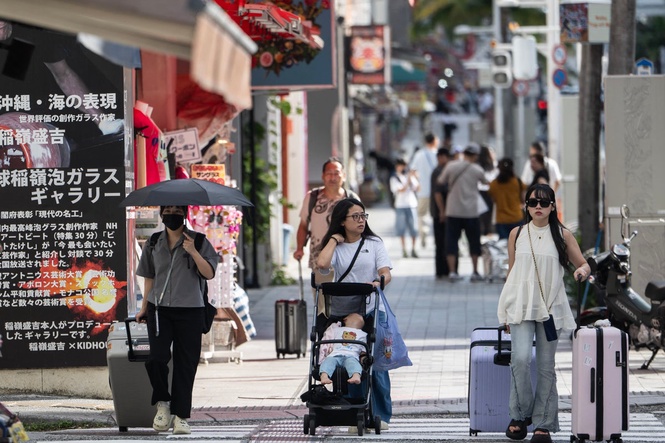
There is a particular kind of holiday souvenir that Japan could do without: the old suitcases left behind by tourists after a shopping spree.
As tourists return home with new luggage stuffed with purchases, unwanted bags are being abandoned on streets, in parks and around hotels, leaving local authorities to deal with the mess.
Now, one Tokyo neighbourhood is preparing to crack down.
Toshima ward, home to the busy Ikebukuro shopping district, plans to introduce penalties for illegal suitcase dumping, after about 290 abandoned bags were found across the ward in 2025, according to the Yomiuri Shimbun.
The ward intends to enact an ordinance by the end of March 2027 and implement it from April.
The problem is particularly noticeable around Ikebukuro station, where hotels and private holiday rentals are concentrated.
Officials believe some tourists are leaving their old suitcases behind after buying replacements in Japan, either to make room for souvenirs or to avoid extra airline baggage fees. Others are thought to be taking advantage of the weak yen to buy inexpensive, durable Japanese luggage before heading home.

For residents, the discarded bags are more than an eyesore.
“Since the number of minpaku (short‑term rentals) has increased over the past few years in the neighbourhood, I’ve seen a total of more than 50 suitcases abandoned on the street. I even saw a foreigner leaving one behind. I want them to follow the rules,” a resident from Ikebukuro-Honcho told the Yomiuri Shimbun.
Toshima ward says residents sometimes call the police after spotting unattended suitcases because they are frightened by the unknown contents. Mitsuhiro Takakuwa, director of the ward’s cleaning office, said staff sometimes have to inspect heavy suitcases in the presence of police officers, which he described as “time-consuming”.
In July, the ward partnered with two private companies to offer alternatives to dumping unwanted luggage. One accepts old suitcases at its shops and other locations, while the other collects them directly from accommodation facilities for ¥2,500 (£12) per bag.
And this is not just a problem for one Tokyo neighbourhood. About 4,600 suitcases were recorded as found property in Tokyo in 2025, up from roughly 2,600 in 2022, according to Nikkei.
Around 70 per cent of the bags are never claimed, despite police holding them for three months.
Those left unclaimed eventually become the property of the Tokyo metropolitan government and can be sold to businesses through public tenders.
Airports are also dealing with growing piles of unwanted luggage. Narita Airport, which serves Tokyo, recorded 1,201 suitcases in 2025, about 50 per cent more than three years earlier. Kansai International Airport, which serves Osaka, found 315 between April and August, while Chubu Centrair International Airport near Nagoya, records about 50 abandoned suitcases each month, according to the Seoul Economic Daily.
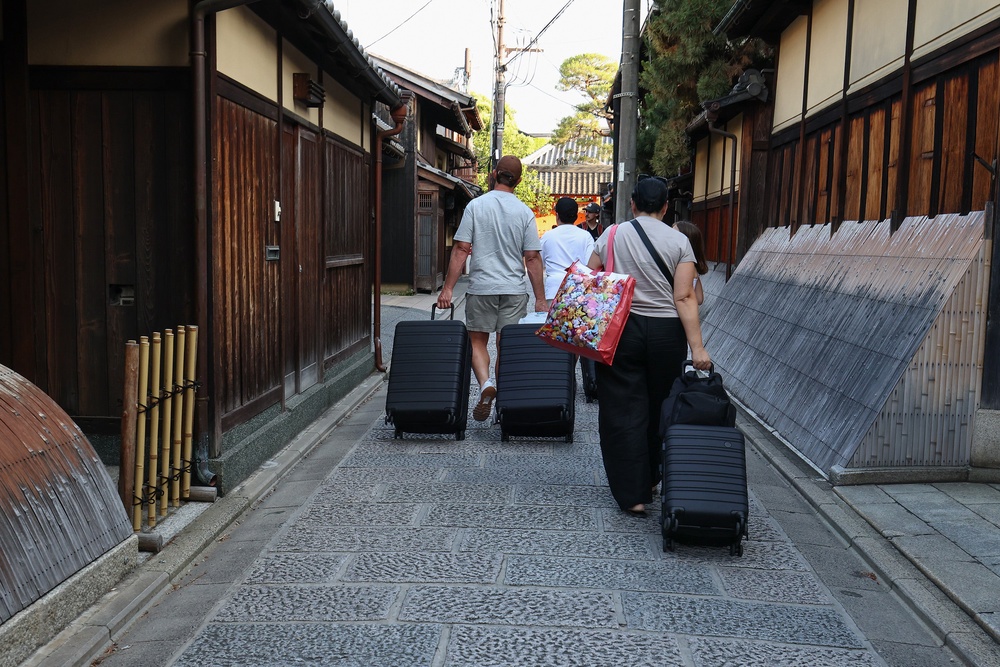
Japan’s tourism boom has brought a record 42,683,600 international visitors to the country in 2025, up 15.8 per cent from 36,870,148 the previous year, according to the Japan National Tourism Organization.
Leaving an unwanted suitcase on the street could cost tourists far more than the price of disposing of it properly.
Japan’s waste-disposal law allows illegal dumping to be punished with up to five years in prison, a fine of ¥10 million ( £47,630), or both, according to official guidance.
The maximum penalty applies to offences covered by the law, rather than automatically to every abandoned suitcase.
Some businesses, meanwhile, have found a more inventive use for unwanted bags.
Hotel Niwa Tokyo, in Chiyoda Ward, has been turning suitcases left behind by guests into planters for its rooftop vegetable garden since 2023.
The hotel grows vegetables in the repurposed luggage and serves the produce in its restaurant, according to The Asahi Shimbun.