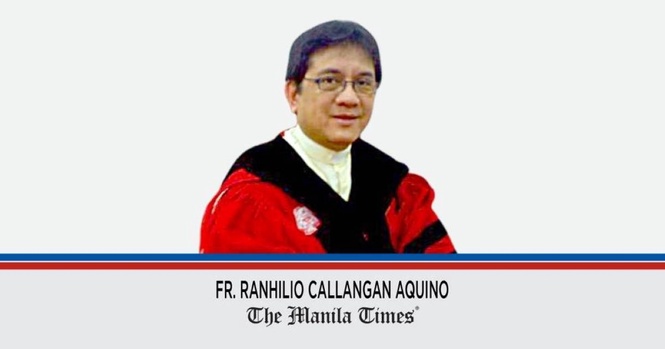
THIS is a biased piece. I write it as a Catholic priest, about the Church, of which I am a member and which I serve. It is human — all too human, in fact — and therefore not exempt from the quirks and foibles of being human. But for everything that has been wrong with it through the centuries, it remains beautiful; and the scars she bears from the struggles with her own failings, as well as assaults from without, are part of her beauty. It is not the pristine beauty of something kept aloft from all strife and contention, but the beauty that has been tested repeatedly in the crucible of history and continues to pulsate with the life of the Spirit.
There are several reasons the Catholic Church should not have survived. Up to the middle of the 4th century, the might of the Roman Empire was directed at it; and the catalogue of martyrs attests to the cost of discipleship, the currency that had to be paid in the blood of the early Christians that, in Tertullian’s immortal words, was the seed of the Christian faith! Already, very early in the life of the Church, there were heated debates over doctrine — and fundamental tenets of the faith: the mystery of the person of Jesus Christ, the Triune God and the Holy Spirit.
Somehow, the Church always managed to heal. This, for believers, was confirmation of Jesus’ promise that his Spirit would abide by his Church and “lead it to all truth.” But that itself is to be underscored because it means that, at no time in her history — not then, not now — can the Church claim to have been in complete and unalterable possession of the truth. This would be to render superfluous Jesus’ own promise of the Spirit. This would be to advance this very dangerous formula: the Church = God. And because this community of faith must constantly learn what the Scriptures mean in the light of how she has lived her faith — what is called Sacred Tradition by theology — then there have to be in the Church the twin dispositions of humility and boldness. One needs a humble Church that listens, not to fads of sociology and anthropology that, on occasion, importune themselves on those who lead the Church, but above all to the Spirit. And because Catholics understand Jesus’ commands and assurances to Peter in the way they do, they find in the Office of Peter — the Petrine or Papal Ministry — a principle of unity, a See around which the local Churches — despite differences in liturgical traditions and theological emphases — can gather and from whom Catholics can take their bearings. But the Church also has to be bold, trying out new ways of thinking of the faith, struggling with intellectual concepts in confrontation with the deposit of the faith and meaningful ways of involving the people in liturgy — literally, the “work of the people.” It is the boldness of conceptual advance that theologians contribute to the life of the Church, for concepts and conceptual schemes are dated and sometimes cease to be truly helpful.
That, too, is why general or ecumenical councils are terribly important. They are called to resolve controversies or disputes on matters central to the faith, as were the councils of Nicea, Ephesus, Chalcedon and Constantinople. They are called when the Church must confront a serious threat to its doctrine and to its life, as the Council of Trent was called to deal with the Reformation. Vatican I — which was never really concluded — was called to deal with the crucial problem of the relation between faith and reason at the time when science was asserting its supremacy as the exclusive way of knowing reality and, as a related matter — the teaching office of the Pope — still a question of how far reason can go, and how far it can exceed its own bounds by the unfailing help of the Holy Spirit. Vatican II was called at the cusp of our own times to allow the Church to respond to the issues a new world raised! No council is less authoritative than another, and there is absolutely no reason to distinguish between a “dogmatic council” and a “pastoral council.” That is a distinction not found in the documents of the Church nor in the Code of Canon Law, and following the general hermeneutic principle of theology, the teachings of earlier councils are to be read and interpreted in light of what later councils teach.
When there is no authority that can tell you how a text is to be read, especially one as complicated as the 73 books of Sacred Scripture spanning all of 3,000 years, written by mainly anonymous authors in at least two, perhaps three languages, according to the demands of different genres, then you will have as many sects as there are plausible readings of the Scriptures. And that is why the Magisterium or the Teaching Office of the Church is the salutary exercise of the power of the keys — the power to bind and to loose.
There are some who have simplistically reduced the regrettable issue of the Fraternal Society of Saint Pius X to the Traditional Latin Mass. In the first place, the “Traditional Latin Mass” can refer to the Mass prior to the Missale Roman of Pope Pius V in the 16th century, or the Mass ordained by him, or the Mass as reformed by Pope John XXIII. To know just how many “traditional Latin Masses” there have been, one has only to read Joseph Jungmann’s masterful classic, “The Mass of the Roman Rite,” in two volumes, which, in themselves, suggest the long, convoluted evolution of the Eucharistic liturgy. There are, in fact, many Catholic communities, fully in communion with Rome, allowed to use traditional forms of the Mass. The Carthusians continue to celebrate Mass as they always have. The Priestly Fraternity of Saint Peter humbly requested the Holy See for an insult to retain the traditional liturgy, which was readily granted them. It is with regard to the Second Vatican Council that the disagreement becomes crucial, because the plain fact is that you cannot remain a Catholic while disagreeing with one supreme exercise of the teaching office of the Church — and that is, through a general council, as Vatican II was!
In fact, when you watch video clips of Catholic rites, whether at the Vatican or at huge assemblies of bishops, you will not fail to see that among the familiar miters are crowns — the typical head gear of Eastern Rite Catholic bishops. Their liturgies are ancient and definitely different from the Roman Rite, as are their beautiful hymns. But what makes them Catholic is their faithful adherence to all that the Church professes in all her creeds and teacher in all her councils, and submission to the unifying office of the See of Rome.
Ours is a beautiful Church and there is, in it, the promise of an eternal springtime for despite the deplorable closure of many parishes in the United States, vocations both to the priesthood and to the religious life are flourishing where once only missionaries from the West ministered: Asia and the African continent. And so it is that missionary work now goes in the opposite direction. In the US alone, there are hundreds of Filipino priests ministering in different parishes, and some of them have become bishops, leading their own communities, bringing to them the Filipino brand of witnessing to the faith!
rannie_aquino@sanbeda.edu.ph
rannie_aquino@csu.edu.ph