
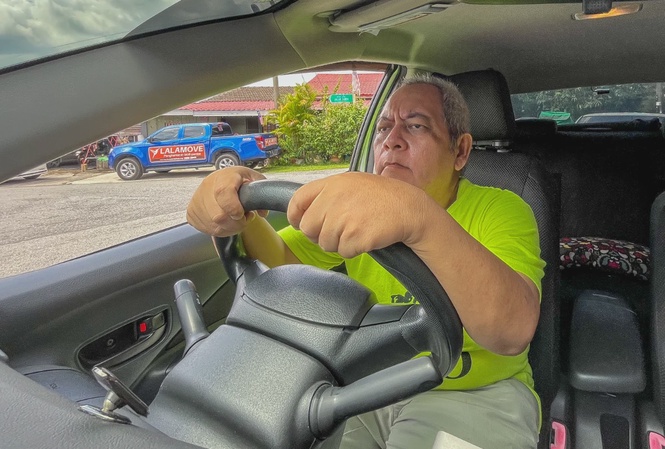
Malaysia’s ageing population sparks debate on mandatory medical screenings for senior drivers to balance road safety with mobility rights.
MALAYSIA is ageing much faster than many realise. According to the Department of Statistics Malaysia, the country officially became an “ageing nation” in 2021 when the demographic of those aged 65 and older reached 7%.
Based on current projections, we are expected to transition into an “aged nation” by 2048, with this group making up 14% of the population. Despite this undeniable demographic shift, Malaysian law currently does not impose a blanket upper age limit on private driving licences.
The process remains governed by the standard operating procedures of the Road Transport Act 1987. Specifically, Section 30(3) of this Act mandates that all drivers, regardless of age, must ensure they are in good health to operate a vehicle safely. However, for everyday private vehicle owners, this relies entirely on self-declaration rather than formal medical proof, a policy that is facing intense public scrutiny.
This scrutiny has been amplified by several highly publicised and tragic accidents in early May. On May 5, an elderly man in his 70s lost control of his car in Section 17, Petaling Jaya. The vehicle sped into the opposite lane and brutally rammed a motorcyclist, where a food delivery rider in his 20s tragically died at the scene. The driver was subsequently released on police bail due to his underlying health reasons.
Days later, social media platforms were flooded with footage of another alarming incident where an elderly driver lost control and crashed directly into a bustling kopitiam stall, severely injuring a worker.
These incidents have sparked public outrage and reignited demands for stricter regulations. Instead of a strict, arbitrary age cut-off, the most prominent solution being debated is the introduction of mandatory health assessments for drivers aged 65 and above.
Various authorities, including the Bukit Aman Traffic Investigation and Enforcement Department, have continuously urged the government to implement specialised screening rules for seniors before they can renew their licences.
Enforcing mandatory medical screenings ensures that natural, age-related physical declines – deteriorating eyesight, slower reflexes, hearing loss or cognitive conditions – do not put the driver or the public at risk.
Establishing a firm, legally required health check removes ambiguity and saves families from the painful, subjective burden of telling an ageing parent they are no longer fit to get behind the wheel. It shifts the responsibility from a personal family conflict to a standardised, unbiased medical evaluation.
Conversely, forcing elderly drivers to undergo mandatory health screenings or strict age caps risks institutionalising ageism and ignoring the vast spectrum of healthy ageing.
A major misconception is that chronological age universally dictates competence on the road. Many advocacy groups point out that reckless behaviour and speeding among younger demographics still account for a massive portion of road fatalities.
Automatically placing administrative hurdles in front of a sharp, physically active 75-year-old ignores their individual capability. The most severe drawback, however, is the real economic and social strain this could cause.
Stripping away an elderly person’s driving licence or making it exceptionally difficult to renew through costly or stressful medical hurdles could restrict their independence.
For many older Malaysians, especially those in areas lacking robust public transit, the ability to drive equates to the ability to earn a living, buy groceries or access vital healthcare.
Cutting off these avenues prematurely could deepen financial hardship and social isolation for an increasingly vulnerable demographic.
Ultimately, navigating the driving capabilities of senior citizens is a complex balancing act for Malaysia, especially in the wake of recent tragedies.
While strict age limits or sweeping mandatory assessments can act as a necessary safeguard for public safety, they also risk unfairly marginalising a massive portion of our population who are still capable and rely on their mobility to survive.
Instead of implementing absolute bans based purely on a number, the most realistic and compassionate path forward likely involves highly targeted, government-subsidised and easily accessible health evaluations. This will support and assist seniors rather than blindly penalise them.
This approach prioritises the safety of Malaysian roads without sacrificing the dignity, mobility and hard-earned independence of our elders.
Dr Muhammad Ammirrul Atiqi Mohd Zainuri is from the the Faculty of Engineering and Built Environment at Univerisiti Kebangsaan Malaysia. Comments: letters@thesundaily.com
