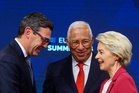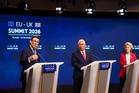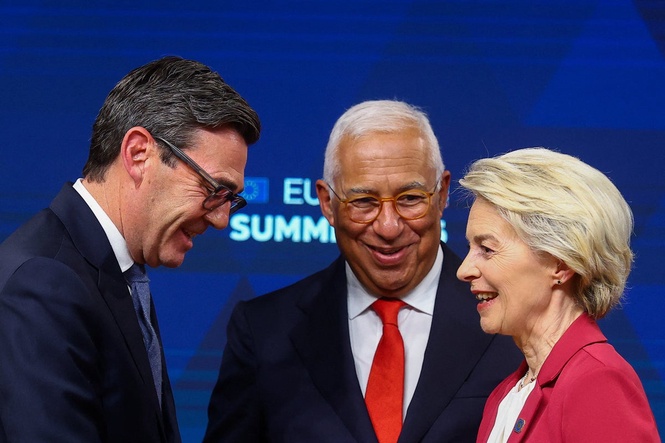
The deal is done. Given the bitterness of the Brexit divorce, which began a decade ago, the UK-EU “reset” is a remarkable achievement by any standard. The goodwill and harmony between the British and EU representatives were tangible. It is indeed a turning point.
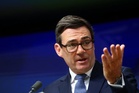
As Andy Burnham acknowledges, this is probably “the limit” for progress during this parliament, the direction of travel is clear. It is in the next parliament that more radical changes can be made.
The outlines of the new deal emerged after the usual process of late-night negotiations, last-minute panics and, as ever, with not a few loose ends hanging around the finely crafted clauses. Whatever its flaws, messy compromises and limited scope, such a deal seemed unlikely, if not inconceivable, only a few years ago.
Assuming all goes well, it is excellent news for young people looking for a life-enhancing experience through work, study and travel; for farmers and seafood producers; for car makers and component manufacturers; for small businesses in Northern Ireland trading into the UK; for shoppers; and for those tasked with controlling Britain’s borders.
It offers “hope on the horizon”, as the prime minister put it – and some benefit will be felt in every postcode in the UK.
The government claims the new arrangements will eventually add some 0.5 per cent to UK GDP, which is a substantial boost given the range of around 1 per cent to 1.7 per cent in annual growth in the coming years.
Roughly speaking, it would benefit the public finances by around £7bn a year, and it represents the single biggest factor in raising living standards over the rest of this decade and beyond. (Still, it has to be set against the 4 per cent drop in national income, conservatively estimated, that Brexit continues to inflict on the UK economy.)
The reset is the product of skilled and dedicated statecraft on both sides, and particular credit has to be accorded to Sir Keir Starmer, who managed to balance Labour’s well-rehearsed “red lines” on rejoining the EU with a determination to get a better deal. It was he who founded the process of annual EU-UK summits, and he who identified where an early reset of the 2020 Trade and Cooperation Agreement was both most desirable and likely, tearing down unnecessary barriers and seeking to “deepen ties with our European friends, neighbours and allies”, just as the 2024 manifesto pledged.
In doing so, Sir Keir built on earlier efforts by Rishi Sunak to rebuild bridges, which culminated in the Windsor Framework. Now, Mr Burnham and his team have made it happen. Mercifully, we have finally moved from the openly hostile, combative language of the Boris Johnson and Liz Truss era. Although Nigel Farage is still fulminating on the sidelines, looking less relevant than ever now that the Brexit project has failed, has been seen to have failed, and is in the process of being ditched. Reform UK is unique in wanting “more Brexit” – hardly a winning offer now.
The British and other nations of Europe know only too well how the geopolitical and global economic context has changed so radically since 2016. That is why the relationship has had to evolve – on trade and economics, but also on defence and security – and why it will continue to do so. The war in Ukraine, America’s waning commitment to “European” Nato, and the continent’s symbolic exclusion from the Xi-Trump-Putin summit, all demonstrate why a renewed partnership built on trust between Britain and the EU is becoming inevitable.
How it proceeds now is a matter for both sides. The Europeans are indicating that they do not favour a rolling programme of resets of the kind just concluded. They would like the British to decide where they wish to end up, a more systematic, timetabled logical approach than the pragmatic, haphazard, organic path traditionally favoured on the other side of the Channel.
As it happens, there is plainly a willingness on the part of the British public, particularly among the young, to look at all options for the future, and this national debate is precisely what Mr Burnham has said he wants to see.
By the time of the next election, the “red lines” of the past will have to be revisited, and the government will have to have a policy in place they can put to the people in their manifesto. Between now and then, Mr Burnham and Ursula von der Leyen, as president of the European Commission, will supervise much “brainstorming” by their officials.
One of the big lessons of the past decade is how unsuitable a binary referendum is for resolving such an immensely complex issue as casting a new relationship with Europe. There is a strong case for the issue to form part of the Labour manifesto, with Mr Burnham seeking a broad mandate to negotiate a deal, no more and no less. It would then be left to parliament, on behalf of the people, to ratify any such deal reached by a democratically accountable government.
This is what happened when Britain joined in 1973. This reset, which follows a similar procedure, reminds us exactly how smooth such a process can be.
Read MorePoor Andy Burnham has just reminded us how exhausting ‘Eurowangling’ really is
This is Starmer’s deal – but only Burnham could have made a success of it
My father fled Europe for Britain. Now I’m going back to rebuild our ties
Trump and Putin’s mad, bad bromance is the best reason yet to reverse Brexit