
Across the globe, modern democracies are grappling with a profound, aching crisis of confidence. From the fractured courtrooms of the West to the shifting political sands of Southeast Asia, everyday citizens are experiencing a growing fatigue born from political expendability. In Malaysia, this collective exhaustion is not merely a philosophical concept; it is a palpable emotion felt deeply by commuters on the LRT, discussed over lukewarm teh tarik at local mamak stalls, and broadcasted continuously across social feeds. The persistent worry among the public is that the elite operate under a separate legal standard, while ordinary citizens bear the full weight of the law.
When high-profile political actors exit courtrooms without convictions, it causes a deep sense of disillusionment within the public consciousness. This environment forms the backdrop for the Malaysian Bar’s institutional interventions. When the collective public sentiment borders on despair, legal institutions are tasked with proving that the foundational framework of the country remains firm. The central issue is not the fate of individual politicians, but whether the concept of blind justice can survive intact within a deeply factionalized political environment.
The President’s Declaration: Law as the Ultimate Equalizer
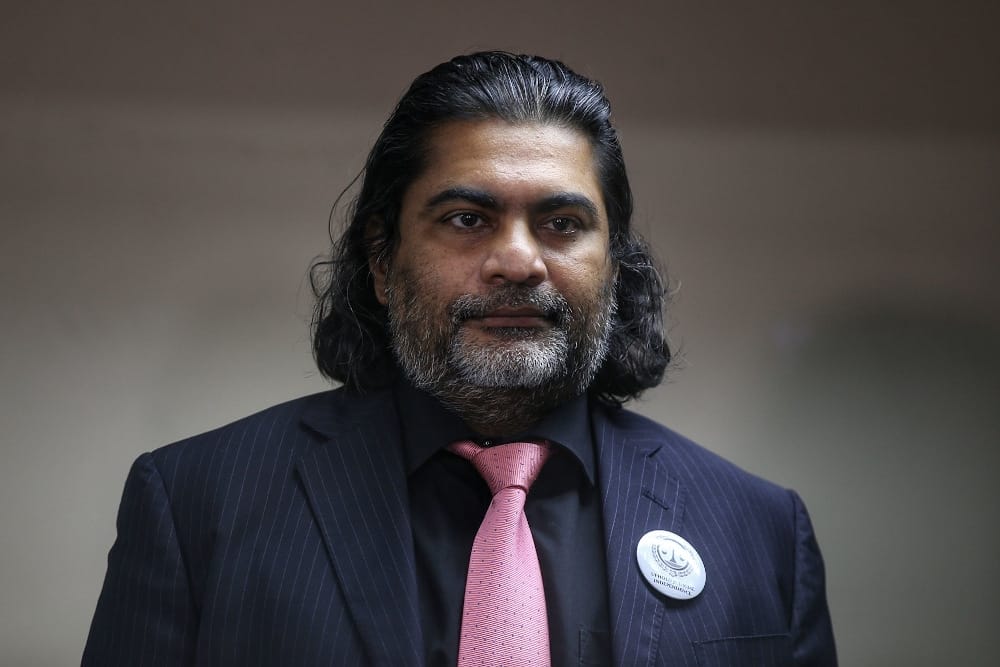
In an era where institutional announcements are often heavily sanitized, the clear statements from Malaysian Bar President Anand Raj offer a focused perspective on constitutional fidelity. Addressing the intense public scrutiny surrounding the Bar’s legal interventions in cases involving high-profile leaders like Deputy Prime Minister Datuk Seri Ahmad Zahid Hamidi and former Prime Minister Datuk Seri Najib Razak, Raj clarified that these actions are strictly principle-based. According to a comprehensive report published by the Malay Mail, Raj emphasized that the professional body operates entirely separate from political or partisan alignments. The statutory body represents thousands of lawyers across Peninsular Malaysia and bases its mandates strictly on legal tenets rather than political motivations.
"And we would have taken it up, whoever the politician was, from whichever party he or she was from, it's not personal against Zahid," Raj stated in an interview also detailed by Yahoo News. This assertion aims to challenge the common narrative that statutory bodies are weaponized by political factions. Instead, it positions the Malaysian Bar as an objective observer focused solely on adherence to due process.
Sociological analysis suggests that in a society where ethnic, cultural, and political ties frequently overlap, the concept of a completely neutral arbiter can be difficult for the public to envision. The Bar’s leadership argues that its consistency is its shield. By centering its focus on legal mechanics rather than individual identities, the organization seeks to demonstrate that the rule of law remains a functional framework rather than a political tool.
Deconstructing the Zahid Hamidi Saga: An Unusual Precedent
The primary point of contention in this discourse stems from the legal proceedings involving Deputy Prime Minister Ahmad Zahid Hamidi, specifically regarding his Yayasan Akalbudi trial. The case drew significant public attention when the prosecution requested a Discharge Not Amounting to Acquittal (DNAA), a move that occurred after a long and resource-intensive trial. Legal analysts and institutional watchdogs noted the timing of the decision with concern. As highlighted in reporting by The Star, the trial had already advanced through 99 prosecution witnesses and 15 defense witnesses. Millions in taxpayer funds and significant institutional effort had been invested into the prosecution's case.
To seek a DNAA at such a mature stage of judicial proceedings is statistically rare in the Malaysian legal system. Typically, a DNAA is utilized in simpler cases where new facts come to light before significant resources have been expended. The Malaysian Bar's response was to initiate two separate court challenges against the decisions of the Attorney General: the first contesting the initial September 2023 DNAA request, and the second challenging the January 2026 classification of the case as "No Further Action" (NFA).
The Attorney General has actively sought leave to appeal against the decisions allowing the Bar to pursue these challenges, as reported in separate coverage by The Star. This ongoing litigation underscores a broader institutional tension between the executive's prosecutorial discretion and the legal fraternity’s oversight role. This tension represents a healthy friction within a constitutional democracy, serving as a check against potential overreach.
The Najib Razak Paradox: Consistency Over Favoritism
The Malaysian Bar’s handling of issues related to former Prime Minister Najib Razak further illustrates its rule-based approach. Critics from various political sides have occasionally accused the Bar of bias, but a closer look at its legal positions suggests a consistent application of principles. For instance, during the final appeal of Najib’s RM42 million SRC International case, the Bar supported the Federal Court’s 2022 decision to deny any further postponements, noting that the trial dates had been set well in advance. This stance drew criticism from Najib's supporters, who argued it infringed upon his right to a fair hearing.
Conversely, the Bar has also taken positions that aligned with arguments raised by the former premier when constitutional principles were at stake. During the Federal Court hearing of Najib’s constitutional challenge against Malaysia's "pay first, dispute later" income tax framework, the Bar appeared as amicus curiae (friend of the court). In this role, they argued alongside Najib’s defense team that the tax provision was unconstitutional because it restricted citizens' access to judicial remedy. Although the Federal Court ultimately upheld the tax system's constitutionality in late 2023, the Bar's participation demonstrated a willingness to advocate for legal principles regardless of who benefits.
This even-handed approach is vital for maintaining institutional credibility. If an organization only challenges the state when it suits a specific political narrative, it loses its status as an independent watchdog. The Bar's history of defending procedural fairness, even when it benefits unpopular figures, reinforces its role as a defender of constitutional processes rather than political outcomes.
Institutional Independence in the Face of Executive Power
The relationship between the Malaysian Bar and the executive branch has often been characterized by structural friction. As an independent statutory body established under the Legal Profession Act 1976, the Bar is mandated to uphold the cause of justice without fear or favor. This mandate regularly puts it at odds with the government of the day, which often prioritizes policy implementation, political stability, and efficiency over complex procedural requirements.
This institutional dynamic was evident during discussions surrounding judicial reforms, including the process for judicial appointments. As documented by Free Malaysia Today, former Malaysian Bar President Ezri Abdul Wahab strongly defended Chief Justice Tengku Maimun Tuan Mat when she called for reducing the Prime Minister's role in judicial appointments to ensure greater institutional independence. While political figures debated the necessity of the current system, the Bar framed the issue around the separation of powers.
This persistent defense of institutional independence is critical during times of political transition. When coalitions shift and political alliances reform, independent bodies like the Bar provide a measure of institutional continuity. They remind the public and the state that while political leadership changes, the legal rules governing the nation must remain stable.
The Quorum Conundrum: A Reflection of Professional Engagement
Despite its vocal leadership, the Malaysian Bar faces internal challenges regarding member mobilization and engagement. A notable example occurred during an Extraordinary General Meeting (EGM) called to debate motions concerning judicial independence and executive accountability. As reported by The Star, the meeting had to be dissolved because it failed to reach the required quorum of 500 members, with only 309 of Peninsular Malaysia's 24,000 lawyers attending.
While critics pointed to the low turnout as a sign of apathy among younger lawyers, the Bar's leadership offered a different interpretation. They noted that an earlier resolution passed at the Annual General Meeting gave the leadership a broad mandate to act on issues related to judicial independence, meaning many members felt the council was already on the right track. However, the incident highlights a broader challenge face by professional associations: balancing active member participation with leadership-driven advocacy. For the Bar to maintain its influence, it must ensure its statements reflect the collective commitment of its wider membership.
The Broader Social and Cultural Tapestry
For the average Malaysian, these legal disputes are more than abstract constitutional arguments; they influence public perceptions of fairness and equity. Malaysian society places a high value on social harmony and collective stability, which can sometimes lead to a preference for political compromises that avoid institutional conflict. When the Bar pursues protracted court battles against popular leaders, it can challenge these cultural preferences.
However, a changing demographic shift is altering this dynamic. A younger, more connected generation of Malaysians is increasingly demanding greater transparency and accountability from institutional leaders. This group expects clear adherence to democratic norms rather than political accommodations. The Bar's public stances provide a legal framework for these changing social expectations, translating public demands for fairness into structured legal arguments.
Ultimately, the true value of the Malaysian Bar’s challenges does not depend on winning every court case. Its impact lies in its willingness to pose necessary questions within the legal system. By insisting that high-profile decisions undergo judicial review, the Bar reinforces the foundational principle that all state actions must remain within constitutional bounds.
What do you think? I’d love to hear your opinion in the comments section.
The legal challenges brought by the Malaysian Bar serve as a vital indicator of the health of the nation's democratic structures. They show a society actively working to define the boundaries of executive power and refine its accountability mechanisms. These actions remind citizens that a democracy requires continuous engagement and oversight to ensure its institutions remain robust and fair.
As Malaysia continues to navigate complex political transitions, the preservation of independent watchdogs remains essential for long-term stability. The work of maintaining a fair society relies on a collective commitment to institutional integrity and the consistent application of the law. It requires every citizen to consider their role in supporting these principles.
AM World (tameer.work88@gmail.com) is a content creator under the Newswav Creator programme, where you get to express yourself, be a citizen journalist, and at the same time monetize your content & reach millions of users on Newswav. Log in to creator.newswav.com and become a Newswav Creator now!
The User Content (as defined on Newswav Terms of Use) above including the views expressed and media (pictures, videos, citations etc) were submitted & posted by the author. Newswav is solely an aggregation platform that hosts the User Content. If you have any questions about the content, copyright or other issues of the work, please contact creator@newswav.com.