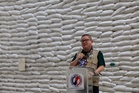
ON Sept. 14, 2026, the Vietnamese vessel MV Tay Son 2 arrived in Davao carrying 312,000 bags of rice in 25-kilogram sacks, worth an estimated P424 million. Before the Bureau of Customs (BOC) could inspect its cargo, the vessel departed without permission. The Philippine Navy pursued and escorted it back. The captain initially resisted inspection but later relented. On Oct. 2, BOC Davao issued a warrant of seizure and detention covering its cargo after learning that the sanitary and phytosanitary import clearances (SPSICs) for the shipment had been voided. The shipment documents named Planters Products Inc. (PPI) as the importer or consignee.
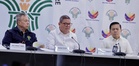
The case drew particular attention because PPI has links to Agriculture Secretary Francisco Tiu Laurel Jr. The Bureau of Plant Industry (BPI), which issued the SPSICs, is under his department; and the cargo was DT8 rice from Vietnam, a variety the secretary had temporarily banned beginning July 2026. Secretary Tiu Laurel said he alerted BOC on Sept. 9 after PPI told him that the vessel carried DT8 rice with 5-percent brokens, rather than the 25-percent-brokens rice it had ordered. PPI reportedly added that it had canceled its contract with the Vietnamese supplier after the latter failed to deliver an order in July 2026. Based on this information, the secretary directed BPI to cancel the SPSICs and asked the BOC to detain the vessel.
Unanswered questions
These explanations leave unanswered questions as to who owned the cargo, why the SPSICs were canceled, and whether PPI and the Department of Agriculture (DA) acted properly. Available shipment documents identify PPI as owner, importer or consignee. The seizure warrant also names PPI and its CEO as claimants. PPI representatives reportedly accompanied the BOC inspection team. If PPI had canceled its contract and had no interest in the shipment, why did it bother to alert the agriculture secretary and even participate in the inspection of the vessel? Conversely, if the supplier had no firm order from PPI, why risk sneaking in rice worth P424 million and consigning it to an established company instead of a dummy?
BPI issued 12 SPSICs in July 2026 in favor of PPI for imports of DT8 rice with 5-percent brokens, for delivery to Davao. BPI later confirmed that these were the same clearances it canceled on Sept. 9. Upon inspection, the cargo was found to be the DT8 variety specified in the SPSICs. If so, what was the basis for canceling the SPSICs? Where is the proof that PPI actually ordered rice with 25-percent brokens, and where are the SPSICs for this order? Why would PPI seek to stop a shipment of higher-quality rice, or why would a supplier send more expensive DT8 rice against an order for lower-priced regular-milled rice with 25-percent brokens?
The timing of the cancellation is also significant. International maritime tracking systems show that MV Tay Son 2 left Ho Chi Minh port on Sept. 9. Secretary Tiu Laurel has said the SPSICs were canceled that day, while the vessel was already “en route” to Davao. Under regular shipping arrangements, the consignee assumes ownership and responsibility over the cargo once it is loaded aboard the assigned vessel. In other words, PPI could already have been the owner of the cargo when its SPSICs were canceled on its way to Davao.
The vessel’s departure from Davao without permission and its initial refusal to allow inspection are serious matters. However, these actions are distinct from the stated basis for the initial seizure: cancellation of the SPSICs. If the clearances were valid when the vessel left Vietnam and the cargo matched their specifications, why were the SPSICs voided subsequently? Can BPI cancel permits for a shipment already at sea on the basis of an unverified report? Why did BPI issue clearances for DT8 rice in July in the first place despite the secretary’s reported ban? Were exemptions granted to PPI? BOC records show that 41 DT8 shipments — totaling 81,742 tons — entered the country between July and September 2026 despite the ban.
PPI’s institutional status adds another dimension. In 1974, Presidential Letter of Instruction (LOI) 178 created the Planters Foundation, chaired by the agriculture secretary. It also restructured PPI, formerly owned by a sugar cooperative, and allocated most of its shares for distribution to fertilizer end-users, particularly farmers. Because the Planters Foundation never undertook the redistribution, the DA secretary continues to control and vote 79.24 percent of PPI shares held in trust for farmers, and effectively influences the selection of its board of directors and officers.
Legal question
In 1985, LOI 1465 was issued imposing a fertilizer levy to support PPI. However, in 2008, the Supreme Court declared the levy unconstitutional because it favored a private entity (PPI) with funds collected for a public purpose. PPI has invoked this ruling to maintain that it is a private corporation and not a government-owned or -controlled corporation (GOCC). However, the Governance Commission for GOCCs created under the GOCC Governance Act of 2011 classifies PPI and the foundation as GOCCs. This raises a central legal question: Does that classification bring PPI within restrictions applicable to government entities? The Rice Tariffication Law, as amended, allows only a DA-designated entity to import rice under stringent conditions.
The scale and financing of PPI’s rice business also warrant scrutiny. Per BPI and BOC data, PPI had no rice imports before 2025 and brought in only 22,750 tons in 2025. As of Oct. 8, 2026, its imports had spiked to 291,382 tons. It obtained 392 SPSICs for 483,516 tons as of the same date despite the announced policy of allocating clearances according to historical import performance. How did a company with current assets and equity of about P600 million each finance imports estimated at P9 billion as of October 2026?
And, if PPI is actually a GOCC, then the propriety (PPI being a self-declared “company of Filipino farmers”) and legality of all its rice imports can be questioned!
The MV Tay Son 2 incident is not simply a matter of responsibility for one seized shipment. It carries issues about cargo ownership, cancellation of import clearances, compliance with the DT8 restriction, PPI’s legal status and the possible conflict arising when the agriculture secretary is both associated with a rice-importing entity and the importation-regulating agency directly under his command. Concerns also arise whether a government-controlled entity can operate as a private company while avoiding procurement rules, Commission on Audit oversight and other safeguards.
The secretary should provide clear and complete answers to these questions, especially since the power that he wields over PPI’s board members emanates from shares of stock owned by the very farmers who could be disadvantaged by the company’s massive rice imports. Instead of issuing blanket denials and threatening to sue his detractors, he should come out cleanly and credibly. Otherwise, the curious case of MV Tay Son 2 will remain unresolved — and the speculations will only multiply.
Raul Montemayor is the national manager of the Federation of Free Farmers. Argel Joseph Cabatbat is a lawyer and chairman of the Magsasaka Partylist.