
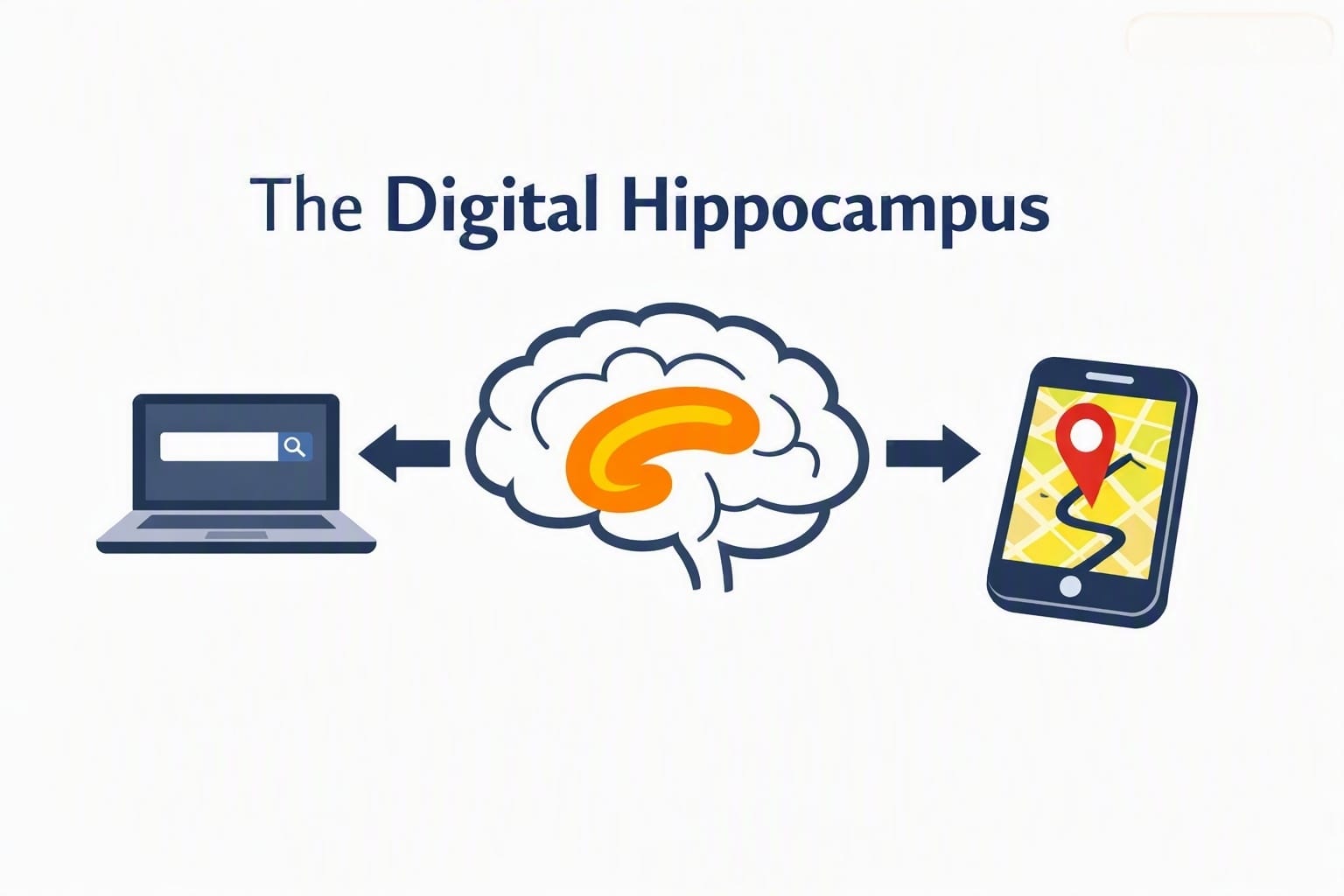
Our brains are quietly reshaping themselves in the age of intelligent systems (AI).
The hippocampus is losing daily exercise as we rely on search engines like Google, GPS like Waze and AI assistants.
This article explores how convenience rewires the mind, why unused neural connections weaken and how simple habits can keep the brain’s memory and navigation systems strong.
The Hippocampus: Location and Role
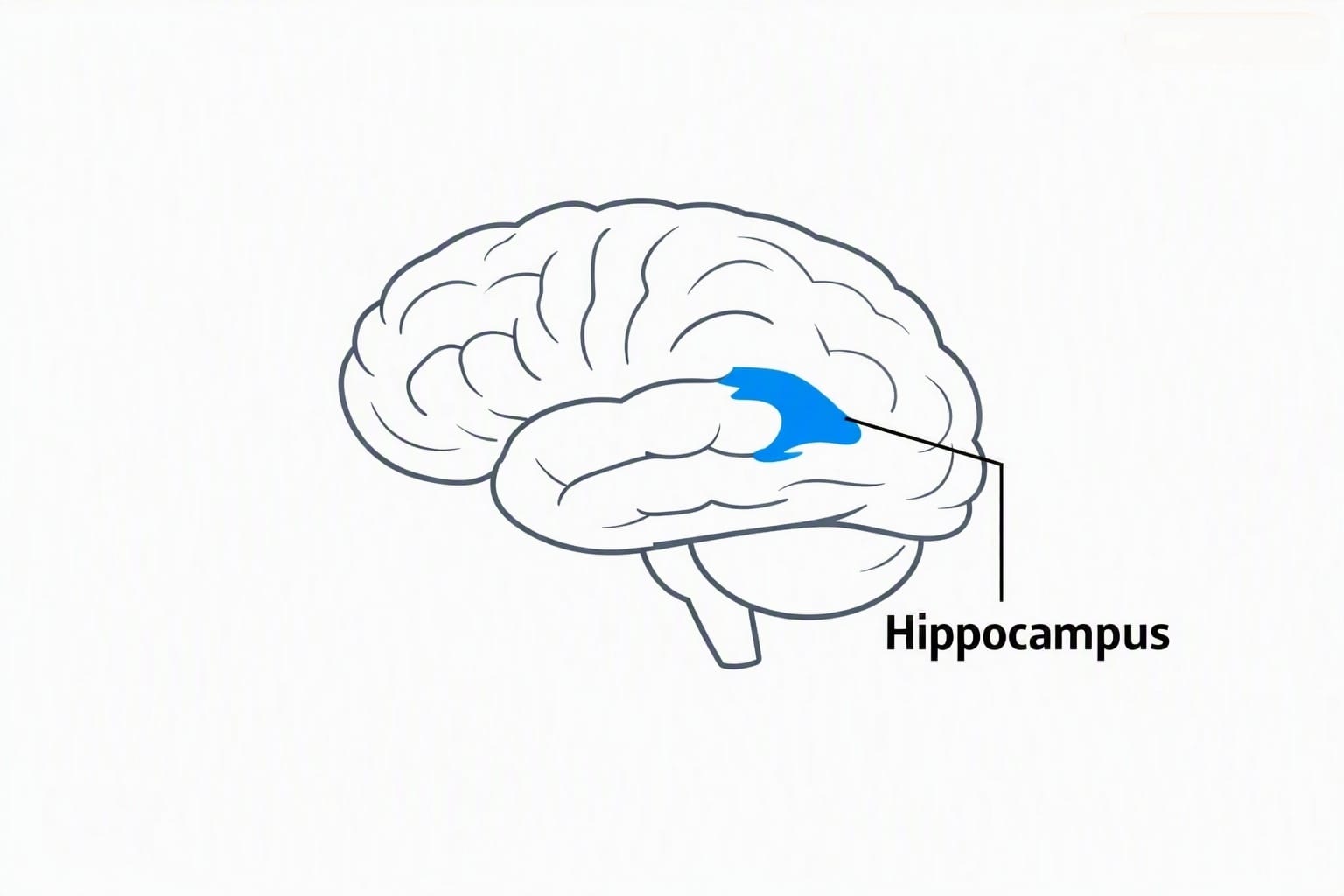
The hippocampus the brain’s memory and navigation hub.
Its main functions are simple but vital:
Forming memories — turning short-term experiences into long-term storage.
Spatial navigation — building mental maps and helping us find our way.
Linking emotions — connecting feelings to experiences, making them easier to recall.
Outsourcing Memory and Navigation
Convenience weakens natural recall and mapping.
When we outsource recalling information to search engines like Google, our brain’s memory circuits lose practice.
Instead of strengthening connections, they weaken — just like muscles that aren’t exercised.
When we outsource navigation to GPS like Waze, the hippocampus reduces its activity.
The brain no longer builds strong internal maps of places, because the device is doing the work.
Over time, we cannot find our way without relying on GPS (eg. Waze)
👉 Read on to see how this dependence reshapes the brain’s natural abilities.
Synaptic Pruning: Use It or Lose It
Unused connections are trimmed away.
The brain is energy-hungry, using about 20% of our body’s energy even though it makes up only 2% of our weight (click here to read more)
To stay efficient, it trims unused connections — a process called synaptic pruning (click here to read more)
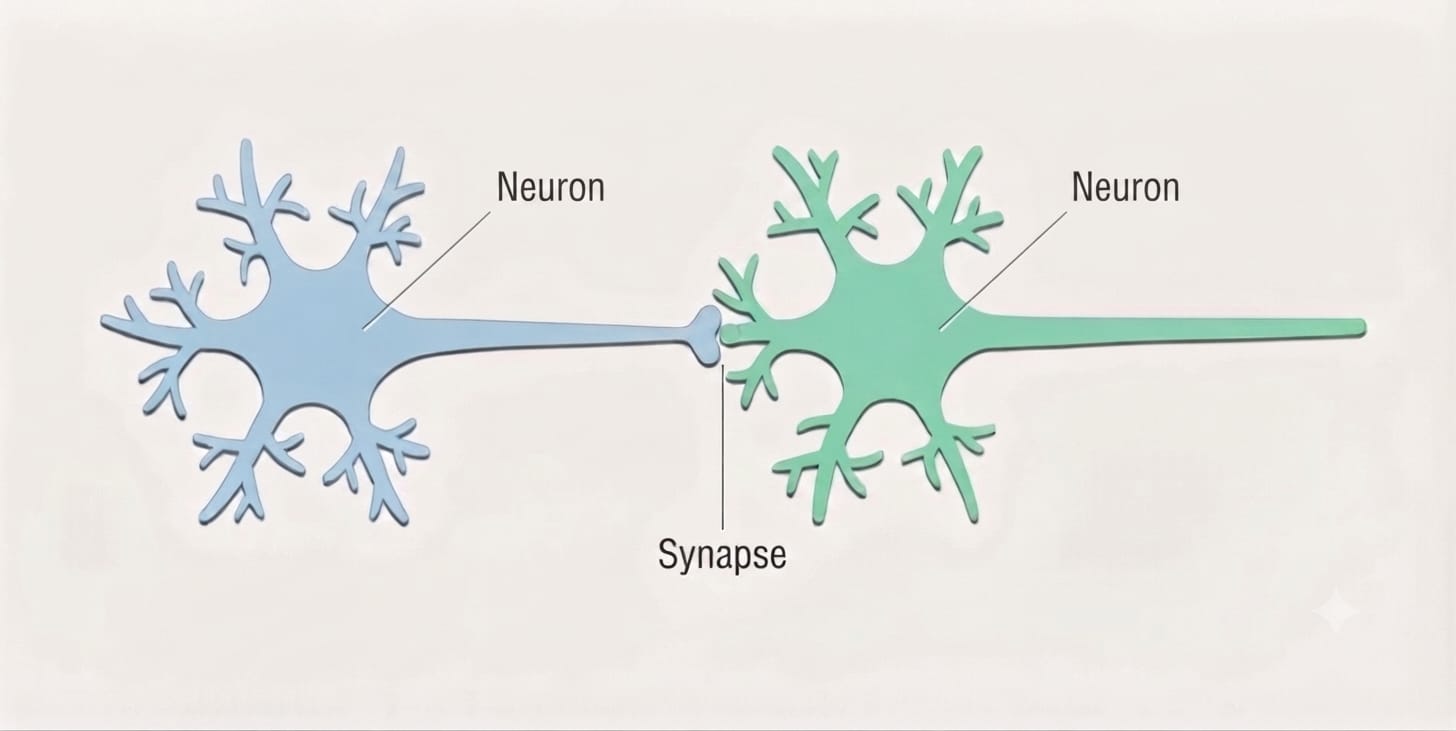
Synapses are the tiny gaps where one neuron (nerve cell) communicates with another. They act like bridges that allow signals to pass through the brain.
The more synapses (bridges) you have, the better your brain is at storing and connecting information.
For example, when you rely on search engines like Google for instant answers, the brain redirects energy toward quick recognition and retrieval tasks — like spotting familiar faces, recognising repeated patterns or rapidly identifying words and icons on a screen.
At the same time, if you stop memorising directions and always use GPS like Waze, the brain may reduce activity in location memory circuits, weakening your natural ability to navigate.
Microchips as External Synapses
Digital storage doesn’t grow with use.
Biological memory grows stronger through use.
Microchips, however, store information passively — they don’t adapt or relearn.
When we outsource memory, the brain skips the healthy cycle of forgetting and relearning.
Without this “exercise,” memory circuits lose strength.Just like muscles weaken without use, memory circuits weaken when they are not challenged.
Decline of Brain Mapping
GPS reduces the brain’s natural navigation skills.
The hippocampus contains place cells — neurons that help us build mental maps of our surroundings.
It’s the brain’s built‑in GPS, allowing us to recognise routes, recall landmarks and form mental maps of environments.
When GPS (eg. Waze) takes over navigation, these cells become less active.
As a result, the brain saves energy but loses its ability to build strong, connected maps of places.
Reclaiming Biological Memory
(a) Sensory recall training — close your eyes and reconstruct a familiar place using smell, sound, and texture cues.
(b) Manual problem solving — do math or logic puzzles on paper instead of digitally to engage working memory.
(c) Story reconstruction — retell a recent event in detail from memory, emphasizing sequence and emotion.
(d) Mental mapping — after arriving somewhere, sketch the route from memory to reinforce spatial encoding.
(f) Reverse navigation — walk or drive back the same path without guidance of GPS , recalling turns and landmarks in reverse order.
(g) Exploration walks — deliberately wander in a safe area, then challenge yourself to find the way back.
Kevin Wong (wongsweeonn@gmail.com) is a content creator under the Newswav Creator programme, where you get to express yourself, be a citizen journalist, and at the same time monetize your content & reach millions of users on Newswav. Log in to creator.newswav.com and become a Newswav Creator now!
The User Content (as defined on Newswav Terms of Use) above including the views expressed and media (pictures, videos, citations etc) were submitted & posted by the author. Newswav is solely an aggregation platform that hosts the User Content. If you have any questions about the content, copyright or other issues of the work, please contact creator@newswav.com.

