When Channel 4 announced The Experiment, it was met by a murmur of confused outrage. The premise – members of the public are invited into a progressive care home for disabled people, without being told its run under Nazi ideology – seemed to be ripped straight from the early-Noughties, when commissioners sought to shock first and answer their critics later. But are we really backsliding into mindless provocation? Or does The Experiment have something fresh and interesting to say about society’s callousness towards disabled people?
The concept is, in a way, simple. SegriLife is a spoof care facility, opening a new site in London. Members of the public have been invited to tour the premises and meet the disabled men and women who are being housed there. The twist, however, is that the conditions at SegriLife become increasingly dystopian. Residents are forced to wear uniforms and make cheap jewellery for the mass market, they’re confined to dorm rooms that look like military barracks, and they’re pushed in the direction of sterilisation and euthanasia. All of this has been taken straight from the playbook of 1930s Germany. “We can make this look really realistic,” says one of the show’s presenters, Mat Fraser, as they build this elaborate mousetrap.
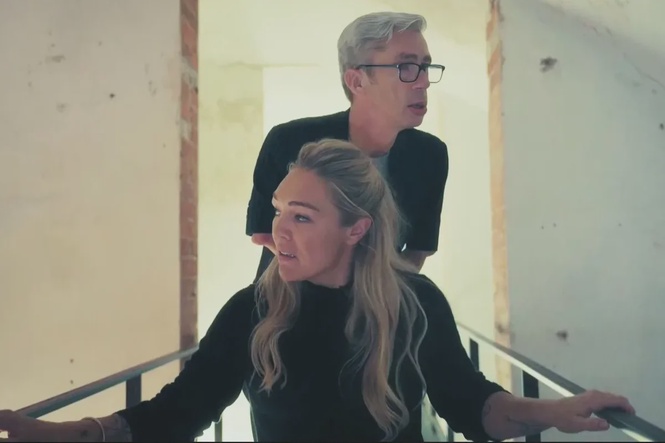
The Experiment is hosted by Fraser alongside Sophie Morgan, another experienced television personality. Fraser has thalidomide-induced phocomelia while Morgan is paraplegic, making this a rare primetime show that is fronted by two presenters with visible disabilities. Together, they visit Schloss Hartheim, a Renaissance castle that became a key part of the Nazi program, Aktion T4, which saw the systematic murder of more than a quarter of a million disabled people. It is an important and overlooked part of the history of Nazi Germany, and Fraser and Morgan make the story raw and pertinent. “Could we be in danger of repeating history?” Morgan asks, and that question is carried over into The Experiment’s central purpose.
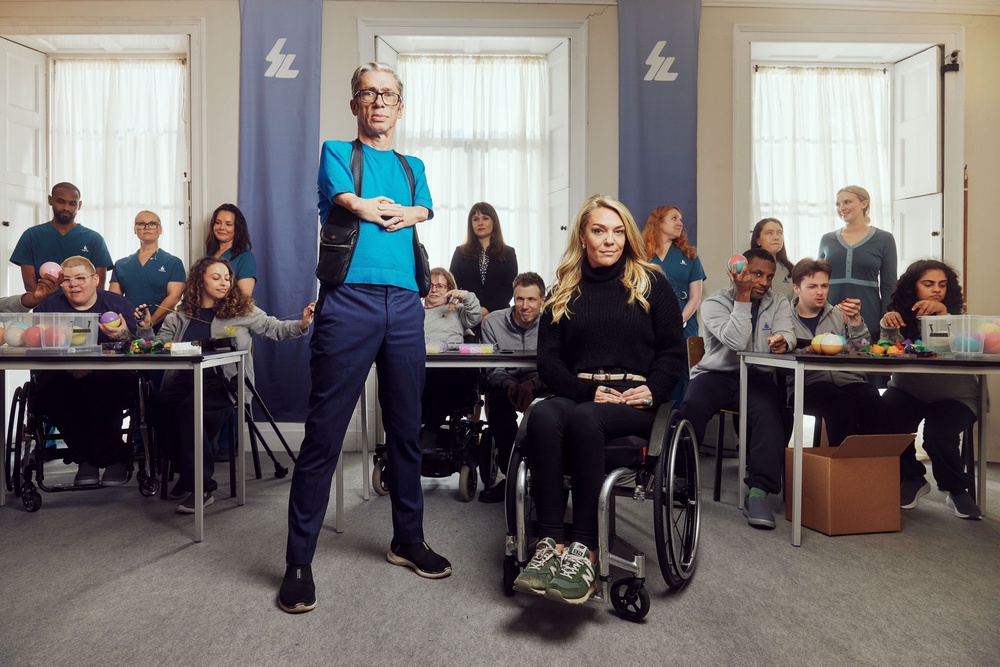
Unfortunately, that’s where things go off the rails somewhat. The ambition was clearly to create something like the Stanford Prison Experiment (itself the subject of a new Netflix reality show this week, probing America’s dark compliance), which exposes human weakness in the face of cruelty and evil. The set-up was undoubtedly influenced by some of Derren Brown’s psychological documentaries, like Pushed to the Edge, in which social coercion is used to convince a member of the public to commit murder, as well as the grand farce of Nathan Fielder. The SegriLife building is populated by actors with a range of physical and learning disabilities, branding that evokes the SS, and subtle callbacks to Nazi propaganda campaigns. When the public arrive, they are taken on a tightly scripted tour which exposes them to the horrors inside, while Fraser and Morgan watch, off-screen, to see how they react. “They’re just soaking it up,” Fraser commentates. “There’s no challenge.”
Part of the problem is that these people have been slightly stitched up. They’ve agreed (for whatever reason) to appear in a documentary about a new care home for disabled people with an ethos of providing all services, both living and professional, under a single roof. They rock up and nod politely as they are shown around. They’re ordinary people who probably don’t have much exposure to the world of care, and many seem totally incurious. The SegriLife facility houses people with a range of disabilities (for example, one man lost an arm in a motorcycle accident, while another has cerebral palsy) which makes it hard for the subjects to accurately surmise how independent each resident is, and how much of their autonomy is being eroded. But they are also being told, by the actors, that the facility is great. “Here is different and honestly better than the outside,” Jenny, who is leading a group discussion, tells their guests. Naturally, most of the outsiders just smile at her. It’s only when the more extreme elements of proceedings come into play (information about sterilisation draws a lot of confused looks) that the visitors consistently push back.
The Experiment is designed to test the theory that modern Britain is dangerously dehumanising disabled people. It draws a stark parallel with the trajectory of Nazi Germany and intends to offer a warning about our susceptibility to eugenicist rhetoric. But, to do that, it engages in quite a tawdry display of tricking the public, setting them up to look stupid or heartless, but not interrogating the belief systems or experiences that brought them there. Fraser says that they are staging the experiment to see if the “British public can be persuaded that disabled people should be segregated”, but the deployment of such persuasion feels rather beside the point. Sure, some people will buy into Nazi talking points, or fail to even notice them, but what does that really tell us about the insidious reality of the present day? Should we be worrying, so literally, about repeating the specific mistakes of the past, when the struggles of the present moment feel so urgent?
The show is also thin. I counted just 14 members of the public being focus-grouped in The Experiment, which isn’t enough to draw any real conclusions. It also gives a frustratingly vapid and prejudicial view of the Assisted Dying Bill, which is an important piece of legislation, whether you support or oppose it. But Fraser and Morgan, alongside the show’s director, Richard Butchins, are clearly hugely passionate about this issue and are trying to tell a complicated story, in a grabby, thought-provoking way. So, while this isn’t the distasteful mess that many will have feared, it’s a show that feels too convoluted and manipulative to be truly impactful.
Read MoreChannel 4 to recreate Nazi conditions for disabled people in new TV experiment