

Have you ever noticed that once you decide on a specific car model, it seems to appear everywhere? Or that when you pick a particular color for your festive outfit, suddenly everyone else seems to be wearing it too? This intriguing experience is known as the Baader-Meinhof phenomenon, or frequency illusion, and it’s a fun reminder of how our brains work.
Understanding the Frequency Illusion
When we become interested in something—whether it’s a car, a color, or any other detail—our minds start to pay extra attention to it. This selective attention means that even if the object or idea isn’t actually more common, we end up noticing it more often. It’s a natural part of how we process information and is closely linked to confirmation bias: once we expect to see something, we’re more likely to believe it’s everywhere, even if statistics might say otherwise.
The Role of Media and Emotions
External influences, like media, also play a big part in shaping our perceptions. For example, if the media hypes up a “viral” color for festive wear, and you already have that color in mind, it reinforces your belief that it’s the most popular choice. This is where the availability heuristic comes into play: emotionally charged or widely reported information sticks in our minds, making us overestimate how common or important it really is.
A relatable example is our perception of aviation safety. Even though air travel is statistically much safer than driving—with technological advances reducing accident risks over time—the media’s intense coverage of rare, dramatic plane accidents can make flying seem riskier than it really is. It’s an emotional response that can cloud our judgment, despite the solid data.
Learning from the Data: Insights from Malaysia
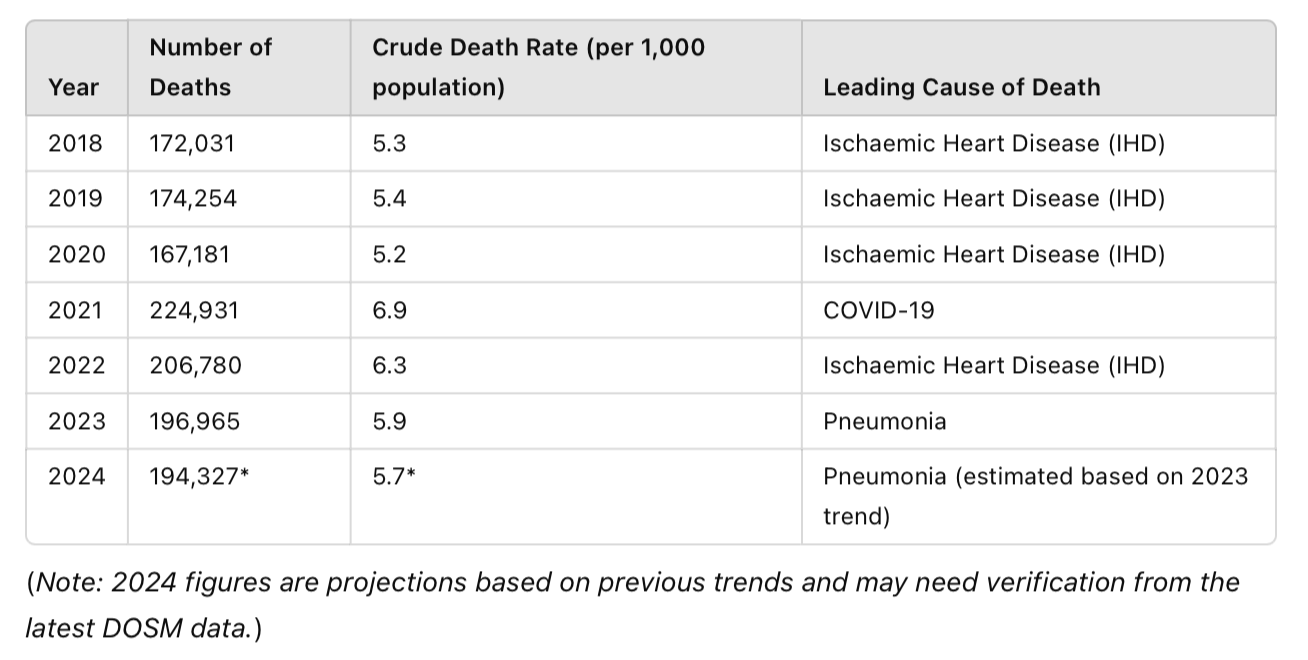
To help balance our natural biases, it’s important to check our impressions against reliable data. For instance, a look at official statistics from the Department of Statistics Malaysia reveals some surprising trends. Recent figures show that the overall death rate has actually declined in the past one to two years compared to the spike in 2021 during the COVID-19 pandemic. Moreover, while many assume heart issues are the leading cause of sudden death, the 2023 data indicates that pneumonia has taken the top spot. These findings remind us that our gut feelings—often shaped by media and personal experiences—might not always align with the facts.
Bringing It All Together
It’s perfectly normal for our minds to focus on what interests us, and it’s equally natural to be influenced by media and our emotions. However, when we share information with others, a friendly yet critical approach is key. By grounding our observations in solid statistics and reputable data, we can avoid misunderstandings and ensure our conclusions are both clear and accurate.
In essence, while our brains are wired to notice what we care about, taking a moment to double-check with reliable data can lead to a more balanced view of the world. This thoughtful approach not only helps us understand everyday phenomena better but also encourages more informed and friendly conversations in our communities.
Dr. Fahmi Hassan is a content creator under the Newswav Creator programme, where you get to express yourself, be a citizen journalist, and at the same time monetize your content & reach millions of users on Newswav. Log in to creator.newswav.com and become a Newswav Creator now!
The User Content (as defined on Newswav Terms of Use) above including the views expressed and media (pictures, videos, citations etc) were submitted & posted by the author. Newswav is solely an aggregation platform that hosts the User Content. If you have any questions about the content, copyright or other issues of the work, please contact Newswav.