
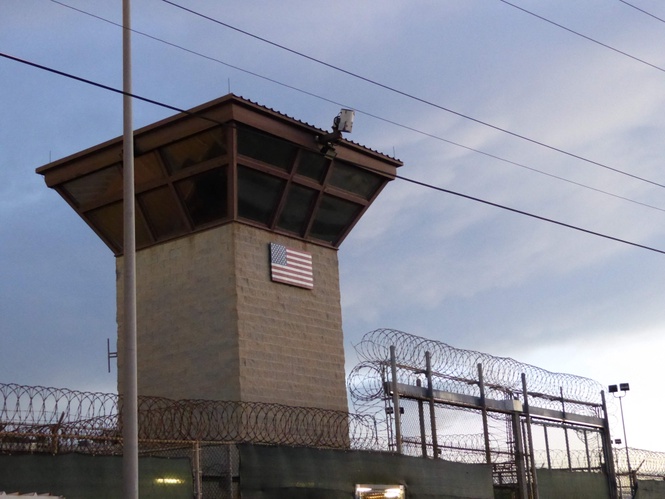
NOVEMBER 17 — The world is increasingly divided between conflicts that erupt into open warfare and those that remain frozen for years, sometimes decades. Yet the distinction between the two is often misleading. A frozen conflict is not necessarily a peaceful conflict. Nor is an endemic conflict one that the international community can afford to ignore. Both can produce prisoners of war, civilian detainees, missing persons, displaced families and generations of people who have never experienced genuine peace.
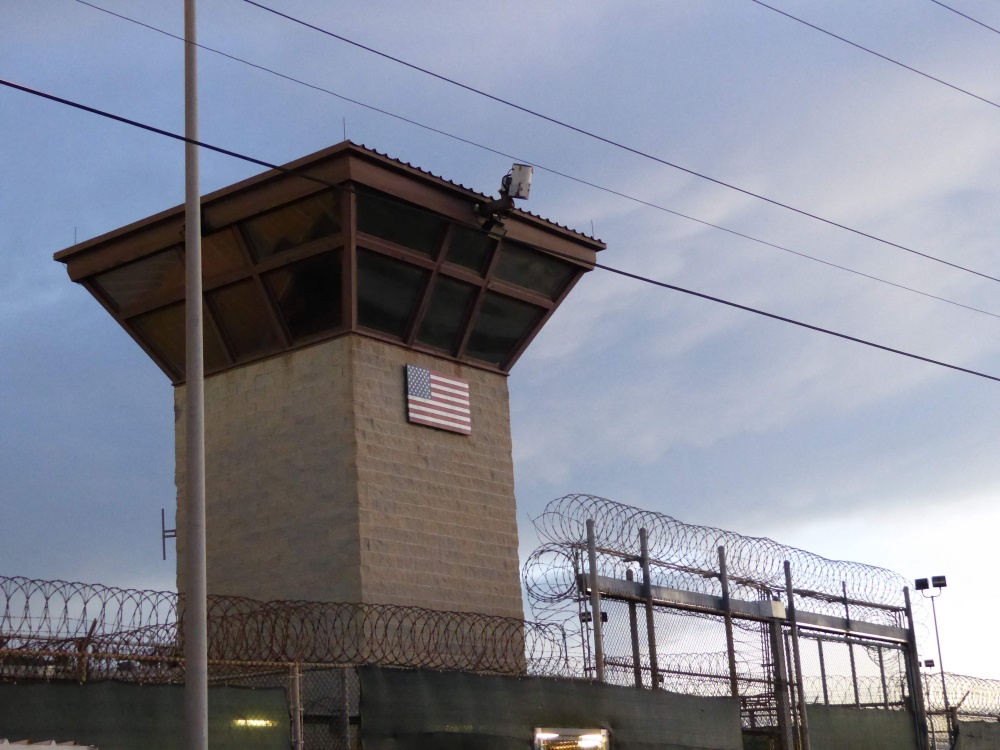 From Ukraine and Russia to the Korean Peninsula, from Myanmar to the Middle East, the international community must recognise a fundamental principle: the Geneva Conventions cannot be allowed to become dormant simply because a conflict has reached a military stalemate. Indeed, the longer a conflict persists, the more important international humanitarian law becomes. — AFP pic
From Ukraine and Russia to the Korean Peninsula, from Myanmar to the Middle East, the international community must recognise a fundamental principle: the Geneva Conventions cannot be allowed to become dormant simply because a conflict has reached a military stalemate. Indeed, the longer a conflict persists, the more important international humanitarian law becomes.
The four Geneva Conventions of 1949, together with their applicable Additional Protocols and customary international humanitarian law, were designed to ensure that even war has limits. They protect wounded soldiers, prisoners of war and civilians. They prohibit torture, cruel treatment, hostage-taking and other serious violations of human dignity. Yet these protections are too often weakened by political calculations, disputes over legal classifications and the reluctance of belligerents to acknowledge their obligations. This must change.
Frozen conflicts cannot mean frozen humanitarian obligations
The Korean War offers an important historical lesson. Although an armistice was signed in July 1953, no comprehensive peace treaty has replaced it. The Korean Peninsula remains divided, with the military confrontation continuing to shape Northeast Asian security. The exchange and repatriation of prisoners were among the most difficult issues during the armistice negotiations. Indeed, disagreements over whether prisoners should be forcibly repatriated contributed to the prolonged negotiations. The lesson is clear. Even when governments cannot agree on the political future of a territory, they must still find ways to address the humanitarian consequences of war.
The same principle applies to the Russia-Ukraine war. Regardless of the military balance or the eventual territorial settlement, prisoners of war must be treated humanely, protected from torture and allowed the safeguards prescribed by international humanitarian law. Exchanges of prisoners can provide an essential humanitarian opening even when broader peace negotiations have stalled.
However, exchanges should never be confused with the totality of the obligations imposed by the Geneva Conventions. Prisoners of war are entitled to humane treatment regardless of whether their governments agree to reciprocal exchanges. Their fundamental rights are not bargaining chips. This distinction is essential if international humanitarian law is to retain its moral and legal authority.
The Middle East requires more than temporary ceasefires
The Middle East demonstrates how easily humanitarian obligations can become entangled with strategic rivalry. The conflicts involving Israel and Palestine, as well as the wider confrontation involving Iran and the United States, have shown the dangers of treating humanitarian arrangements as temporary political concessions.
Civilian hostages must be released. Prisoners of war must receive the protections to which they are entitled. Civilian detainees must be treated according to the applicable rules of international humanitarian law and human rights law. These categories are legally distinct, and they should not be casually conflated. Nevertheless, the humanitarian imperative remains the same. No individual should be subjected to torture, enforced disappearance, humiliation or collective punishment. Nor should access to food, water, medicine and essential humanitarian assistance be manipulated as an instrument of political coercion. The difficulty is that prisoner exchanges are often negotiated only after extensive military escalation. By then, mistrust has deepened and political leaders may fear that humanitarian concessions will be interpreted domestically as weakness.
This approach is fundamentally mistaken. The willingness to exchange prisoners, release hostages and clarify the fate of missing persons should be understood as evidence of responsible statecraft, not military surrender. It is precisely when hostility is greatest that humanitarian diplomacy becomes indispensable.
Myanmar and Aseanmust not be overlooked
Closer to home, Myanmar presents a different but equally urgent challenge. Its prolonged internal conflict has produced political prisoners, civilian detainees, displaced populations and serious allegations of violations of international humanitarian law. The fragmentation of armed authority makes the protection and release of detainees especially complicated. Myanmar is not simply confronting a conventional war between two identifiable states. It involves multiple armed organizations, competing political authorities and areas where civilian protection is precarious.
In such circumstances, the Geneva Conventions remain relevant, particularly through Common Article 3, which establishes minimum humanitarian protections in non-international armed conflicts. Common Article 3 also encourages special agreements between parties to bring additional humanitarian protections into effect.
This provides an important opening for Asean. Under Singapore's chairmanship of Asean in 2027, the regional organization should seek to institutionalize stronger humanitarian engagement with Myanmar. Asean cannot compel every armed organization to accept a comprehensive peace agreement. But it can promote humanitarian dialogue, facilitate the release of detainees, support family reunification and encourage neutral humanitarian access.
These objectives should not be postponed until a final political settlement becomes possible. Indeed, humanitarian progress can create the conditions for eventual political negotiations. This requires what may be called the Asean Will: the collective determination to translate regional diplomacy into measurable humanitarian outcomes. Asean must demonstrate that its commitment to non-interference does not prevent it from advocating the observance of universally recognized humanitarian obligations.
Prisoner exchanges must become more systematic
The international community has traditionally treated prisoner exchanges as exceptional arrangements, often negotiated through intermediaries. This approach has achieved results, but it remains too dependent on political circumstances. A more systematic international framework is needed.
First, parties to armed conflicts should maintain reliable records of prisoners, detainees and missing persons, subject to appropriate safeguards. Second, the International Committee of the Red Cross (ICRC) must be given the access and cooperation required under applicable international humanitarian law. Third, neutral mediators should be encouraged to establish continuing humanitarian communication channels even when formal diplomatic relations have collapsed. Fourth, the exchange or release of prisoners should be separated, as far as possible, from unrelated political demands. Fifth, the fate of missing persons and the dignified return of human remains must remain priorities long after active hostilities have ceased.
None of these measures requires the parties to abandon their political or territorial positions. They require only the recognition that human dignity cannot be suspended indefinitely. It is equally important to distinguish between international and non-international armed conflicts. The Third Geneva Convention provides detailed rules concerning prisoners of war in international armed conflicts, including their release and repatriation after the cessation of active hostilities. In non-international armed conflicts, Common Article 3 and other applicable rules establish essential protections, but do not automatically confer prisoner-of-war status. A stronger humanitarian framework must respect these legal differences while encouraging negotiated releases and exchanges wherever they can alleviate suffering.
The United Nations must reinforce compliance
The United Nations should play a more consistent role in keeping humanitarian obligations on the international agenda. The UN Security Council is frequently immobilized by geopolitical rivalry. Permanent members can prevent decisive collective action even when humanitarian suffering is extensive. Yet the inability to reach agreement on a comprehensive political settlement should not automatically prevent cooperation on prisoners, missing persons and humanitarian access. The UN General Assembly, relevant humanitarian agencies and regional organizations can help sustain diplomatic attention.
The ICRC, whose neutrality and independence are central to its humanitarian mandate, must not be turned into an instrument of geopolitical competition. Its work depends on the confidence of parties to armed conflicts. At the same time, governments should be pressed to comply with their existing obligations, including the prohibition of torture and the requirement to investigate and prosecute grave breaches where applicable. International humanitarian law is not merely a statement of good intentions. It creates binding legal duties. The challenge is to ensure that these duties are observed even when the political incentives for compliance appear weak.
Islam, Confucianism and the ethics of restraint
The moral foundations of humanitarian restraint are not confined to Western legal traditions. Islamic teachings on warfare emphasize limits on violence, the protection of non-combatants and the humane treatment of captives (documented extensively by institutes such as the Organization of Islamic Cooperation). Confucian political philosophy similarly places importance on benevolence, moral responsibility and the ethical conduct of rulers. Neither tradition regards the unrestricted exercise of force as the highest expression of legitimate authority. The ancient Greek historian Thucydides demonstrated how fear, power and ambition can overwhelm justice when political communities abandon restraint. Yet the history of civilization also shows that political authority cannot survive indefinitely on coercion alone.
The Geneva Conventions represent a modern legal expression of a much older ethical proposition: even enemies remain human beings. This principle should transcend religious, cultural and geopolitical divisions. It is especially relevant in an era when major powers increasingly measure security through military expenditure, technological superiority and the capacity to inflict destruction. Military power may deter aggression. But it cannot, by itself, resolve the humanitarian consequences of prolonged conflict.
From humanitarian diplomacy to durable peace
Malaysia has an important role to play. As a country with longstanding diplomatic relationships across the Muslim world, ASEAN, China, Japan, Europe and the United States, Malaysia can advocate stronger international cooperation on humanitarian law. It should encourage the normalization of prisoner exchanges, the protection of detainees and the clarification of missing-person cases as essential components of conflict management. This would be consistent with Malaysia's support for multilateralism and a rules-based international order.
More importantly, Malaysia should work with ASEAN, the United Nations and the ICRC to promote practical humanitarian arrangements that can survive changes in political leadership and military circumstances. Such initiatives must be carefully designed. No government should be allowed to detain civilians unlawfully merely to obtain concessions through an exchange. Nor should the release of hostages be treated as a legitimate bargaining entitlement. The objective must always be the protection of individuals, not the creation of incentives for further detention or hostage-taking.
There is also a need to distinguish between a ceasefire, an armistice and a comprehensive peace agreement. A ceasefire may temporarily suspend hostilities. An armistice may establish a more durable military arrangement. But neither necessarily resolves the political causes of conflict. Humanitarian obligations must continue throughout these different stages. Indeed, they may become even more important when political negotiations remain deadlocked.
Peace begins with the treatment of the captive
The international community has spent enormous resources preparing for war, maintaining deterrence and developing increasingly sophisticated weapons. It has devoted comparatively insufficient political attention to ensuring that the humanitarian protections already established under international law are consistently implemented. This imbalance must be corrected. The Geneva Conventions do not need to be reinvented. Their core protections are already clear. What needs to be strengthened is their implementation, enforcement and practical application in conflicts that remain frozen or endemic.
Prisoner exchanges, where legally appropriate, should become regular humanitarian confidence-building measures rather than rare diplomatic achievements. The release of civilian hostages and unlawfully detained persons should be pursued as an obligation, not a concession. The fate of missing persons must never be forgotten. Families should not have to wait decades to discover whether their loved ones are alive or dead. Above all, the world must reject the dangerous assumption that humanitarian obligations can be suspended until political leaders agree on peace.
The Geneva Conventions must operate most effectively precisely when peace is absent. That is their fundamental purpose. A world increasingly accustomed to perpetual confrontation must rediscover the importance of humanitarian restraint. For even when wars cannot immediately be ended, suffering can still be reduced. Even when borders remain disputed, prisoners can be treated humanely. Even when governments refuse to recognize one another, humanitarian communication can continue. And even when peace appears distant, the dignity of human life must remain non-negotiable. The true measure of civilization is not merely how a state treats its allies, but how it treats those who have fallen into its hands as enemies. That is why the Geneva Conventions and the mechanisms for prisoner exchanges must be strengthened before frozen conflicts become permanent humanitarian tragedies.
*Phar Kim Beng, PhD, is Professor of Asean Studies at the International Islamic University Malaysia and Director of the Institute of International and Asean Studies (IINTAS).
Shahiran bin Kamaruzaman is an independent legal researcher.
** This is the personal opinion of the writer or publication and does not necessarily represent the views of Malay Mail.