WHEN defense diplomacy becomes a theater of geopolitical rivalry, can Southeast Asia remain the architect of its own security, or will Asean centrality become little more than a ceremonial declaration?
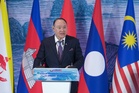
The 20th Asean Defense Ministers’ Meeting (ADMM) and the 13th ADMM-Plus were held in Cebu on Oct. 28 and 29, 2026, ostensibly aimed to strengthen regional security cooperation, preserve peace and reaffirm Asean centrality. Yet beneath the carefully crafted diplomatic language emerged a more consequential geopolitical question: Can the Asean remain the principal architect of Southeast Asia’s regional security order while its member states deepen overlapping, and sometimes competing, military relationships with major powers, particularly China and the United States?
Cebu exposed the growing contradiction between the Asean’s declared commitment to strategic autonomy and the expanding military alignments increasingly shaping the region. The meetings produced familiar assurances of peaceful dispute settlement, respect for sovereignty, noninterference and adherence to international law. More significantly, the Manila Joint Declaration reaffirmed Asean centrality, the Treaty of Amity and Cooperation (TAC), the Asean Outlook on the Indo-Pacific and the Zone of Peace, Freedom and Neutrality (Zopfan).
These principles were not incidental diplomatic decorations. They represented the Asean’s collective reaffirmation that Southeast Asia must not become an exclusive geopolitical sphere of influence for any major power. Yet while the Asean spoke the language of neutrality and inclusiveness, the military and diplomatic developments surrounding the meetings reflected an increasingly competitive security environment.
Hegseth proposal: Cooperation or strategic consolidation?
One of Cebu’s most consequential developments was US Defense Secretary Pete Hegseth’s proposal for a new US-Asean Framework for Defense Cooperation. Hegseth advocated sustained military engagement, emphasizing maritime domain awareness, naval coordination, interoperability and practical defense cooperation. He described Washington’s regional approach as “strong, quiet and clear,” arguing that credible military capabilities could deter coercion without unnecessarily escalating tensions. The proposal was presented as a practical framework for the coming years, particularly as Singapore assumes the Asean’s chairmanship in 2027.
Hegseth proposed the framework; the Asean did not collectively adopt it as a binding defense arrangement in Cebu. From Washington’s perspective, stronger military cooperation reassures regional partners and enhances deterrence. For Southeast Asian states facing maritime security concerns, such cooperation can provide surveillance capabilities, training and greater operational capacity. Nevertheless, the geopolitical implications deserve scrutiny.
Military interoperability is never merely technical. It affects operational planning, intelligence-sharing, logistical arrangements and potentially the strategic choices available during a crisis.
The critical question is whether the Asean’s proposed cooperation with Washington will reinforce its institutional autonomy or gradually subordinate regional defense priorities to a security architecture principally shaped by US strategic interests.
The distinction between cooperation with a major power and strategic dependence upon one is fundamental. The Asean was never intended to become an Asian NATO. Its institutions should not become convenient platforms for legitimizing the strategic preferences of whichever external power has the greatest military capabilities.
Philippines-China confrontation
Bilateral tensions between the Philippines and China enter the Asean arena. Perhaps, the most politically revealing controversy concerned China’s downgraded participation in Cebu. Beijing sent its defense attaché rather than Defense Minister Dong Jun. This highlights the ongoing political and diplomatic spat, the deterioration in bilateral relations between the Philippines and China, and the difficulty of insulating intergovernmental multilateral institutions like the Asean from national political confrontations. The danger emerges when national grievances begin influencing perceptions of institutional neutrality.
In the case of the South China Sea dispute, the Philippines has legitimate sovereign rights claims under the United Nations Convention on the Law of the Sea, and the 2016 South China Sea arbitral award exists despite China’s rejection. Yet defending those rights does not eliminate the need to maintain functional diplomatic and military communication with Beijing. Indeed, the more contentious the maritime dispute becomes, the more indispensable such channels are. Defense diplomacy prevents misunderstandings from becoming confrontations and avoids creating another arena for escalation.
Asean centrality vs proliferation of military groupings
Another consequential development was the separate defense engagement involving the Philippines, the US, Japan and Australia — “the squad.” These countries have been strengthening military exercises, operational coordination and defense cooperation, reflecting growing concerns over regional security.
Separately, Washington and Tokyo announced arrangements to expand joint missile production, reinforcing the broader trend toward deeper alliance integration and defense industrial cooperation. None of these arrangements automatically violates Asean principles. Member-states possess the sovereign right to develop defense partnerships.
The contradiction emerges when an increasingly dense network of external military alignments begins exercising greater practical influence over Southeast Asian security than the Asean’s own multilateral institutions.
Asean centrality cannot survive merely because the Asean hosts meetings. It must also retain meaningful influence over the security decisions shaping its region. Otherwise, the organization risks becoming the diplomatic venue where strategic decisions made elsewhere are subsequently explained, justified or ceremonially acknowledged. This is the distinction between institutional visibility and genuine strategic agency.
For the Asean, the challenge is not preventing members from maintaining external partnerships. That would be unrealistic. Rather, it is ensuring that such partnerships do not displace Asean-led diplomacy, fragment regional consensus or transform Southeast Asia into an extension of major-power strategic competition.
Note that Asean neutrality is not passivity, and autonomy is not isolation. The principles embodied in Zopfan and the TAC emphasize the peaceful management of interstate relations, sovereign equality, noninterference and restraint. Their contemporary significance lies in preventing Southeast Asian states from becoming instruments of rival powers’ geopolitical agendas.
Furthermore, Asean members must resist the assumption that regional stability can be achieved exclusively through military deterrence. Deterrence may discourage certain forms of coercion, but without sustained diplomacy, credible crisis-management mechanisms and political restraint, expanding military capabilities can create additional risks of miscalculation.
The objective must be security through a careful combination of diplomacy, international law, defensive preparedness and strategic restraint.
Conclusion
For the Asean, it must lead, not merely convene. For the Philippines, the summit highlighted a fundamental foreign-policy dilemma. Manila’s expanding defense cooperation with Washington, Tokyo and Canberra may improve certain military capabilities and strengthen its ability to respond to security challenges. But it also raises important questions about strategic dependence, escalation management, and the country’s ability to maintain independent foreign and defense policy choices.
Does every additional military arrangement strengthen Philippine national security, or can some commitments create new vulnerabilities? Are the country’s defense partnerships calibrated primarily to Philippine requirements, or increasingly shaped by its partners’ broader geopolitical priorities and strategic interests? And, perhaps most critically, can Manila defend its maritime rights without letting a bilateral confrontation with China compromise its wider diplomatic and economic interests?
These questions require serious national debate, not simplistic accusations that diplomacy signifies weakness or that military diplomacy and cooperation necessarily constitute subservience.
An independent foreign policy requires the capacity to disagree and cooperate with the US and China, and engage both without surrendering Philippine strategic agency. It also requires recognizing that confrontation carries costs beyond defense establishments: economic uncertainty, disrupted exchanges, heightened maritime risks and potentially diminished diplomatic flexibility. For the Philippines, strategic judgment should be measured not by rhetorical militancy but by its ability to protect national interests and the welfare of its people while preventing unnecessary conflict and escalation.