
UK households should keep small supplies of cash, bottled water and tinned food at home in case of emergency or war, the Defence Secretary has warned.
Wes Streeting said Britain faces a growing threat of being disrupted by fires, floods, and enemy attacks, including cyber warfare.
He called for a "whole society approach" to strengthen national resilience, though he insisted people should remain "alert not alarmed" regarding potential risks.
Speaking to The Sun ahead of the Labour Party conference, he said: "It’s just a simple ask of people.
"Do they have what they need indoors, should they lose access to their online banking for a period? Should they have a power cut?”

It comes as the government releases a list of supplies for an emergency kit they say everyone should keep at home.
Here we look at the key items you should stock up on in case disaster strikes.
What should people stockpile?
Wes Streeting has advised the British public there are certain items they should store for emergencies.
He said: "These are basic things, and of course, you know, a lot of people just have that in their cupboard naturally.
"It’s having some cash at home, having a supply of bottled water indoors, having some tinned goods that you can access if your electric goes and you’re not able to cook on the hob or in the microwave.”
Nutritionists and “preppers” on social media also say people should consider intake of carbohydrates and protein, and so suggest items such as oats, rice and pasta be included in any stockpile.
Kidney beans, peanut butter and tinned fish provide high levels of protein.

What should I keep in my emergency kit?
The government says people should put together an emergency kit that includes key provisions you and your household would need during a short-term incident lasting several days, such as a power failure or a disruption to your water supply.
Recommended emergency kit supplies include:
- A battery or wind-up torch – torches are safer than candles.
- A portable power bank for charging your mobile phone.
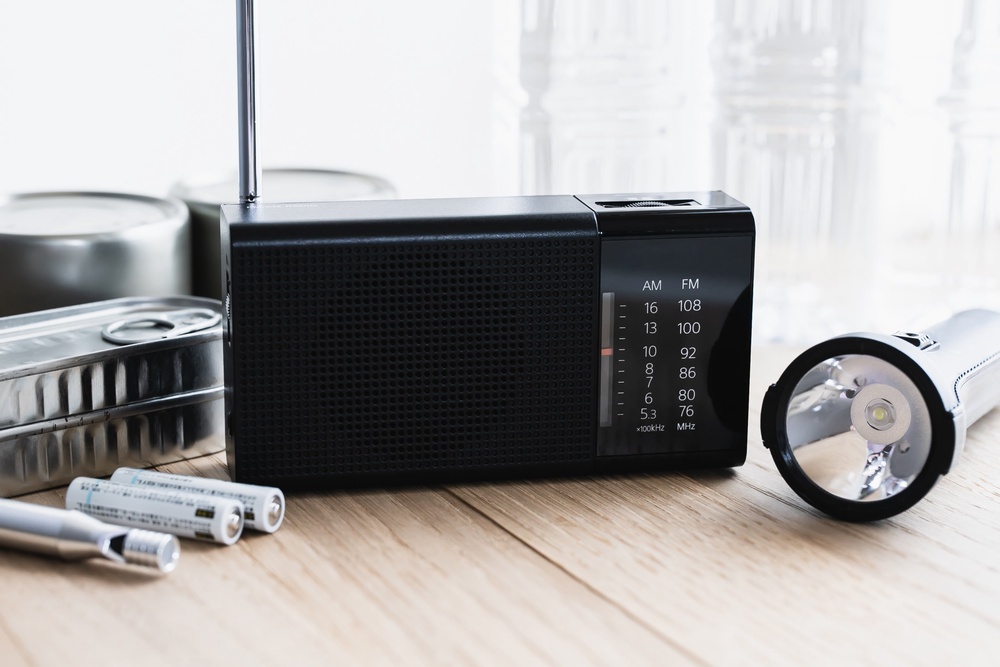
- A battery or wind-up radio to get updates during a power cut – a car radio can be used, however in severe weather it might be safer to stay inside.
- Spare batteries for torches and radio and a backup battery for any medical equipment you rely on.
- A first aid kit (or some first aid items) including items such as waterproof plasters, bandages, a thermometer, antiseptic, eyewash solution, sterile dressings and gloves, medical tape for dressings, and tweezers.
- Hand sanitiser and wet wipes for hygiene purposes when the water is off.
- Bottled water – there is no standard figure for this as emergencies can vary in duration and people use different amounts. A minimum of 2.5-3 litres of drinking water per person per day is recommended by the World Health Organisation for survival. 10 litres per person per day will make you more comfortable by also providing for basic cooking and hygiene needs. Additional water might be needed to make up baby formula, for medical devices and for pets.
- Non-perishable food that doesn’t need cooking, such as ready-to-eat tinned meat, fruit or vegetables (and a tin opener). As with water, how much you need will vary based on your own circumstances. Don’t forget food for pets.
- Baby supplies such as nappies and baby formula – ready made or ‘ready-to-feed’ formula is best as you may not be able to boil water or sterilise bottles.
Rather than buying all the items at once, you could just add to your emergency kit when you are able and build it up over time. You should try to store these items together in a single location in your home, ideally in a spot that remains simple to locate if the lights are off.
Maintaining a supply of prescription medication to cover several days is also essential. For those who depend on any medical devices or equipment, ensure that printed physical copies of all operating instructions are kept on hand. Furthermore, any available back-up batteries ought to be kept fully charged at all times.
What threats is the government worried about?
Andy Burnham’s government is focusing on national resilience in the wake of threats from Russia.
The government is also concerned following the record-breaking heatwaves the UK has experienced this summer, plunging the country into drought and causing numerous wildfires.
According to the FT, the government is accelerating work on its “war book” – a manual for the defence of the nation against external threats – as well as a social media campaign with advice to help people to deal with the impacts of extreme weather.
It also updated its national risk register last month, with the risk of interference in the UK’s democratic process added to it.

The national risk register is the government’s assessment of the most significant risks facing the UK.
It is a planning tool designed to help professionals prepare for risks and is not intended to be a prediction of future events.
Vladimir Putin’s government recenty warned that British facilities in Ukraine will be considered “legitimate targets” if they are used to support long-range strikes against Russia.
The Independent also reported that rogue drones are targeting Britain’s military bases almost daily, leaving the UK vulnerable to growing threats from Russia and Iran.
Some 340 security incidents involving drones were reported at or near Ministry of Defence sites in the year to August 2026, data obtained under freedom of information laws show. In 2025, there were a total of 250 incidents recorded – double the 126 recorded the year before.

Why are the heatwaves a concern?
Analysts have warned extreme heat and ongoing droughts are putting Britain at risk of its “worst food security crisis in decades”.
The knock-on impact of five back-to-back heatwaves and prolonged dry conditions could destroy farmers’ harvests, leading to food shortages later this year and increasing reliance on foreign imports, according to analysts from the investment bank Shore Capital.
The National Farmers Union (NFU) warned the situation is “increasingly concerning” and that dairy farmers are already using winter feed because grass has stopped growing.
Read MoreBurnham is popular with young people — but more would vote Green, polling reveals
Doctor begs women to attend smear tests: ‘Cervical cancer is preventable’
Three migrants, including a child, 'crushed to death' trying to cross English Channel
British father, 65, vanishes while travelling across France
Cause of Merseyside fire that killed 'devoted' mother and three children revealed