
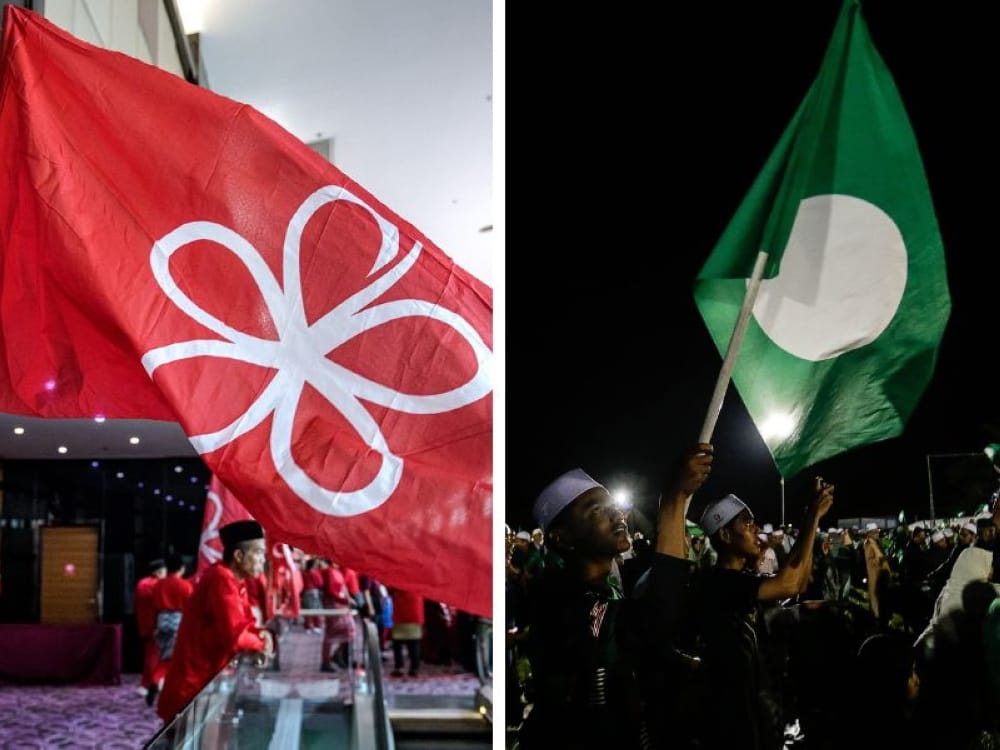
The air inside the closed-door hall in Kuala Terengganu on May 24, 2026, was undoubtedly heavy, thick with the kind of tension that alters the course of a nation’s history. For months, whispers of friction had rippled through the corridors of Malaysia’s federal opposition bloc, but what transpired over the weekend transformed vague murmurs into a glaring political reality. Driven by a sudden, short-notice summons, the highest echelons of the Pan-Malaysian Islamic Party (PAS) including its Central Committee and influential Political Bureau gathered for an emergency conclave. The sole, explosive agenda on the table: re-evaluating the party's future within the Perikatan Nasional (PN) coalition and deciding whether its marriage of convenience with Tan Sri Muhyiddin Yassin’s Parti Pribumi Bersatu Malaysia (Bersatu) has finally hit a dead end.
For the ordinary Malaysian scrolling through their newsfeeds, the emergency meeting represents far more than standard intra-party administration. It marks a foundational tremor in the country's fragile socio-political landscape. The "Green Wave" the formidable socio-religious movement that swept the conservative Malay heartland during the 15th General Election (GE15) and subsequent state polls has arrived at an existential crossroads. What happens when the machinery that drove this wave decides it no longer needs its co-pilot? As PAS President Tan Sri Abdul Hadi Awang signals that his party's legendary patience has strict limits, the rest of the country watches a high-stakes game of political chess that could fundamentally redefine the path toward the 16th General Election (GE16).
The Anatomy of an Emergency: Why PAS Blew the Whistle
The emergency meeting was not a sudden burst of spontaneous anger; rather, it was the culmination of long-simmering institutional grievances. According to reports from Berita Harian, carried by Scoop.my, the session kicked off at 11:00 AM on Sunday, under the strict chairmanship of Abdul Hadi Awang. The sheer gravity of the meeting was underscored by the immediate presence of PAS heavyweights, including Deputy President Datuk Seri Tuan Ibrahim Tuan Man, Secretary-General Datuk Seri Takiyuddin Hassan, and Vice-President Datuk Idris Ahmad.
The spark that lit this fuse was Abdul Hadi Awang's remarkably frank and public admission that PAS is actively reviewing its partnership within PN. The Marang Member of Parliament openly lamented a series of "unpleasant" and unilateral actions taken by Bersatu, which PAS leadership argues directly violated the foundational spirit of camaraderie. Prior to the huddle, Takiyuddin Hassan had defended a party directive prohibiting members from openly criticizing other parties without top-tier clearance, emphasizing that while "freedom exists," the leadership must decide matters to avoid total chaos. This defensive messaging made it clear that PAS was closing ranks, preparing to deliver a unified ultimatum to its coalition partner.
At the heart of the Islamist party’s frustration lies a deeply transactional grievance: organizational asymmetry. Abdul Hadi and his circle have grown increasingly critical of Bersatu’s ambitious electoral appetite, which they argue is completely detached from reality on the ground. PAS insiders note that while Bersatu frequently demands a large share of parliamentary and state seats during negotiations, it lacks the grassroots infantry required to win them. In practice, PAS ends up deploying its own highly disciplined, well-oiled local machinery to canvas votes, hang flags, and manage polling stations for Bersatu candidates. For a party that prides itself on decades of grassroots resilience, the realization that they are carrying the physical and financial weight of Bersatu’s electoral ambitions has soured the partnership.
A Public War of Words: Bersatu’s Detailed Rebuttal
The internal rift did not remain behind closed doors for long. In an unusual departure from traditional backroom diplomacy, the ideological cracks burst into the public sphere on the very night of the PAS emergency meeting. Bersatu’s Political Bureau chose to strike back dynamically, releasing a comprehensive, public statement on its official social media channels to counter Abdul Hadi’s narrative.
As reported by the Malay Mail, Bersatu expressed deep regret that internal coalition disputes were aired in public rather than resolved through established internal channels, warning that such public declarations breed unnecessary misunderstandings among ordinary party members and the public. Bersatu’s leadership revealed details regarding specific flashpoints, particularly focusing on the intricate political maneuvering in Negeri Sembilan.
While PAS insinuated that Bersatu acted independently and unreliably, Bersatu's Political Bureau countered that their strategic moves including tentative discussions regarding cooperation between PN assemblymen and local United Malays National Organisation (UMNO) representatives to maintain state stability had been coordinated and openly presented during the PN Supreme Council meeting on May 16, where they claim no formal objections were raised. This public volleying of blame reveals a deeper structural truth: the level of mutual trust between the two Malay-centric giants has deteriorated to its lowest point since Perikatan Nasional's inception.
The Perlis Powder Keg: Institutional Fragility on Display
The instability within the central opposition leadership has rapidly trickled down to affect state governments, revealing how fragile these alliances are at an institutional level. The most striking example of this vulnerability is unfolding in Perlis. The state, which historically served as a fortress for the Barisan Nasional (BN) coalition, became a cornerstone of PN’s regional governance following the Green Wave. However, the current federal friction has triggered acute local anxiety.
Political analysts monitoring the situation highlight that the regional relationship between PAS and Bersatu has reached an intensely critical juncture. As reported by The Vibes, local political dynamics grew highly volatile following declarations by Perlis Menteri Besar Abu Bakar Hamzah, who indicated a readiness to dissolve the state legislative assembly if an internal vote of no confidence were to succeed.
Observers assume that this extreme rhetorical stance is a direct byproduct of the federal rift. If the alliance dissolves entirely, analysts like Dr. Mazlan Ali suggest that PAS might confidently choose to contest independently against Bersatu in any snap state polls. Such a structural fracture is no longer a hypothetical warning; it represents an active threat to PN’s survival, where bitter internal competition could inadvertently hand control of crucial constituencies back to rival political blocs.
The Strategy of Letting PN Go Dormant: What Lies Ahead?
If PAS decides that its relationship with Bersatu is unrecoverable, what is its long-term plan? Political analysts suggest that the Islamist party is unlikely to pursue a dramatic, messy public divorce. Instead, a more sophisticated strategy may be at play: letting Perikatan Nasional quietly fade into administrative dormancy.
Prominent political scientist Wong Chin Huat of Sunway University shared his analysis with Free Malaysia Today, explaining that PAS appears increasingly ready to pivot away from both Bersatu and UMNO, choosing instead to let PN go dormant without officially dissolving the coalition structure. Wong noted that from an electoral perspective, working with large, established entities like Bersatu or UMNO presents constant challenges for PAS, as these parties are large enough to act as direct rivals for the same demographic of voters. He likened the three-way relationship to an unstable dynamic of rival suitors competing for the same prize.
Instead, PAS may look to build a fresh, alternative alignment alongside smaller, less demanding entities, such as the Reset movement led by Hamzah Zainudin, Parti Pejuang Tanah Air (Pejuang), and Barisan Jemaah Islamiah Se-Malaysia (Berjasa). The institutional benefit of this pivot is clear: because these smaller factions lack extensive national machinery, they are highly likely to accept whatever structural terms PAS dictates, allowing the Islamist party to position itself as the undisputed leader of Malay-Muslim political unity.
Furthermore, moving away from Bersatu frees PAS from the tedious, combative process of seat allocations. Universiti Sains Malaysia analyst Azmil Tayeb supported this view, stating that PAS has fully realized its own structural independence. The electoral data from GE15 proved that Bersatu was heavily reliant on PAS’s deeply rooted grassroots machinery to win seats. Azmil noted that a shift toward smaller partners would mirror the party's older GE14-era model under the Gagasan Sejahtera banner, a framework that still allowed PAS to secure significant parliamentary territory entirely on its own terms.
Cultural and Social Repercussions for the Malaysian Electorate
Beyond the strategic maneuvers of party leaders, this political rift carries profound social and cultural implications for everyday Malaysians. For the conservative Malay voter, Perikatan Nasional represented a unified, powerful voice designed to defend Malay-Muslim identity and interests in a rapidly evolving, multicultural landscape. The alliance between PAS's religious authority and Bersatu's nationalist governance offered a compelling narrative of security and cultural preservation.
When these two pillars publicly clash, it creates a sense of disillusionment among the grassroots. The public dispute threatens to fracture the collective identity built around the Green Wave, potentially leading to political fatigue among voters who feel that personal ambitions and backroom disagreements are being prioritized over stable leadership. For non-Malay communities and urban voters, this fragmentation offers a different perspective, signaling a potential softening of a consolidated conservative front and opening up avenues for alternative centrist narratives.
The Opposition at a Crossroads
As Bersatu calls for its own urgent Supreme Leadership Council meetings to conduct an autopsy on its partnership with PAS, the Malaysian opposition finds itself at a historical crossroads. The foundational question is no longer whether cracks exist, but whether the alliance can withstand the structural pressures of its own success. PAS has evolved from a regional, ideologically driven party into a dominant national force, and with that growth comes a diminished willingness to compromise with partners it views as organizationally fragile.
The coming weeks will show whether this emergency meeting leads to a temporary truce or a permanent realignment of the country's political landscape. If PAS chooses independence or selects smaller partners it can easily control, the traditional multi-party coalition model that has governed Malaysian politics for decades will face an unprecedented challenge.
What do you think? I’d love to hear your opinion in the comments section.
The political theater unfolding in Kuala Terengganu and Kuala Lumpur is far more than a routine disagreement over seat allocations; it serves as a powerful mirror reflecting the volatile nature of modern Malaysian democracy. For decades, the nation's political landscape was anchored by predictable, long-lasting coalitions. Today, alliances shift rapidly, driven by convenience, transactional arithmetic, and evolving strategic goals. As PAS steps up to evaluate its path forward, it carries the expectations, anxieties, and aspirations of millions of voters who desire consistent, reliable leadership.
Witnessing the very architects of the Green Wave engage in a public dispute reveals a deeper truth about governance: building a powerful political movement based on shared rhetoric is one thing, but sustaining a governing coalition through institutional challenges requires deep mutual trust. For the average citizen, who is busy navigating economic challenges and focused on daily life, these elite political shifts can feel distant, yet their outcomes directly shape the policies, stability, and cultural direction of the entire nation. Malaysia stands at a pivotal moment, waiting to see if this confrontation brings a new era of political clarity or plunges the country into further fragmentation.
AM World (tameer.work88@gmail.com) is a content creator under the Newswav Creator programme, where you get to express yourself, be a citizen journalist, and at the same time monetize your content & reach millions of users on Newswav. Log in to creator.newswav.com and become a Newswav Creator now!
The User Content (as defined on Newswav Terms of Use) above including the views expressed and media (pictures, videos, citations etc) were submitted & posted by the author. Newswav is solely an aggregation platform that hosts the User Content. If you have any questions about the content, copyright or other issues of the work, please contact creator@newswav.com.