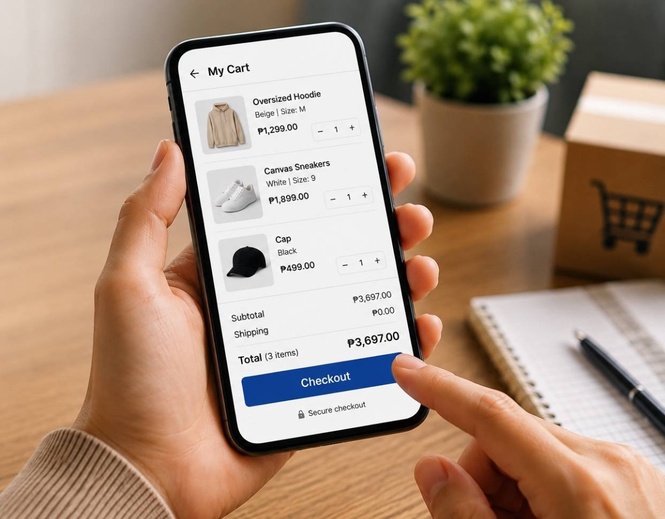
IT is a few minutes before midnight on payday. The cart has been sitting in your app all week. You have compared prices, read the reviews, and waited out the sale.
Now you are one tap away from finally checking out. The screen spins. The payment fails. No reason is given. You try again, and it fails again. Your wallet balance is fine, but the purchase still does not go through, and the sale ends at midnight.
You may give up and buy from another store instead. Or perhaps the store never gave you a real choice. It accepts only one e-wallet, and not yours. It may ask you to transfer to a bank account, send a screenshot over chat, and wait until someone confirms it the next day.
Every Filipino has lived some version of this. We shrug, adapt, and move on.
On the other side of that spinning screen, however, is a merchant that has just lost a sale. In most cases, that merchant will never learn why. Multiply that moment across the millions of digital transactions now made in the country every day, and it stops being a minor inconvenience. It becomes one of the quietest and largest leaks in Philippine commerce.
This is not the problem of one company, and it is not confined to small sellers. It affects merchants of every size and industry, from neighborhood online shops to national enterprises.
The demand side has already done its part. According to Bangko Sentral ng Pilipinas report, digital payments reached 57.4 percent of retail transaction volume in 2024, up from 52.8 percent the year before. The BSP is also working toward a target of 60 to 70 percent by 2028, supported by efforts to lower transfer fees.
Filipino consumers showed up. The question now is whether the experience merchants provide can keep up.
Part of the answer begins with how businesses think about payments in the first place.
For many companies, payments have traditionally been treated as a utility, similar to electricity, rent, or other essential operating costs. It is often purchased based on price and noticed only when something breaks.
But payments touch nearly every relationship a business has. Treated seriously, they are not simply a back-office function but a business driver.
Start with customers, because convenience is how relationships are built. Checkout is usually the final experience a customer has before deciding whether a business deserves another visit. It is also the moment when their money is on the line.
Payments will sometimes fail. Cards expire, wallets run short, and systems encounter errors. No honest provider can promise otherwise.
The relationship survives when the customer is told what happened and what to do next. They may be asked to try another method, top up their balance, or attempt the transaction again.
The relationship quietly ends when the screen simply says that the payment failed.
I have seen a homegrown brand lose app orders for exactly this reason. Its customers did not complain. They simply walked to the counter instead. The business still made some sales, but the digital channel it had invested in was not delivering the experience it was meant to provide.
Payments also affect operations and the people a business works with.
When every transaction carries a clear explanation, customer support teams can actually help instead of apologizing without an answer. Reconciliation that takes hours instead of days allows suppliers and partners to be paid on time. Disputes can be caught earlier, and finance teams can close the books with greater confidence.
Efficiency in payments is not merely back-office housekeeping. It is what makes a business dependable to everyone connected to it.
Investors feel the effects as well, even when payments never appear in the pitch deck.
Payment data is one of the most honest records a business keeps. It reveals conversion rates, repeat purchases, and whether revenue is arriving predictably.
Clean and transparent payment flows make financial numbers more credible when a company is raising capital. Recurring payment systems can support subscription models. Infrastructure that can operate across markets can also shorten the road for businesses expanding beyond the Philippines, as more homegrown brands are now seeking to do.
Inside the business, the most valuable currency may be time.
Before working in fintech, I led everything from growth to operations at a health care startup, including how money moved in and out of the business. Every other week, I lost hours manually reconciling payments and payouts. Those were hours that could not be spent improving the product, serving patients, or growing the business. When we eventually improved the payment process, the first thing the team gained was not money. It was time.
The outlook is genuinely bright. Regulation is moving, fees are falling, and Filipino businesses are thinking beyond the domestic market. Some homegrown brands are already expanding abroad and taking their payment infrastructure with them.
The past few years showed that Filipino consumers will embrace services that respect their time. The next few will belong to businesses that ask more of their payment systems.
They should not ask only what payments cost. They should also consider which customers payments help retain, which partners they strengthen, and which hours they return to the team.
That spinning screen at checkout is not simply an information technology issue. It is a growth decision being made without the business.
Ina Gatan is the head of Commercial at Xendit Philippines. Xendit Philippines Inc. is a fintech company that provides payment infrastructure and digital payment services to businesses. It enables merchants to accept and manage payments through various channels.