I had originally intended for this article to be published as part of Newswav's Ei Tahu Tak campaign. The more I wrote, the more I realised I had wandered far beyond its 2,000-word cap. If you're reading this, I'd like to think I finally made it with this legendary tale.
In Ipoh, where motorists hurry past limestone hills and familiar blue road signs without a second glance, stands one bearing a name many Malaysians were never properly taught to remember.
Jalan Sybil Kathigasu.
To most, it is merely a name on a blue signboard, another civic label in the everyday theatre of traffic lights and double-parked cars. But behind that name lies a story buried not by time alone, but by the strange selectiveness of history; a story Malaysian textbooks have often tiptoed around, as though afraid of waking the ghosts that still linger in the old mining towns of Perak.
The year was 1941. Japan invaded Malaya, and the mighty British Empire—so accustomed to projecting invincibility—found itself outpaced by an army advancing on bicycles.
Yes, bicycles.
The Japanese advance through Malaya was swift, audacious and humiliatingly efficient. While the British expected an attack from the sea, the Japanese came down through the peninsula with infantry, tanks and thousands of bicycles, moving with a speed that stunned their opponents and terrified civilians. It was conquest by pedal power; history’s darkest Tour de Malaya.
The British retreated south towards Singapore, their final stronghold in Malaya. There, instead of throwing down a gauntlet, they eventually raised the white flag. The fall of Singapore in February 1942 would become one of the greatest military humiliations in British history. For the people of Malaya, however, humiliation was the least of what followed.
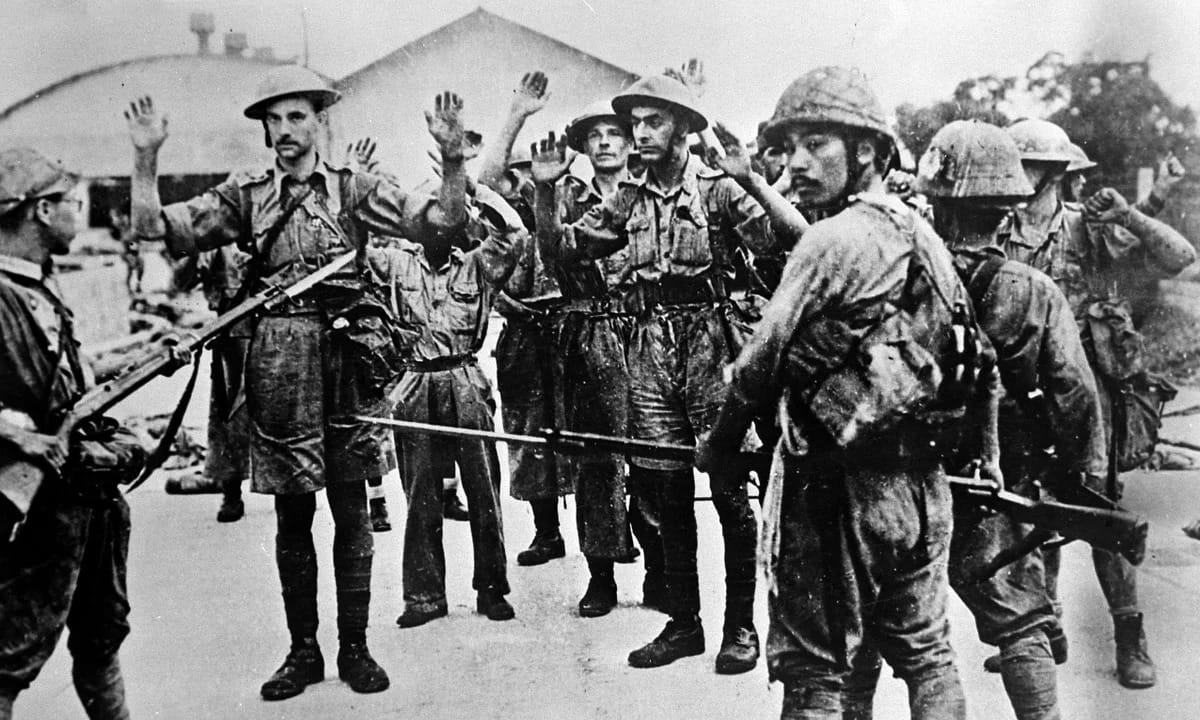
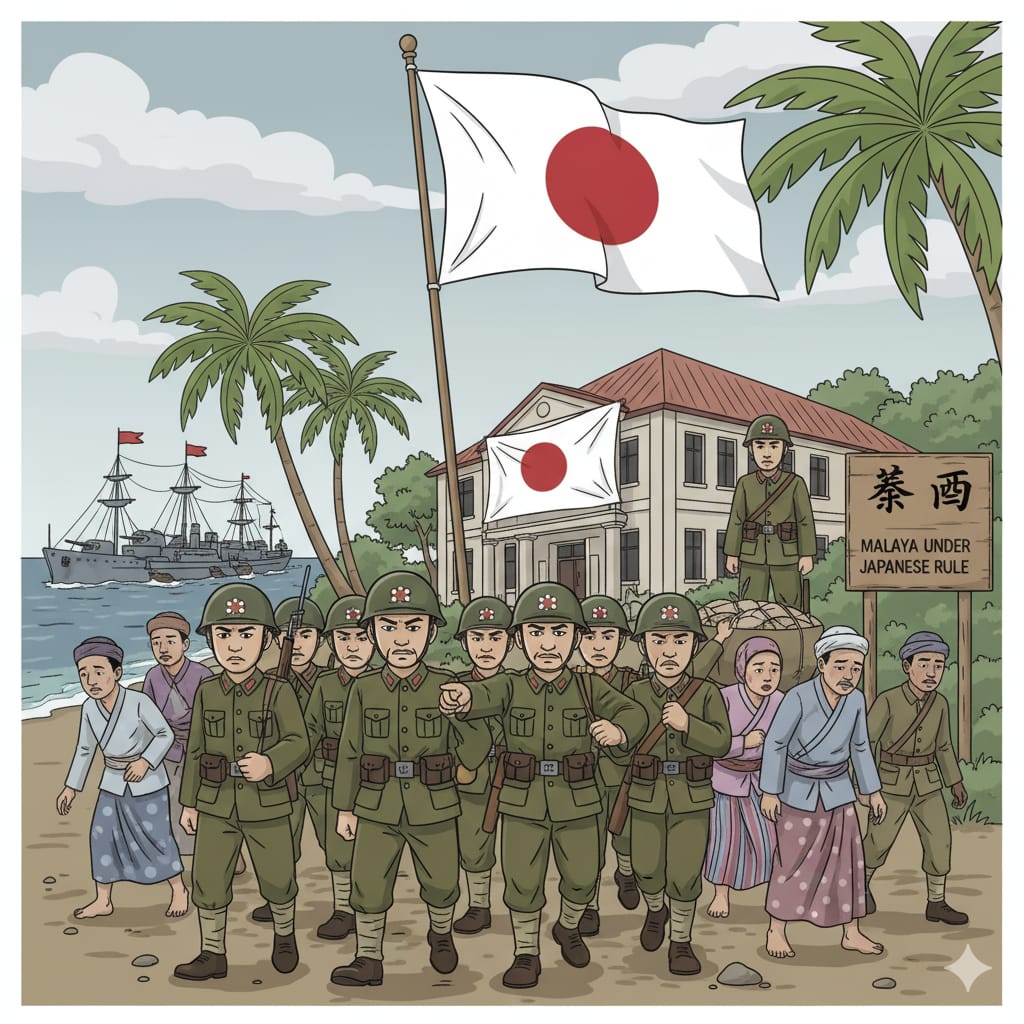
The Japanese occupation transformed fear into a way of life. The dreaded Kempeitai ruled through intimidation, torture and suspicion. Civilians disappeared without explanation. Communities lived under constant surveillance. Malayan Chinese suffered particularly brutal reprisals, fuelled by Japan's long and bloody war against China. Rape of their womenfolk by Japanese troops was widespread.
People bowed when ordered to bow. They learned Nippon-go because survival sometimes requires the tongue to bend even when the heart refuses. Outwardly, there was obedience. Inwardly, there was a furnace.
Among those living through this darkness was Sybil Medan Kathigasu.
Born Sybil Daly in Medan, Sumatra, in 1899, she trained as a nurse and midwife before marrying Dr Abdon Clement Kathigasu, a second generation Indian migrant. Together they established a clinic in Ipoh where patients were treated according to need rather than race or wealth—a quietly radical idea in colonial Malaya.
Then war arrived.
As Japanese forces approached Ipoh, the family relocated to the nearby town of Papan. It was hardly safe, but it offered the illusion of sanctuary.
The people around her were poor, frightened and often ill. Malaria, dysentery and beri-beri did not pause politely because a war was on. Disease, unlike politicians and generals, requires no manifesto. It simply arrives. Sybil treated the destitute for free, and when cases became too complicated, her husband stepped in. In a time when humanity had become rationed, Sybil gave hers away wholesale.
Yet medicine was no longer her only calling.
Hidden inside the house was a forbidden shortwave radio affectionately known as Josephine. One imagines her in the dimness, hand hovering near the dial, ears straining through static for news from a world that seemed both impossibly distant and desperately necessary. Hitler. Churchill. The Allies. The Axis. Europe burning. Asia bleeding. Malaya waiting.
Hope itself had become contraband.
Gradually, Papan evolved into something more than a refuge. It became a quiet outpost of resistance.
Deep within the surrounding jungle, the Malayan People's Anti-Japanese Army (MPAJA) waged a relentless guerrilla campaign against the Japanese. They lived in constant danger, emerging from the rainforest only when necessary before disappearing once more into its green secrecy.
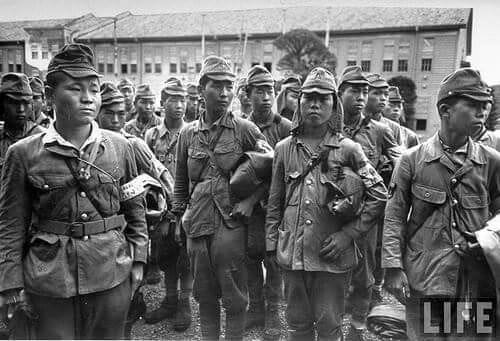
Sybil and her husband were drawn into their orbit not by politics, but by conscience.
The wounded came first.
Men arrived with bullet wounds, bayonet injuries, festering infections and bodies worn down by fever and exhaustion. Hospitals were watched. Clinics were monitored. Seeking treatment could expose an entire resistance network.
Still, they came to Sybil.
And still, she treated them.
Some people resist with rifles.
Sybil resisted with bandages, quinine and mercy.
As night fell, guerrillas waited silently at the edge of the rainforest for a signal. A lamp glowing in Sybil's upstairs window—or a small note bearing three simple words—
"Semua Ada Baik."
All is well.
—meant it was safe to approach.
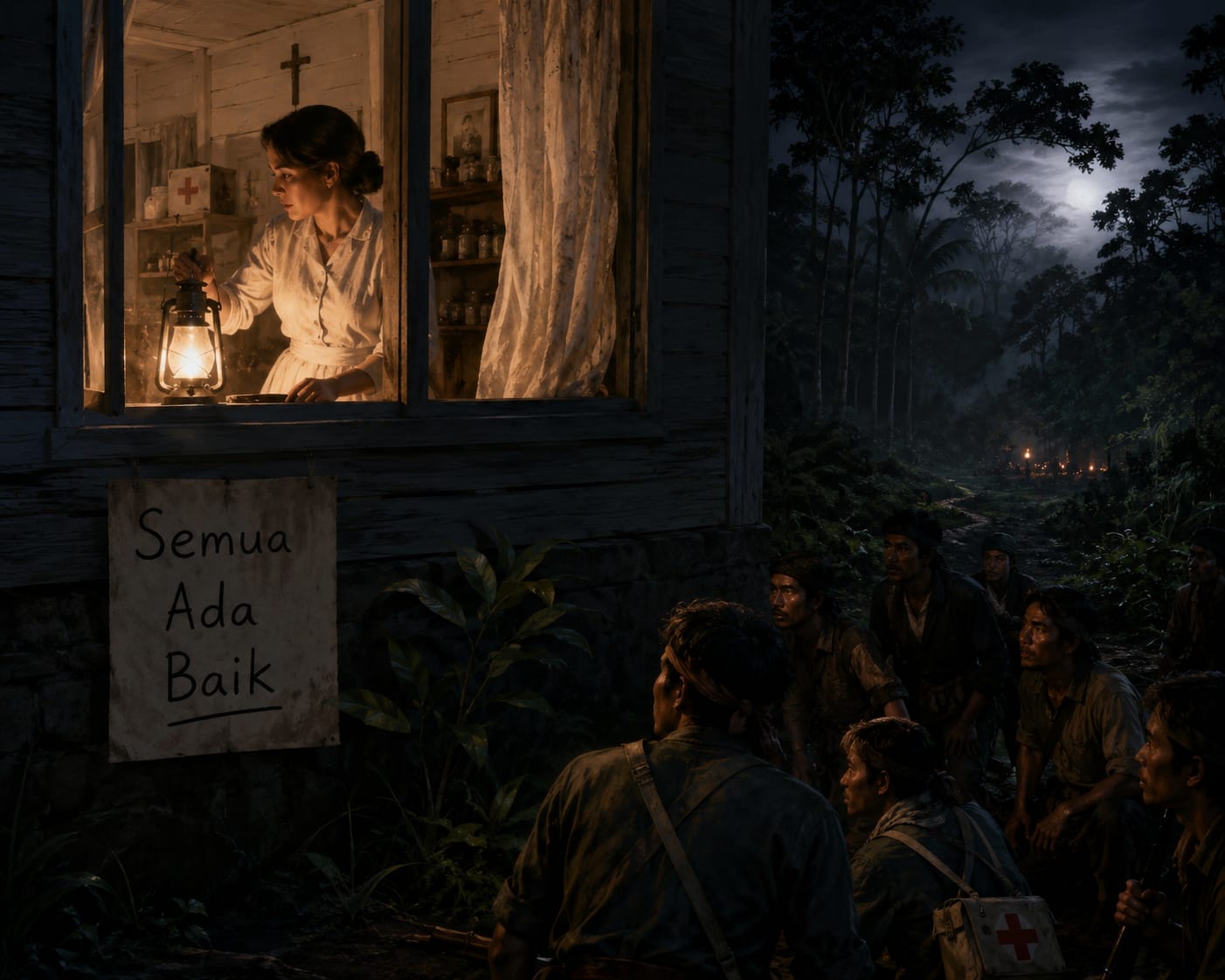
One by one they emerged from the darkness.
Sybil’s story is therefore not merely a tale of personal bravery. It is one of the most luminous examples of interracial solidarity in Malayan history. Eurasian wife. Indian husband. Chinese resistance fighters. Malay soil. British broadcasts. Japanese terror. One shared moral universe.
Sybil dressed their wounds, distributed precious medicine and quietly passed on news gathered from forbidden BBC broadcasts. Her husband assisted. Their young daughters lived beneath the same roof, unaware that their family home had become one of occupied Malaya's quietest centres of defiance.
But courage leaves footprints.
Soon enough, the Kempeitai began following them.
The Kempeitai did not require much by way of evidence. Under their rule, guilt was presumed, innocence was irrelevant, and confession was often beaten out of the body long before truth entered the room.
A month later, they came for Sybil.
She was accused of aiding the resistance.
She had.
But what the Japanese called treason, history would later recognise as extraordinary courage.
The months that followed would test the limits of human endurance.
Sybil was subjected to relentless interrogation. Water was forced down her throat until her body swelled, after which soldiers stamped on her abdomen. She was beaten, kicked and burned. Her jaw was fractured. Her spine was permanently damaged. The body that had spent a lifetime healing others became a battlefield itself.
Still, she revealed nothing.
Unable to break her through pain alone, the Japanese turned to psychological cruelty.
Her five-year-old daughter, Dawn, was tied to a wooden stake above a burning fire.
Few images in history are more difficult to comprehend.
The mother who had spent years bringing children safely into the world was now forced to watch her own child suspended above flames. It was designed to shatter not merely her body, but her spirit.
The Japanese wanted names.
They wanted fear to succeed where torture had failed.
Yet Dawn, displaying a courage no child should ever have to summon, reportedly cried out words of encouragement to her mother.
Even in terror, she urged her not to yield.
If Sybil's secret signal had once proclaimed "Semua Ada Baik"—All is well—the truth was now painfully different.
Nothing was well.
The Japanese could break bone.
They could not break conviction.
After months of interrogation, Sybil was transferred to Batu Gajah Prison. Compared with the Kempeitai headquarters, prison was less savage—but that is rather like saying a storm is kinder than a hurricane. The beatings became less frequent, but pain remained her constant companion.
Outside the prison walls, however, history was beginning to change.
Across Europe, Nazi Germany was collapsing. In the Pacific, Japan's empire was buckling beneath the weight of a war it could no longer sustain.
Then came August 1945.
The atomic bombings of Hiroshima and Nagasaki forced Japan's surrender. For Malaya, liberation had finally arrived.
For Sybil, it arrived wearing a British uniform.
After nearly two years in captivity, she walked free carrying little more than a shattered body and an unbroken spirit. Freedom, however, came with a cruel irony.
Recognising the severity of her injuries, the British Government sent Sybil to Scotland for specialist treatment. Surgeons laboured to repair what the Kempeitai had so methodically destroyed. Bones were reset. Infections were fought.
Doctors could mend fractures.
They could not erase memory.
During her recovery, Sybil resolved that the suffering she had witnessed would not disappear with those who endured it.
She wrote a memoir- titled No Dram of Mercy
In 1947, Britain formally recognised what the people of Papan had long known.

King George VI awarded Sybil Kathigasu the George Medal for conspicuous courage, making her the only Malayan woman ever to receive one of Britain's highest civilian honours for gallantry.
The medal was fashioned from silver.
The courage that earned it was not.
History has always been generous in celebrating those who wage war.
It has been far less generous in remembering those who preserve life amidst it.
The years of torture eventually exacted their final price. Complications arising from her fractured jaw led to infections and septicaemia. Despite the best medical care available at the time, septicaemia claimed the life that the Japanese themselves had failed to extinguish.
The war was over.
Its scars were not.
History, however, has an odd habit.
It remembers kings and generals with remarkable precision.
But every so often, it quietly misplaces its healers.
For decades, Sybil's name lingered at the margins of Malaysia's national story. Schoolchildren learnt about invasions, occupations and independence, yet few were introduced to the woman who quietly stitched together the human cost of war.
Why?
Perhaps it was because she had aided communist guerrillas during an era when such associations became politically inconvenient.
Perhaps it was because women who changed history without holding political office were too easily relegated to footnotes.
Or perhaps history, like people, sometimes suffers from selective memory.
Yet history also has a remarkable way of correcting itself.
Today, Sybil's memoir, No Dram of Mercy, continues to bear witness. Her George Medal remains a symbol of extraordinary courage.
The Catholic Church has begun exploring her cause for sainthood. Whether that journey ultimately reaches its destination is almost beside the point. To the countless lives she touched, sainthood never required Vatican approval. It had already been quietly bestowed in the clinic she served, the prison she endured and the wounded men she refused to abandon.
Which brings us back to where this story began.
A road sign.
Today, in Ipoh's Fair Park, thousands of motorists pass beneath the words "Jalan Sybil Kathigasu" every single day.
Most never look twice
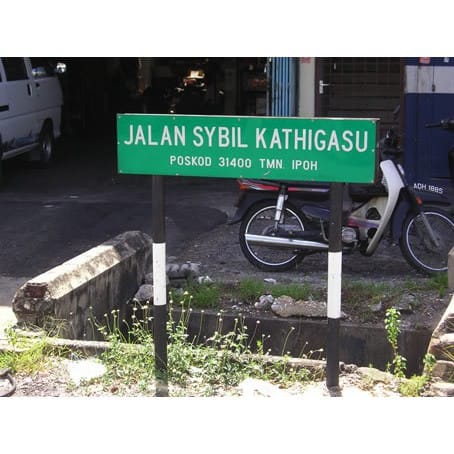
Fewer still know the extraordinary woman behind the name.
Yet perhaps that modest signboard is more fitting than any towering monument.
After all, Sybil never sought recognition.
She simply answered the call of her conscience, even when doing so demanded everything she had.
Heroes are not defined by the monuments erected in their honour, nor by how loudly history speaks their names.
They are defined by what they choose to do when no one is watching.
When fear is overwhelming.
When compassion carries a price.
And when doing the right thing may cost them everything.
The sign still stands in Ipoh.
Quiet.
Unassuming.
Almost hidden in plain sight.
But if you pause for a moment—long enough to silence the traffic, the engines and the endless distractions of modern life—you may hear what history has been trying to whisper all along.
That once, in a small town called Papan, there lived a nurse whose hands healed the wounded, whose courage humbled an empire, and whose humanity proved stronger than fear.
Empires rose.
Empires fell.
But compassion, in the hands of Sybil Kathigasu, outlived them all.
Thillak Sekaran (thillaksekaran@gmail.com) is a content creator under the Newswav Creator programme, where you get to express yourself, be a citizen journalist, and at the same time monetize your content & reach millions of users on Newswav. Log in to creator.newswav.com and become a Newswav Creator now!
The User Content (as defined on Newswav Terms of Use) above including the views expressed and media (pictures, videos, citations etc) were submitted & posted by the author. Newswav is solely an aggregation platform that hosts the User Content. If you have any questions about the content, copyright or other issues of the work, please contact creator@newswav.com.