When the forests burn, ordinary families across Southeast Asia pay the price.
By Dr. Amarjeet Singh @ AJ | 19 October 2026
There is something deeply unsettling about waking up, looking outside and wondering whether the air is safe to breathe.
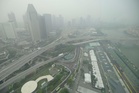
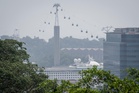
The sky looks tired. Buildings disappear behind a grey curtain. A child asks why there is no outdoor play today. An elderly parent starts coughing. A delivery rider puts on a mask and leaves for work because the bills will not wait for clearer skies.
This is what haze means in everyday life.
It enters our homes, changes our plans and places another burden on people already trying to manage the cost of living. Behind every pollution reading is a family deciding what to do next.
The fires may be across the sea. Their consequences arrive at our doorstep.
Why is this happening again?
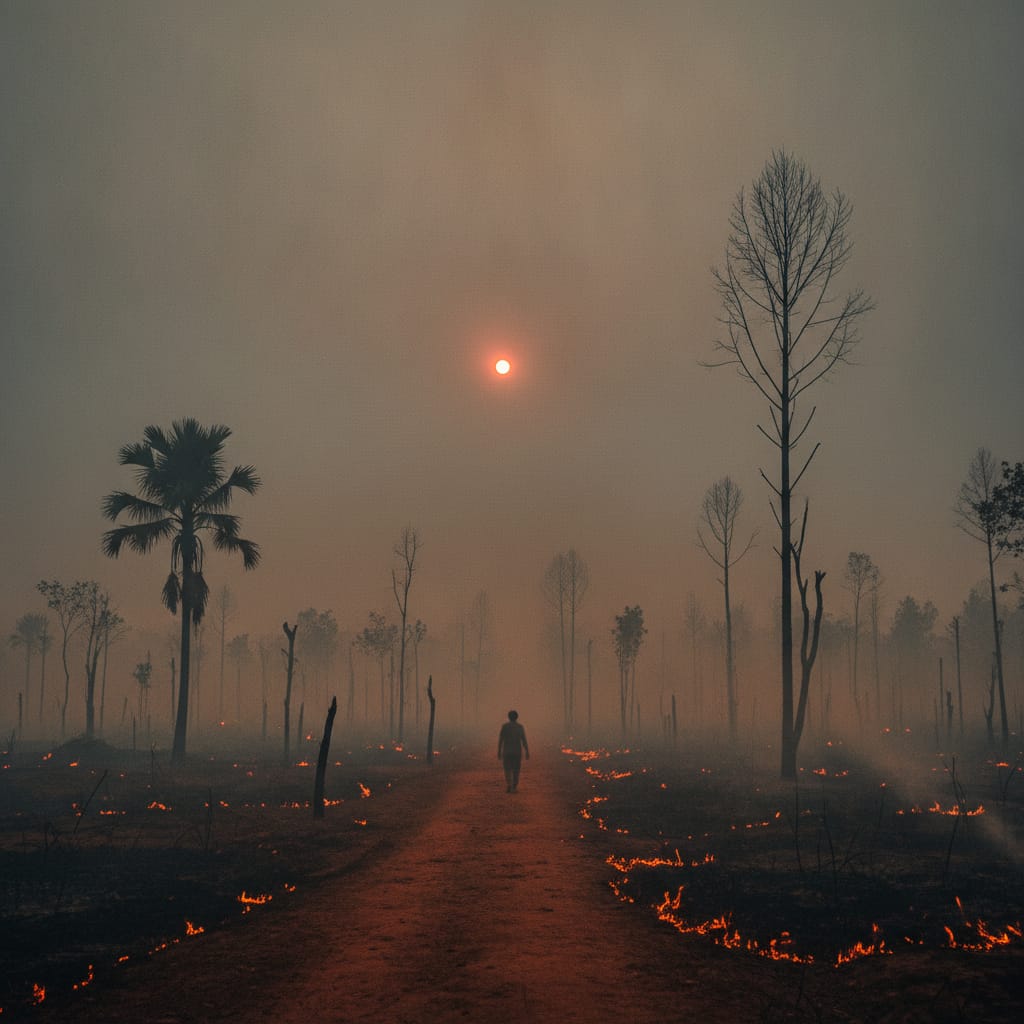
Reuters reported on 15 October 2026 that persistent forest and peatland fires in Indonesia, particularly in Sumatra and Borneo, were sending hazardous smoke across the region. Severe El Niño conditions were adding heat and dryness, helping fires spread. Malaysia and Singapore were among the countries affected.[1]
The ASEAN Specialised Meteorological Centre's website also shows Alert Level 3 for southern ASEAN. This signals a high risk of severe transboundary haze, involving persistent hotspots, widespread smoke and weather conditions that can carry pollution towards neighbouring countries.[2]
These are serious warnings. But understanding the problem requires us to look beyond the smoke.
Land clearing using fire, damaged peatlands and dry weather can combine into a dangerous cycle. UNEP identifies agricultural burning, land disputes and the flammability of drained peat among the drivers of forest and peatland fires.[3]
Dry weather increases the danger. It does not remove the responsibility to prevent avoidable burning.
The fire beneath our feet
Many people imagine a forest fire as flames racing through trees. Peat adds another difficulty.
Peat is accumulated, partly decomposed plant material. In its natural condition, it is waterlogged. When drained, it becomes vulnerable to burning. Restoring moisture is therefore central to preventing peat fires.[4]
Think of the difference between a wet sponge and a dried one. Drain a landscape that depends on water, and its relationship with fire changes.
This helps explain why prevention must begin with the land itself. Firefighting matters enormously, but repeatedly responding after ignition leaves us trapped in the same emergency.
We must ask how the land was managed, who was responsible and what could have stopped the fire before it began.
Please remember the people closest to the flames
It is understandable that Malaysians feel angry. We want to protect our children, our health and our livelihoods.
But ordinary Indonesians are also victims. Families living near burning areas do not have the comfort of distance. Their homes, workplaces and communities face the smoke close to its source.
We can demand accountability without turning suffering into hostility towards an entire population.
Investigations should identify those responsible for unlawful burning or failures of land management. Responsibility must follow evidence, whether it leads to individuals, contractors or companies.
The Indonesian child struggling with polluted air deserves the same compassion as the Malaysian child struggling with it.
Our anger should help secure cleaner air for both.
What are we breathing?
One major concern is PM2.5: airborne particles measuring 2.5 micrometres or less. These particles are small enough to penetrate deep into the lungs; some can enter the bloodstream. The World Health Organization warns that wildfire smoke can harm health far beyond the immediate fire area.[5]
Smoke exposure can cause sore eyes, throat irritation, coughing and wheezing. It can also worsen asthma and other illnesses. Children, older people and those with chronic conditions need particular care.[6]
Being fit does not make polluted air harmless. A person who normally enjoys jogging, cycling or hockey still needs to adjust activities when conditions deteriorate.
Protecting your health sometimes means changing today's plan so that you can continue enjoying tomorrow.
Start with information, not guesswork
Before sending children outdoors, organising a sports session or beginning strenuous work, check Malaysia's official Air Pollutant Index, or API, through the Department of Environment's APIMS service.
Malaysia's Ministry of Health classifies API readings of 101–200 as unhealthy, 201–300 as very unhealthy, and 301–500 as hazardous. Advice becomes more restrictive as pollution rises, particularly for vulnerable groups.[7]
Do not rely only on whether the skyline looks clearer. Do not assume a reading from another town describes your neighbourhood.
Also remember that Malaysia's API, Singapore's PSI and other countries' indices are not automatically interchangeable. Check the location, time, pollutant and measurement system before sharing alarming numbers.
A useful family habit is simple: check the air, check official advice, then decide what activities are suitable.
Give your lungs a break
When haze worsens, reduce outdoor exertion. Malaysia's health guidance advises reducing strenuous outdoor activities at unhealthy levels and taking stronger precautions as readings climb.[7]
A postponed football match is an inconvenience. A preventable health emergency is something else entirely.
Schools, clubs and event organisers should make these decisions early and communicate clearly. Parents should not have to choose between protecting a child and appearing uncooperative.
For employers, concern should extend beyond office staff. Ask what your cleaners, guards, gardeners, drivers and site workers are breathing throughout the day.
My recommendation is to review outdoor duties, provide cleaner rest areas and reduce unnecessary exposure. A worker should feel able to report breathing difficulties without fearing that concern will be mistaken for laziness.
Make home a cleaner place to breathe
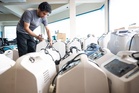
When outdoor smoke is bad, keep it out as far as practical. A portable particle air cleaner can help create a cleaner room. Avoid adding indoor smoke through cigarettes, candles or incense.[8]
Where suitable, use air-conditioning on recirculation rather than drawing polluted outdoor air inside. But heat matters too: a closed room that becomes dangerously hot is not a safe solution. Seek a cooler, cleaner indoor place if needed.[6]
Not everyone can afford an air purifier or air-conditioning. This is where community care matters.
I would like to see community halls, places of worship and other suitable buildings assess whether they can provide cleaner indoor spaces during severe episodes. Such spaces need proper filtration and management; merely being indoors does not guarantee clean air.
A little planning could give a vulnerable neighbour somewhere safer to spend the afternoon.
A mask must fit to help
A properly fitted particulate respirator, such as an N95, can reduce the amount of smoke particles inhaled. Loose surgical or cloth masks do not offer the same seal and filtration. Facial hair can interfere with a tight-fitting respirator's seal.[9]
Do not treat a respirator as permission to remain outdoors longer than necessary. Fit and correct use matter.
Children need special consideration because adult respirators may not fit them. Parents should follow appropriate health guidance rather than assuming a smaller-looking mask provides reliable protection.[8]
Where a good seal cannot be achieved, reducing exposure and finding cleaner air become especially important.
The aim is to reduce what reaches the lungs, not simply to have something covering the face.
Take symptoms seriously
WHO advises seeking urgent help for concerning symptoms such as severe breathing difficulty or chest pain during smoke exposure.[6]
Do not dismiss a person who says, “I cannot breathe properly.” Help them reach medical care. Do not assume every chest symptom is merely irritation from haze.
People with existing illnesses should discuss worsening symptoms with their healthcare professionals. Keep prescribed treatment accessible and follow the advice given for your condition.
Drinking water may soothe a dry throat, but it does not make polluted air safe. Be cautious about products promoted as special protection against haze. Ask for reliable evidence before spending money on promises.
When people are frightened about health, reassurance should come from sound advice and practical protection.
The burden on the person earning a daily wage
“Stay indoors” is sensible advice, but following it is easier for some people than others.
Consider a roadside trader, construction worker or food delivery rider. Staying home may mean losing the day's income. Buying extra protective supplies becomes another expense.
This is why I believe haze planning should include social support. Employers and public agencies should consider how to help people whose work exposes them and whose finances leave little choice.
The same principle applies to small businesses. A restaurant owner may face fewer customers while still paying wages, rent and suppliers.
An environmental crisis can become a household financial crisis. Our response should recognise both.
What about crops and our food?
Air pollution also deserves attention beyond human lungs.
The US Environmental Protection Agency explains that ground-level ozone can enter sensitive plants through their leaves, reduce photosynthesis and slow growth. It can also make plants more vulnerable to other stresses.[10]
Nor should we turn a map showing smoke over farmland into a claim that the same area has suffered crop failure. Exposure, damage and measured yield loss are different things.
My concern is that farmers need better monitoring and clear guidance. If air pollution threatens agricultural productivity, food security belongs in the discussion too.
Readers deserve evidence, not frightening estimates presented as established losses.
How do we prevent the next crisis?
The most important protection begins before smoke reaches our homes.
UNEP's peatland work highlights rewetting, restoration and better fire-risk management as practical ways to reduce the danger.[4] These efforts deserve sustained attention between emergencies.
My proposed priorities are straightforward: protect wet peatlands, restore damaged areas, detect fires early and make alternatives to burning accessible to farmers.
Enforcement must also be credible. Investigate fires promptly, publish findings and apply penalties where wrongdoing is established. Companies should be expected to understand what happens on the land and in the supply chains supporting their business.
Regional cooperation should focus on timely information, practical assistance and measurable prevention. Communities need to see what changed after the last emergency.
Rain can bring relief. It should not become an excuse to stop asking questions.
What can we do today?
Begin close to home. Check on an elderly parent. Ask whether a neighbour needs help collecting essentials. Speak to your child's school about outdoor activities.
Avoid open burning and report suspected incidents through the appropriate local channels. Share official advisories with their dates and locations intact.
Before forwarding a dramatic photograph, check when and where it was taken. Before repeating a health claim, check its source. Concern is useful when it helps someone make a safer decision.
As business owners and community leaders, prepare a simple haze response before the next difficult day. Decide who monitors conditions, who communicates changes and how vulnerable people will be helped.
Compassion becomes stronger when it has a practical plan.
We deserve more than another season of smoke
The phrase “hell fires” captures the fear and frustration these burning landscapes bring. Yet beyond that anger are ordinary people asking for ordinary things.
A child wants to play outside. A parent wants to breathe comfortably. A worker wants to earn a living without sacrificing health.
Those hopes cross every border in our region.
Let us protect our families today and insist on better prevention for tomorrow. Let us support the people fighting fires and the communities living beside them, while demanding answers from those responsible.
No family's lungs should become the price of somebody else's shortcut.
When the sky finally clears, our concern must remain. That is when the work to prevent the next haze crisis needs to continue.
Sources and further reading
Current-event information checked on 19 October 2026. Air quality and official advice can change throughout the day.
- Reuters: Why is the haze so bad in Southeast Asia this year? — 15 October 2026
- ASEAN Specialised Meteorological Centre: Regional haze situation and alert definitions.
- UNEP: Why peatlands matter.
- UNEP: Project to restore peatlands in Indonesia.
- WHO: Wildfire smoke — a frequently underestimated health risk.
- WHO: Public health advice during wildfires.
- Malaysia Ministry of Health: Langkah-langkah Pencegahan Semasa Jerebu. Check Malaysia's API through APIMS.
- CDC: Safety guidelines for wildfires and smoke.
- CDC/NIOSH: Protecting workers and the public from wildfire smoke.
- US EPA: Ecosystem effects of ozone pollution.
Amarjeet Singh Sran (amarjeetsinghsran5@gmail.com) is a content creator under the Newswav Creator programme, where you get to express yourself, be a citizen journalist, and at the same time monetize your content & reach millions of users on Newswav. Log in to creator.newswav.com and become a Newswav Creator now!
The User Content (as defined on Newswav Terms of Use) above including the views expressed and media (pictures, videos, citations etc) were submitted & posted by the author. Newswav is solely an aggregation platform that hosts the User Content. If you have any questions about the content, copyright or other issues of the work, please contact creator@newswav.com.