
When the call came through late one Friday evening, the voice on the other end was steady but hollow. A senior analyst, once celebrated for smashing ambitious targets, described a gruelling cycle of 12-hour days, sleepless nights, and a manager who equated physical endurance with professional loyalty. “I don’t want to be a burden,” she whispered. “I just want to keep my job.”
That reluctance to speak up is a story echoed across Malaysian boardrooms and cubicles alike. It is more than a human tragedy, it is an urgent, systemic business failure. For decades, the "Corporate Ladder" was built on a foundation of silence. We were taught to check our personal struggles at the office door, treating mental health as a "soft" HR topic relegated to CSR initiatives.
However, in today’s high-pressure landscape, mental health is no longer a peripheral welfare issue. It is a material line item on the profit-and-loss statement.
The Anatomy of a Breaking Point
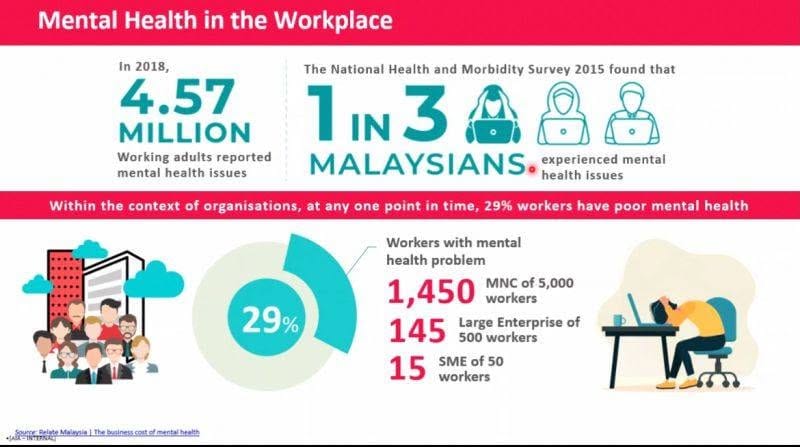
The silence is breaking, but it is breaking painfully. The 2025 Malaysia Well-being Work© Index shows a continued, sobering decline in employee wellness scores (https://2025wawreport.o-psych.com/).
The Voices on the Other End of the Line
Through my work with SNEHAM Malaysia, I often hear the voices that Leaders, HR frequently often misses until the resignation letter or worse arrives. These aren't just statistics; they are professionals, managers, and executives whose productivity is being eroded by environments that prioritize output over the human engine that produces it. Consider these "calls" from the frontline of the Malaysian workforce:

- The High-Performer’s Fatigue
"I haven't slept more than four hours a night in six months. My KPIs are green, my bonuses are high, but I feel like a hollow shell. Every time my phone pings with a work message at 10:00 PM, my heart races. I want to ask for help, but in my department, 'mental health' is seen as a code word for 'not being able to handle the pressure.' So, I keep quiet, and I keep breaking."
- The Middle-Manager’s Burden
"I am caught between a leadership team demanding 120% growth and a team that is visibly burnt out. I’ve lost three of my best engineers in two months, not to competitors, but to 'rest.' I don't know how to support them when I can barely support myself. We talk about 'resilience' in meetings, but it feels like a demand for us to just suffer more efficiently."
- The Toxic Quiet
"The bullying isn't loud; it’s the exclusion. It's the way my manager ignores my emails since I took a week off for 'personal reasons.' Now, I’m back, but I’m terrified. I spend more energy navigating the office politics of my mental health than I do on my actual tasks."

The RM14.46 Billion Price Tag
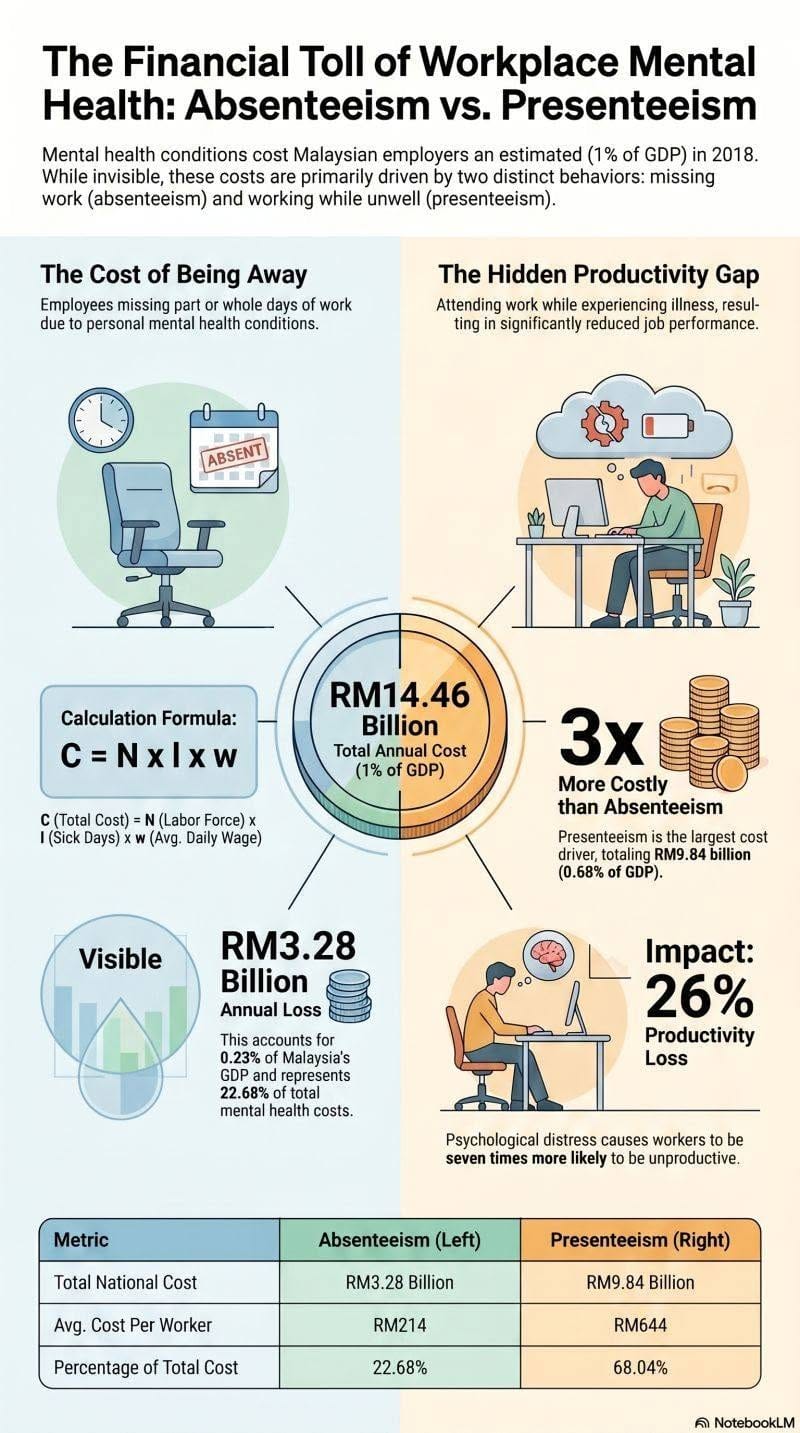
In Malaysia, cultural norms of "saving face" and hierarchical endurance often mask the rot until it is too late. This silence carries a staggering price tag. Research published in “The Lancet Psychiatry” estimates that mental health conditions in the workplace cost the Malaysian economy RM14.46 billion, roughly 1% of our national GDP (https://www.thelancet.com/journals/lanpsy/article/PIIS2215-0366(20)30091-2/fulltext).
This drain isn't just caused by absenteeism. It is driven by presenteeism, the "hidden" cost of employees who are physically at their desks but mentally disengaged, leading to poor decision-making and low output. Furthermore, research identifies the lack of mental health support as a primary predictor of occupational stress in Malaysia (https://pmc.ncbi.nlm.nih.gov/articles/PMC12562579/).
As corporate leaders, we must accept a hard truth: A productive employee on the verge of a breakdown is not a success story; they are a liability.
From Management to "Human" Management
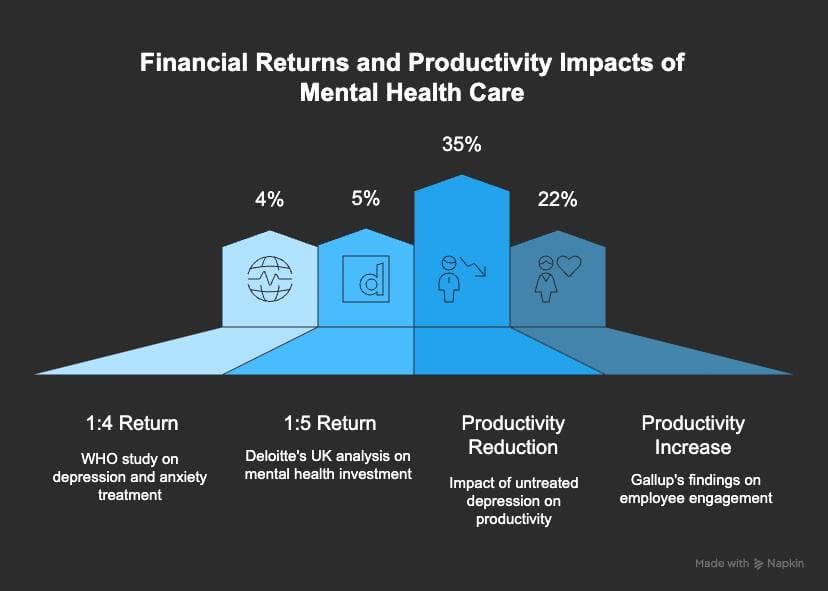
To bridge the gap between strategic HR and empathetic advocacy, we must move beyond the traditional playbook. The organizations that will win the "war for talent" are those that treat mental wealth as a high-yield investment. The ROI is irrefutable: for every RM1 invested in scaled-up treatment for common mental disorders, there is a RM4 return in improved health and productivity (https://finance.yahoo.com/news/employers-invest-mental-health-see-193953609.html).
A Pragmatic Framework for Malaysian Leaders and HR
As a Management Consultant, I advise organizations to move beyond "Mental Health Awareness Months" toward a structured, data-driven approach:
1. Redefining KPIs to Include Well-being
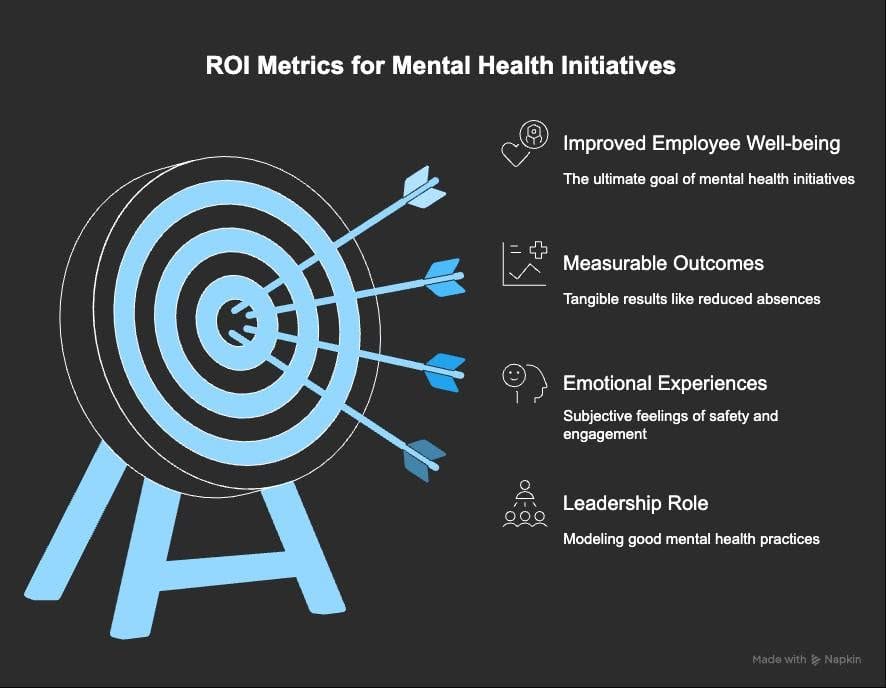
If we only measure what we produce, we ignore the health of the machine. Forward-thinking organizations are beginning to integrate "Well-being Indicators" into their quarterly reviews. This isn't just about "How are you feeling?" but about tracking turnover rates, the utilization of Employee Assistance Programs (EAPs), and the results of anonymous culture audits.
2. Eradicating the Stigma of the "S" Word
In many Malaysian corporate cultures, "Stress" is seen as a badge of honor, while "Struggle" is seen as a weakness. We must flip this narrative. When leadership speaks openly about mental health, it gives the rest of the organization "psychological safety." If a Director can admit they are taking a mental health day, it signals to the junior associate that they can too.
3. Capacity Building and "Mental Health First Aid"
Just as we train staff in physical first aid or fire safety, we must equip our managers with "Mental Health First Aid." A manager is often the first person to notice a change in an employee’s behavior. Training them to identify signs of burnout, anxiety, or depression and teaching them how to have that first, difficult conversation can literally save lives.
A Final Note on Urgency: The Moral Imperative
The late-night phone call that opened this article is not unique. Behind every statistic are real people, families and teams. Beyond the balance sheet, there is a moral duty. My work in suicide prevention has taught me that the workplace is often the last line of defense. When a company provides support, they aren't just protecting a "resource"; they are protecting a human life.
Malaysia’s economic future and the health of its workforce depend on leaders who treat mental health as central to strategy. The numbers RM14.46 billion in losses, RM4 back for every RM1 invested make the business case. When empathy becomes a measurable, managed part of organizational life, everyone wins employees, employers and the wider economy.
The phone calls I receive are a barometer for our nation’s corporate health. By the time someone reaches out to a helpline, the system has already failed them. Our mission must be to ensure that before a crisis strikes, the workplace has already offered a hand.
Let this be the WAKE UP Call for Malaysian industry. The numbers tell us we have a problem, but our empathy tells us we have the solution. It is time to put the "Human" back in Human Resources.
Disclaimer
The writer serves as a volunteer at SNEHAM Malaysia. All case information shared publicly is done only with the caller’s explicit consent. The Organization maintains confidentiality and no personal or identifying details will be disclosed without permission.
SNEHAM Malaysia (est. 2018) is a Non-profit organization dedicated to suicide prevention and mental health advocacy. We offer free confidential crisis support daily from 4:00 PM to 8:00 PM in English, Bahasa Malaysia and Tamil. Helpline #Call Toll-free: 1800‑22‑5757. For information: WhatsApp (text only) 0102945722.
Florance Sinniah (flojitha@gmail.com) is a content creator under the Newswav Creator programme, where you get to express yourself, be a citizen journalist, and at the same time monetize your content & reach millions of users on Newswav. Log in to creator.newswav.com and become a Newswav Creator now!
The User Content (as defined on Newswav Terms of Use) above including the views expressed and media (pictures, videos, citations etc) were submitted & posted by the author. Newswav is solely an aggregation platform that hosts the User Content. If you have any questions about the content, copyright or other issues of the work, please contact creator@newswav.com.