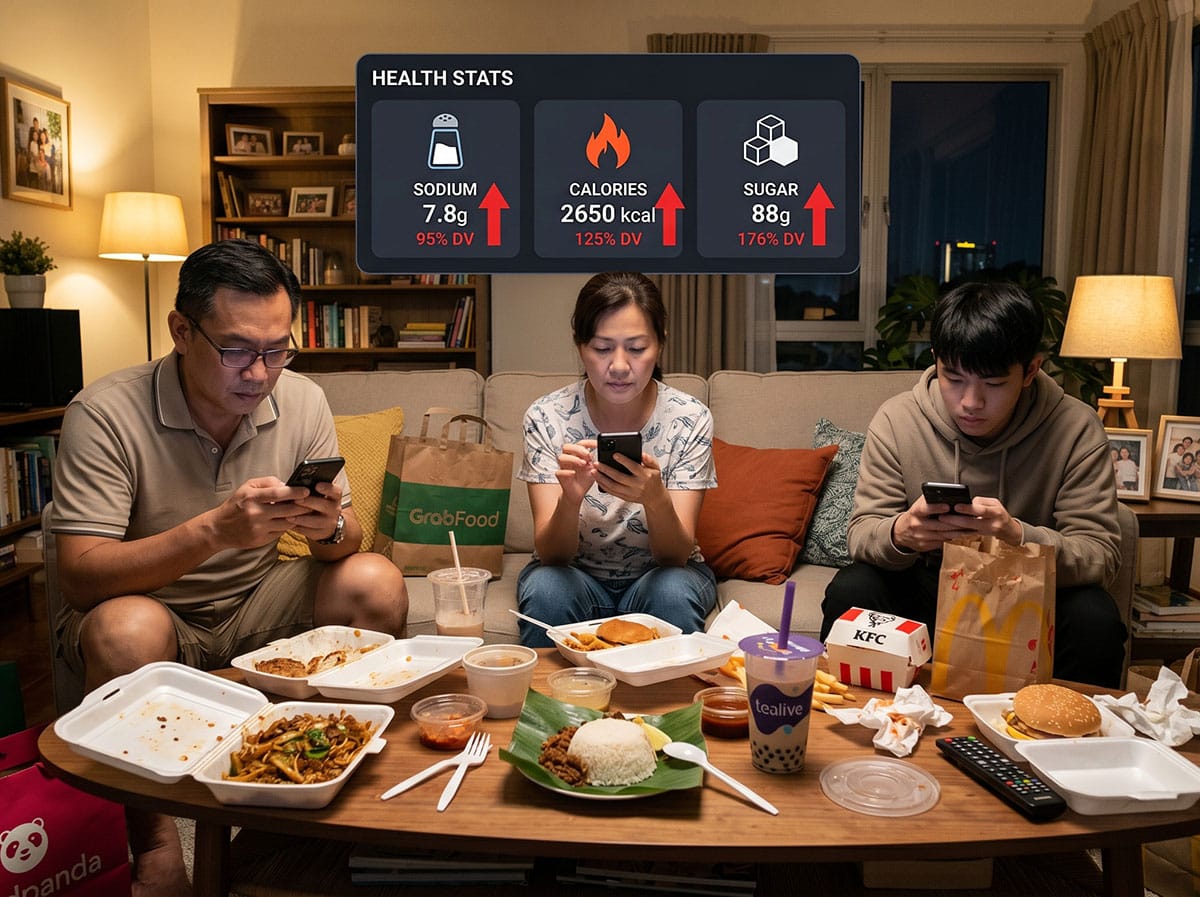
Ordering delivery every day feels harmless. The numbers say otherwise.
Let me start with a confession. I am a Grab and Foodpanda VIP member. Paid subscription, free deliveries, the whole setup. My phone opens faster to the GrabFood app than it does to my own photos.
So before anyone says this article is judgmental, know that I am writing it while waiting for a delivery.
But here is the thing. After spending way too much time researching what daily food delivery is quietly doing to us, I have some thoughts. And they are worth sharing, even if they arrive with a side of guilt.
We Are All Doing This Together
Food delivery in Malaysia is not a habit. It is a national personality trait.
Malaysia is one of the highest food delivery markets per capita in Southeast Asia. Grab and Foodpanda together process millions of orders daily, and the convenience economy they have built around our appetite for nasi lemak, McD's, bubble tea and sushi delivered to our doors within 30 minutes has fundamentally changed how Malaysians eat.
And honestly? For busy parents, solo workers, or anyone whose kitchen sees more cobwebs than cooking, delivery is not laziness. It is a rational response to a genuinely hectic life. When both parents are working, the kids need feeding, and nobody has the energy to even think about what to cook, opening an app is not a character flaw. It is a survival instinct.
But survival instincts, left unchecked, have a way of quietly accumulating consequences.
The Salt Problem Nobody Talks About
Here is the number that made me put down my roti canai mid-bite.
A study published in the Malaysian Journal of Nutrition found that Malaysians who frequently eat outside or order delivery consume an average of 2,934 milligrams of sodium per day. Those who eat at home average 2,165 milligrams. The recommended daily maximum is 2,000 milligrams. Even the home cookers are already over.
For daily delivery eaters, you are consuming nearly 50% more sodium than you should be, every single day, without even knowing it. Because nobody announces the salt content when they pack your economy rice. The ayam goreng does not come with a warning label. The kuah for your mee rebus is doing what it wants.
High sodium over time is one of the most well-documented drivers of hypertension, and Malaysia already has a serious hypertension problem. More than 54% of Malaysian adults are overweight or obese, a figure that has been climbing steadily alongside the rise of delivery culture. These two trends are not unrelated.
The Portion Size Conspiracy
Here is something the food delivery industry does not advertise. Restaurant portions are designed to look impressive, not to match what your body actually needs. Bigger portions make customers feel they got good value. They also make Instagram content look more impressive.
The result is that the average delivery meal contains significantly more calories than a home-cooked equivalent of the same dish. The nasi lemak you cook at home comes with a controlled amount of coconut rice, one egg, some ikan bilis and sambal. The nasi lemak from your favourite delivery spot comes with twice the rice, extra lauk, and a packet of kuah on the side because they want you to come back tomorrow.
Multiply that caloric surplus by seven days a week, fifty-two weeks a year, and you start to understand why the weighing scale is giving you that look.
The Part Where We Talk About Food Poisoning
Right. Let us address the elephant in the delivery bag.
Malaysia recorded 12,821 food poisoning cases in just the first nine months of 2025, and that was actually an improvement from the year before. The World Health Organisation estimates that one in ten people globally falls ill from contaminated food every year.
Delivery food introduces specific risks that do not exist when you cook at home. The food is prepared somewhere you cannot see. It is packed by someone you do not know. It travels in a bag through varying temperatures for anywhere from fifteen minutes to an hour. And if the restaurant handling your order has loose hygiene practices, you have absolutely no way of knowing that until you are spending quality time in the bathroom at 2am.
I had a delivery rider get into an accident while bringing my order once. The food did not make it. That was the food poisoning risk I did not even end up taking. The real risk is the meal that arrives looking completely fine.
The safest habit when ordering delivery is to stick with restaurants you know and trust, particularly those with a consistent track record and verified ratings. A new restaurant with ten reviews and a suspiciously low price point for curry is an adventure. Sometimes it is a delicious adventure. But occasionally it is a less enjoyable kind.
The Hidden Ingredients You Never Agreed To
When you cook at home, you control what goes into your food. When you order delivery, you are trusting an entire kitchen, supply chain, and delivery process to maintain the same standards you hold yourself to.
Most of the time, that trust is reasonably well-placed. But cooking at scale for a delivery business means certain shortcuts become standard practice. Cooking oil is reused longer than it should be. MSG and flavour enhancers are used generously because they make food taste great and come back. Sauces and marinades are made in large batches, often days in advance. These are not criminal practices. They are commercial realities.
The result is that your delivery ayam masak merah contains significantly more sugar, oil, and additives than the version your mother makes on a Sunday afternoon. You cannot taste the difference. But your body, over time, absolutely can.
So Should You Stop Ordering Delivery?
No. Let us be realistic. Nobody reading this is going to suddenly become a home cook seven days a week. That is not how habits work and it is not what this article is arguing for.
What this article is arguing for is a small amount of mindfulness applied to a habit most of us have made completely automatic.
A few practical suggestions that do not require you to cancel your Grab subscription. First, try to cook at home at least three days a week. It does not have to be elaborate. Fried rice with whatever is in the fridge counts. The simple act of reducing delivery frequency by half already makes a meaningful difference to your sodium and calorie intake.
Second, when you do order, use the filters in the GrabFood or Foodpanda app to surface healthier options. Both apps have dietary preference settings most users never bother to enable.
Third, be slightly more selective about new and unreviewed restaurants. The familiar places you order from regularly have already passed your personal safety test repeatedly. Branch out by all means, but maybe not when you are feeding young children or an elderly family member who should not be taking unnecessary risks with their digestive system.
My Take
I start every morning with apple cider vinegar in warm water. Then I open Grab and order fast food for lunch. The cognitive dissonance is real and I am aware of it.
Writing this article has not made me want to quit food delivery. But it has made me want to be a little smarter about it. Order slightly less often. Cook a few more times a week, even just simple things. Pay more attention to what my family is actually eating when we go the delivery route, particularly for my kids who are at an age where the food habits they build now will follow them for decades.
The convenience economy is genuinely wonderful. Having restaurant-quality food delivered to your door in thirty minutes is one of the small miracles of modern Malaysian life. But like all miracles, it works best in moderation.
Your body has been patient about this. Just do not make it wait too much longer.
Kamarul Azwan (k.azwan@gmail.com) is a content creator under the Newswav Creator programme, where you get to express yourself, be a citizen journalist, and at the same time monetize your content & reach millions of users on Newswav. Log in to creator.newswav.com and become a Newswav Creator now!
The User Content (as defined on Newswav Terms of Use) above including the views expressed and media (pictures, videos, citations etc) were submitted & posted by the author. Newswav is solely an aggregation platform that hosts the User Content. If you have any questions about the content, copyright or other issues of the work, please contact creator@newswav.com.