
By Pola Singh
“I can safely say that no Malaysian senior is in perfect health. All seniors have some health-related problems; the difference lies in how we cope and manage”.
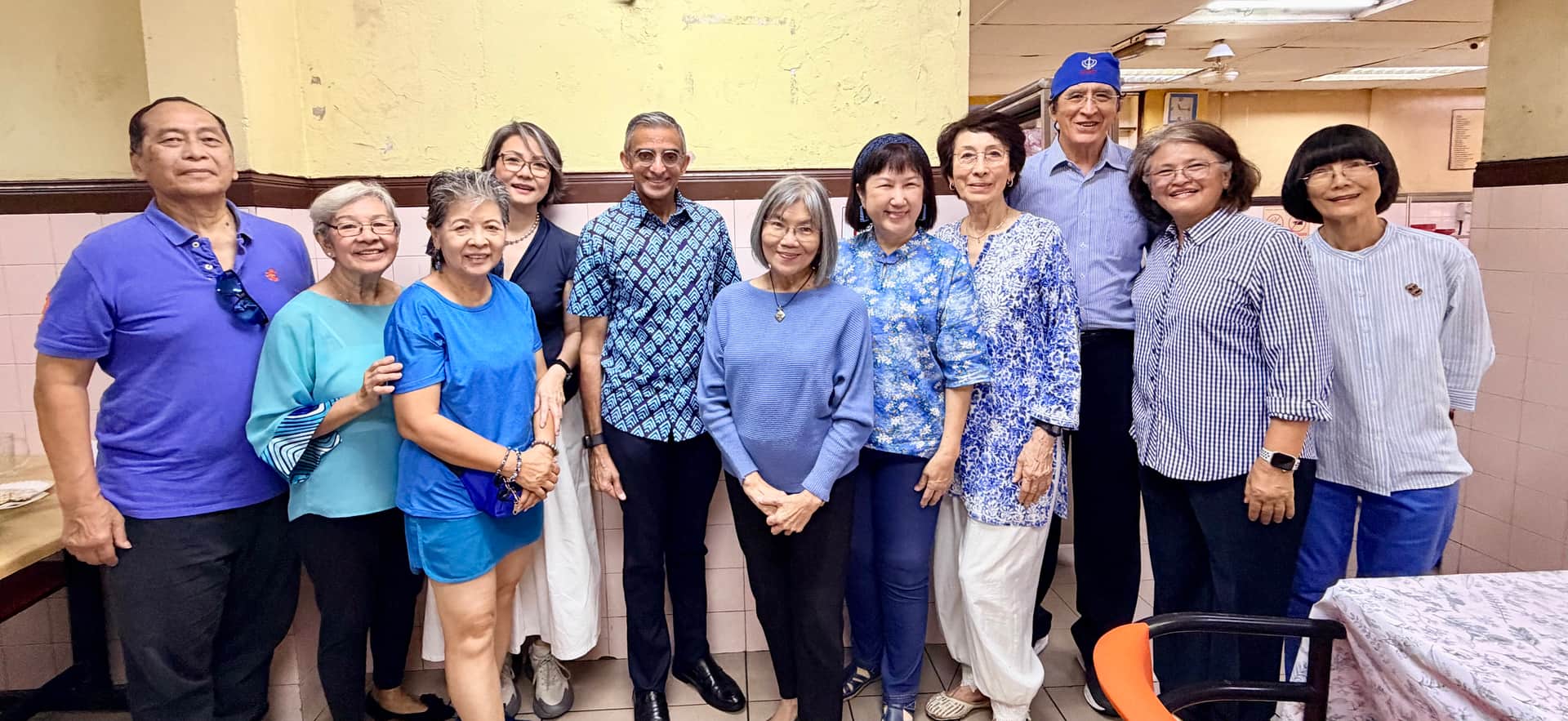
There is something deeply moving, and perhaps a little humorous, about the collective choreography of seniors after a group photograph. We gather for the camera—a fairly large crowd of old friends and colleagues—filling the frame with smiles. Because the group is so big, the younger or more agile among us naturally gravitate toward the front and sit on the floor so everyone’s face can be seen.
The shutter clicks, capturing a moment of timeless connection. But then comes the “unsticking.”
The laughter of the moment quickly turns into a chorus of soft grunts and the steadying breaths of effort. Those on the floor find that their knees, once so reliable, now seem to have a mind of their own. There is a frantic reaching for nearby shoulders and a slow, wobbling ascent. In those seconds of mutual hauling, where a colleague reaches down to offer a firm hand and a steadying pull, a quiet truth is revealed: we are all carrying something.
We see this same humble scene played out in the sacred halls of the Gurdwara or temple. After sitting in prayer on the floor, the transition back to standing becomes a shared ritual of support. A hand on a shoulder, a firm grip on an elbow—this is where community truly lives. While we may look composed in the frame or in prayer, the effort required to get back on our feet is a struggle we all share.
The Illusion of Perfection
When we notice a fellow senior who looks radiant, mobile, and "super fit," it is easy to be filled with a quiet envy. We compare our internal aches to their polished exterior and wonder, “Why am I the only one struggling?”
Please, don’t. We rarely know the full inside story.
Take my case. I will be 77 this July. I am often told I don’t look my age and that I appear to be in peak condition. It is true that I have invested decades into exercise and disciplined habits—and I continue those "winning ways" today. But hold on for a second. "Healthy" is a relative term. Behind the good skin tone and steady gait, my heart dances to an irregular rhythm—atrial fibrillation caused by a "haywire" electrical system that requires a daily blood thinner. Like so many others, I manage high blood pressure with daily medication and navigate a back that protests loudly ever so often.
I am not the exception; I am the rule. I can safely say that no Malaysian senior is in perfect health. All seniors have some health-related problems; the difference lies in how we cope and manage.
The Great Equalizer
If we could see through the skin of every senior in a café, we would see a mosaic of life-long medications, the scars of cataract surgeries, and the silent navigation of chronic conditions. Beyond a certain milestone, the immune system begins to whisper its fatigue. We "reap what we sow" through our habits, yet even the most disciplined must eventually make peace with a body that is fraying at the edges.
You Are Not Alone
The most dangerous thing a senior can do is suffer in silence, believing they are the only ones falling apart. If you are popping pills or scheduling life around doctor appointments, take heart: everyone else is in the same boat. Welcome to the stage of life where "maintenance" is a daily requirement.
• If you can still walk and are mobile, feel blessed compared to those who cannot.
• If you can still see the smiling faces of your grandchildren, be grateful for the medicine that makes it possible.
• If you can eat without a tube or sleep through the night—count those as major victories.
These "problems" are simply the price of admission for a long life.
Dropping the Two Suitcases
Many of us go through life lugging two heavy suitcases. In one, we carry past pains: grudges, anger, and old hatreds. In the other, we pack worries about the future: Who will care for me? How will I manage? To live fully, we must be bold enough to put these suitcases down. Forgive and forget. Release the grudges you’ve accumulated over the decades. By letting go of the "then" and the "what if," we become light enough to enjoy the "now." The quality of our lives is determined by the quality of our thoughts; think positive, and you invite positive outcomes.
Rejecting the “Waiting Room”
There is a temptation to enter "hopelessness mode"—a quiet surrender where we stop planning because we are too focused on our fragility. To that, we must say: “No, never.”
Acceptance is not surrender. We accept our bodies are weaker, but our spirits must remain stubborn and alive. We socialize because friends are the crutches for our souls. We volunteer and engage in charity because when we are absorbed in helping others, our minds are distracted from our own aches.
We take life one day at a time, not because we are waiting for the end, but because that is the only way to savour the ride. So, the next time you struggle to get up from the floor, reach for a hand. It’s likely a hand that aches just as much as yours—and in that shared struggle, there is a beautiful, humble strength.
Pola Singh (mediaplayer1717@gmail.com) is a content creator under the Newswav Creator programme, where you get to express yourself, be a citizen journalist, and at the same time monetize your content & reach millions of users on Newswav. Log in to creator.newswav.com and become a Newswav Creator now!
The User Content (as defined on Newswav Terms of Use) above including the views expressed and media (pictures, videos, citations etc) were submitted & posted by the author. Newswav is solely an aggregation platform that hosts the User Content. If you have any questions about the content, copyright or other issues of the work, please contact creator@newswav.com.
