
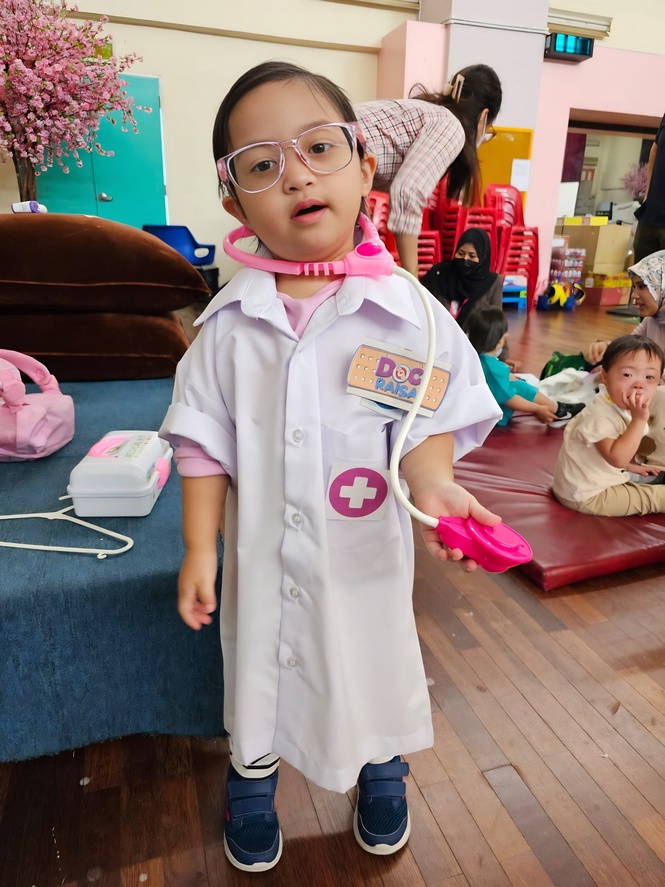
From the moment Raisa entered the world in 2020, her mother, Rose Zaimi Mohamed Zaid, knew life was about to change in ways she never imagined. As the fourth child in a family, Raisa carved out her own place, filling their home with love, laughter, and a fair bit of chaos.
“I had this feeling that her journey would be something extraordinary. And I was right.
“I first learnt about my daughter's potential Down syndrome diagnosis when I took the Non-Invasive Prenatal Testing (NIPT) at around 20 weeks of pregnancy. At that time, the probability of Down syndrome was only 20%,” said Rose, who lives just down the road from the centre in Taman Sea.
Rose said that when she first heard the news, she felt a mix of shock and worry.
“It was an unplanned pregnancy, and I was already overwhelmed with emotions. The possibility of Down syndrome only added to the uncertainty and fear I was experiencing.”
By the time Raisa was 5 months old, she had already joined the KDSF Infant Stimulation Programme (ISP). The programme provides early intervention to stimulate her cognitive, motor and social skills.
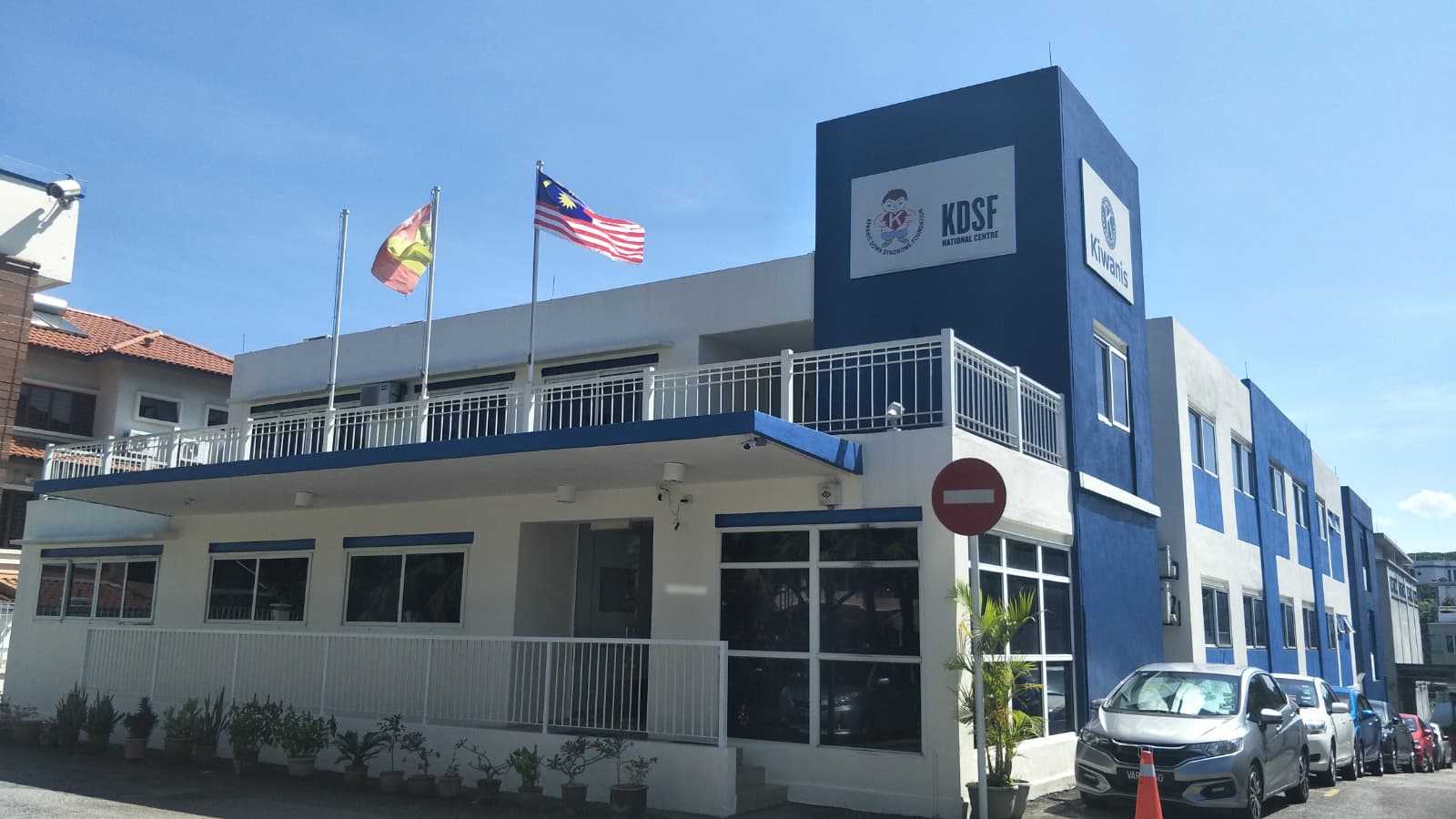
Founded in 1989 by the Kiwanis Club of Kuala Lumpur, KDSF has been indispensable in advocating for early intervention for children with Down syndrome in Malaysia.
The ISP is a programme for infants from 2 months – 24 months. Physiotherapy and Occupational therapy are provided for students in this programme weekly.
“The main focus is to help the students reach their developmental milestones such as rolling, crawling, walking and provide them with the foundation that is crucial for their years ahead,” said Lee Sook Foong, Operations Director of KDSF.
With structured programmes focused on speech, motor development, and social interaction, the foundation has helped nearly 3,000 children gain essential skills for their future. Raisa was one of them.
“Now, at nearly 5 years old, she is in the School Readiness Programme (SRP1), which focuses on preparing her for a more structured school environment.”
Rose recounts Raisa’s experience in SRP1 as being really positive. She said the programme is similar to a kindergarten setup, where she’s encouraged to be more independent and follow simple commands.
“What I’ve noticed most is how she’s gained confidence in doing things on her own, like completing tasks independently—whether it’s colouring or matching.
The hands-on activities and sensory-rich experiences have been great for her,” she said.
Additionally, Raisa is also attending a pre-integrated special educational programme (pra-PPKI) at Sekolah Kebangsaan Bandar Utama Damansara. The pre-PPKI program is tailored for children with special educational needs.
For Rose and her husband, juggling between therapy sessions, online schooling for her three other children, and overcoming the challenges of early intervention was not an easy task, and at times, overwhelming.
“During the Covid-19 lockdown, we were all thrown into a new routine, and we were all just trying to figure it out together.
“The older kids found online learning tough, and Raisa’s physiotherapy could be tiring for all of us.
“But through the ups and downs, we kept going, one day at a time.
“It wasn’t always easy, but we found a way to support each other and get through it as a family,” she said.
Rose said that KDSF’s therapist would always send the lesson plan in advance and that helped her prepare the materials and mentally, before each session.
By the time Raisa turned three, after a year of consistent speech therapy at Klinik Audiologi dan Pertuturan Hospital Canselor Tuanku Muhriz UKM (HUKM) and WQ Park, a health and rehabilitation centre, she began to speak.
“It took about a year before she was able to say a word at a time.
“Once she reached that point, her progress was rapid. Her vocabulary grew quickly, and she was constantly learning new ones,” she said.
Rose also said that she has not encountered any difficulties in accessing services or resources for Raisa. She added that medical services have been readily available too.
However, her biggest worries about Raisa’s future are her education and independence.
“While she’s making progress, I’m concerned about how she’ll adapt to more structured education as she gets older and whether she’ll continue to thrive.
“I also worry about her developing the independence she’ll need to take care of herself and navigate the world confidently.
“Balancing her need for support with helping her become more independent is something I think about often,” said Rose.
Many schools in Malaysia, however, still lack the necessary resources and trained staff to support children with Down syndrome, and this results in a gap, according to Lee.
“Teachers and school staff may not have sufficient training to meet the unique educational needs of children with Down syndrome.
“Inclusive education involves individualised teaching methods to cater to different learning styles and needs, as well as the inclusion of teaching assistants or specialists, to assist with specific learning or developmental challenges,” she said.
“Early intervention is key, and it is heartening to see more families seeking help earlier.”
Lee added that as individuals with Down syndrome are now living longer, it is crucial for parents to ensure their child attends all hospital appointments.
“Regular follow-ups are essential for monitoring health, addressing medical concerns early, and providing the necessary support to enhance their quality of life,” she said.
She urged parents to bring their children for regular medical check-ups.
Lee argued that even if a child appears healthy, many medical conditions associated with Down syndrome require ongoing monitoring.
She also said training healthcare providers to recognise and address the long-term healthcare needs of individuals with Down syndrome can improve overall health outcomes, reduce stigma within the healthcare system.
She said this will promote greater sensitivity and empathy toward individuals with Down syndrome.
Funding is another aspect of successfully running early intervention programmes that require trained educators, therapy services, and customised learning materials.
As a non-profit organisation, KDSF relies heavily on donations to keep these services accessible. While fees are subsidised, some families still struggle to afford them, and public donations will go a long way in helping those who struggle with financial needs.
With the right support, children with Down syndrome can grow, learn, and lead fulfilling lives, just like anyone else.
World Down Syndrome Day was on March 21, and Raisa’s story is a powerful testimony to the importance of early intervention and community support.
KDSF provides early intervention for children with Down syndrome from the age of 2 months to 6 years old through the Early Intervention Programme (EIP). This programme equips children with essential skills in communication, motor development, and independent living.
KDSF is located at Lot 13490, Jalan Jenjarum, Off SS23/1, Taman Sea, 47400. Petaling Jaya.
For those who wish to contribute to the Down syndrome cause, KDSF accepts transfers through their Maybank account: 512530172440.
A shorter version of this story was published in theSun on April 6.
Carolyn Khor is a content creator under the Newswav Creator programme, where you get to express yourself, be a citizen journalist, and at the same time monetize your content & reach millions of users on Newswav. Log in to creator.newswav.com and become a Newswav Creator now!
The User Content (as defined on Newswav Terms of Use) above including the views expressed and media (pictures, videos, citations etc) were submitted & posted by the author. Newswav is solely an aggregation platform that hosts the User Content. If you have any questions about the content, copyright or other issues of the work, please contact Newswav.
