.jpg)
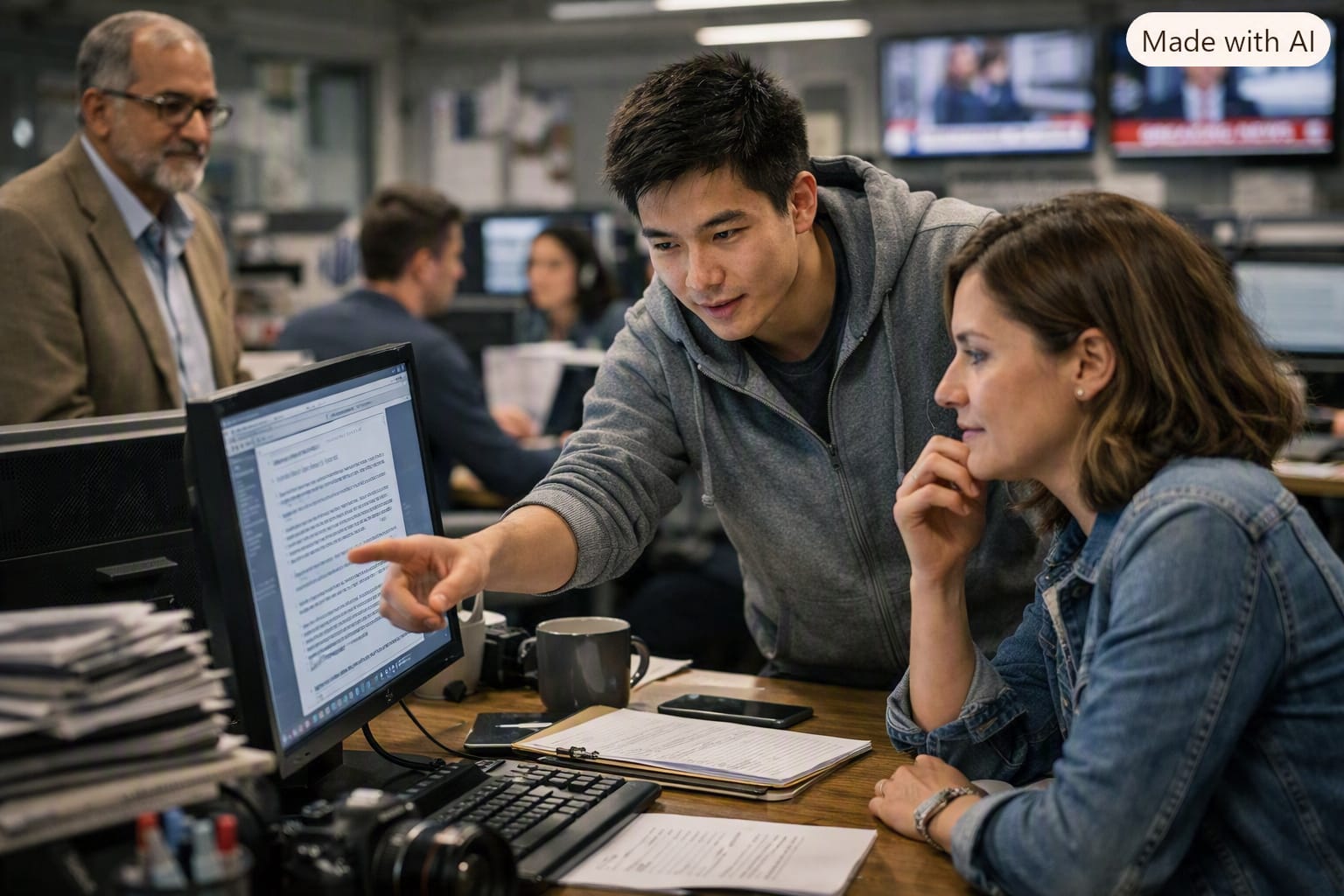
The Intern in the Newsroom: AI for Writers
By Mihar Dias August 2026
A week ago I sat in a room full of young journalists, editors and journalism students, listening to Dr. Rahim Said deliver a keynote on artificial intelligence that I have not been able to shake off since. The talk was billed as "AI for Journalists and Columnists — Writing Smarter Without Losing Your Voice." It was organised by Weekly Echo, and by the time Rahim Said had finished, I found myself doing something columnists rarely admit to in public: agreeing with almost everything I had just heard, and then arguing with it anyway.
Rahim Said 's central image was the right one. Treat AI, he said, like the brightest intern you have ever hired — one who has read a library's worth of material, never sleeps, answers in seconds, and will occasionally hand you a confidently invented quotation as if it were gospel. You would never publish an intern's copy unedited. You verify, you rewrite, you take responsibility. The byline, he reminded the room, carries your name, not the machine's.
I have no quarrel with that framing. If anything, it understates the discipline required. An intern eventually learns your newsroom's standards through correction and shame. A language model learns nothing from being wrong in your last conversation. It will fabricate the same confident nonsense tomorrow with the same unbothered fluency. The verification burden does not shrink with familiarity, the way it does with a junior colleague. It stays exactly where it started, every single time.
Where I want to push further than the keynote is on the question of time. Rahim Said's most generous promise to that room was this: AI does not save time so journalists can work less, it saves time so they can practise better journalism — more interviews, more verification, more fresh angles. I believe he meant it sincerely. I am less sure the newsrooms paying the bills believe it. The economics of Malaysian media, like media everywhere, reward speed and volume more reliably than they reward the extra hour spent chasing one more source. Give an editor three found hours, and the honest wager is that a fair number of newsrooms will fill them with more output, not more scrutiny. The tool is neutral. The incentives around it are not. That gap between what AI makes possible and what a newsroom's business model makes rewarded is where I think the real ethical test sits — not in the technology at all.
There was one line in the speech I want columnists especially to sit with: readers return because they recognise your voice, not AI's. I have been writing under this pen name long enough to know that the voice is not decoration. It is the entire transaction. A reader who opens a Mihar Dias column is not buying information — Twitter delivers that faster and free. They are buying a particular way of noticing things: which detail I choose to linger on, which political absurdity earns a raised eyebrow instead of outrage, what I think is worth being annoyed about this week. A model can imitate the rhythm of that after enough prompting. It cannot originate the judgement behind it, because judgement is accumulated, not generated — from a childhood, a newsroom that once humiliated you into checking your facts twice, a grandfather's stories you had to learn to separate from the archive. Rahim Said put it plainly: AI has no political scars. Neither does it have the memory of the specific way a minister's aide once lied to your face. That memory is not a productivity constraint. It is the actual product.
None of this is an argument for fear, and Rahim Said was right to spend most of his hour talking his audience out of it. Every technological panic in journalism's history — radio, television, the internet, social media — arrived promising the death of the profession and delivered instead a redistribution of its labour. What survived each wave was never the format. It was the willingness to answer one particular question honestly: how do we know this is true? That question does not belong to any tool. It belongs to whoever is prepared to stake their name on the answer.
So my advice to the room, and to myself, is the same as his, with one addition. Use the intern. Make it draft, summarise, translate, suggest a sharper headline at eleven at night when your own head is empty. But keep a private, slightly stubborn account of everything it cannot do — smell the smoke at a fire, notice a hesitation in an interview, remember what it felt like to be booed at a FELDA anniversary you covered in person. That list is not a limitation to apologise for. It is the job description. Guard it, because nothing in that intern's training data will ever write it for you.
Mihar Dias (mihardias@gmail.com) is a content creator under the Newswav Creator programme, where you get to express yourself, be a citizen journalist, and at the same time monetize your content & reach millions of users on Newswav. Log in to creator.newswav.com and become a Newswav Creator now!
The User Content (as defined on Newswav Terms of Use) above including the views expressed and media (pictures, videos, citations etc) were submitted & posted by the author. Newswav is solely an aggregation platform that hosts the User Content. If you have any questions about the content, copyright or other issues of the work, please contact creator@newswav.com.



