More than a hundred invasive species may colonise coastal waters worldwide by mid-century as sea levels rise due to climate change, a new study warns.
Invasive species like Chinese mitten crabs, Pacific oysters, and Asian tiger shrimps can lead to biodiversity loss and ecosystem change, with devastating economic impacts.
While previous studies have shown that climate change can alter species distributions on land and at sea, the impact of invasive, non-native marine species entering newly flooded areas due to the rise in sea levels has remained unclear.
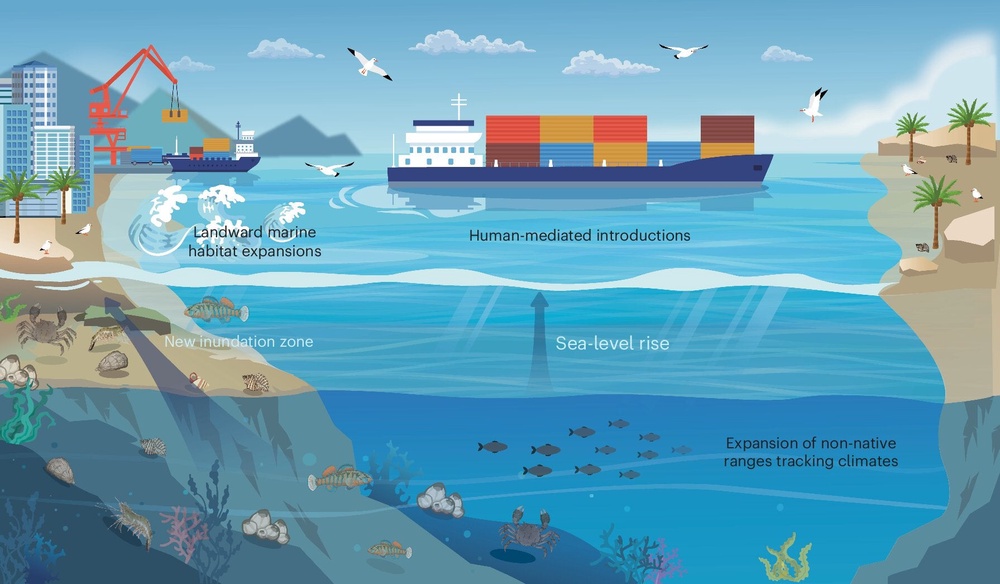
“Sea-level rise may open new habitats for the landward expansion of marine non-native species into inundated coastal lands, which remains unexplored,” the latest study, published in Nature Ecology & Evolution, explains.
Estuaries are particularly vulnerable to invasive marine species, it notes, as they are hubs of human activity.
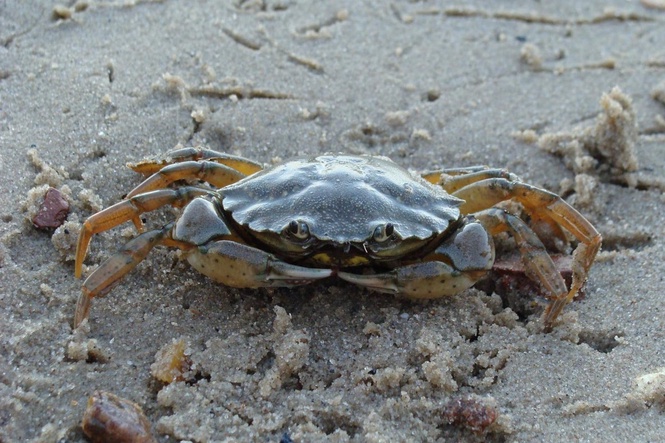
The research models the future distribution of 122 non-native marine species, including the European green crab, the northern Pacific sea star, the bamboo worm and the pleated sea squirt under scenarios of continued sea-level rise. A scenario of moderate carbon emissions will see the global sea level rise by an average of 20cm by 2050.
In this scenario, the study predicts that between 290,000 and 470,000 sq km of inundated coastal land, almost the size of Italy, will become suitable habitat for invasive species, which often possess traits that give them competitive advantages over native species.
Invasive species like the Pacific oyster, the Atlantic blue crab, the predatory snail Veined rapa whelk, and the Asian tiger shrimp could colonise two-thirds of inundated coastal land in regions where they are already established.
Some of the marine creatures covered in the study, such as the striped barnacle, the orange-striped green sea anemone, the Indo-Pacific swimming crab, are expected to gain the most habitat from the inundated area. They are likely to spread most extensively in areas close to estuaries.
The findings highlight the need to incorporate sea-level rise into invasion-risk assessments, the study notes.
“Coastlands bordering estuaries typically have large human populations and are among the most important ecological and economic marine regions,” the researchers explain, adding that landward invasions of non-native species will likely adversely affect both biodiversity and human activities.
The researchers call for early monitoring and management strategies to help limit the impacts on biodiversity, fisheries productivity and other ecosystem services in coastal regions.
They add, however, that the newly inundated habitats may not always support rapid colonisation by invasive species.
“Despite potential caveats, considering the general lack of comprehensive surveillance and monitoring strategies for marine invaders in mainland areas under sea level rise-induced incursions, our study provides valuable data that can help inform targeted management plans,” the scientists concluded.
A Nor’easter is set to slam into the East Coast. Climate Change is making it stronger
Trump renames AI in off-the-rails rant against ‘hoax’ concerns
Europe’s worst disease-carrying bug hunts mainly at night, study finds
NHS nurses found maggots in wounds during ‘suffocating’ heatwaves
What nutritionists say to buy if you want to avoid ultra-processed foods
Major breakthrough in treatment for ultra-rare 'second skeleton' disease