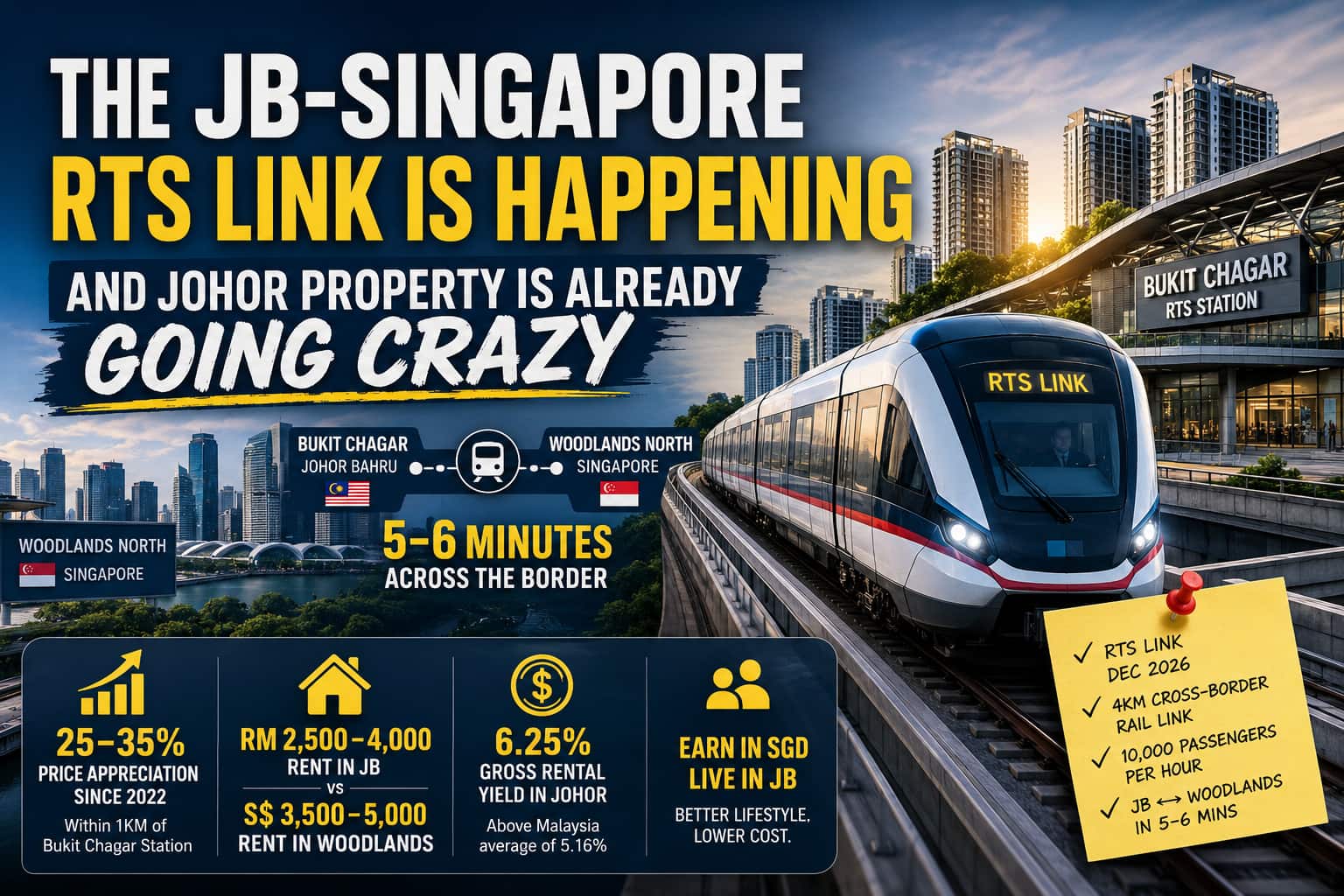
The RTS Link is not a new story. It has been announced, delayed, renegotiated, and pushed back so many times that Malaysians developed a reflexive skepticism about it ever actually happening. But this time? It's actually happening.
The Johor Bahru-Singapore Rapid Transit System Link is a 4km cross-border rail connection between Bukit Chagar in JB and Woodlands North in Singapore, capable of carrying 10,000 passengers per hour and cutting the JB-to-Woodlands commute to approximately five to six minutes. Currently, the Causeway jam can swallow anything from 30 minutes to two hours depending on the time of day. That's not a minor improvement. It is a fundamental transformation of how people think about living and working across both sides of the border.
The latest official target is December 2026. Construction is physically visible and both governments are deeply invested in delivery. And the property market has already been pricing this in for some time. Within a 1km radius of the Bukit Chagar station, apartment and condominium prices have appreciated 25 to 35% since 2022, driven significantly by the RTS and the adjacent Johor-Singapore Special Economic Zone.
The opportunity being created is straightforward. A modern serviced apartment near the RTS station rents for RM2,500 to RM4,000 per month. A comparable unit in Woodlands, Singapore would cost between S$3,500 and S$5,000. For a Malaysian or Singaporean working in Singapore and willing to commute via rail, living in JB becomes not just affordable but genuinely attractive from a lifestyle-to-cost ratio. Johor gross rental yields average 6.25%, comfortably above Malaysia's national average of 5.16%. The numbers are compelling.
What this also means for ordinary Malaysians who aren't investors is that cross-border employment becomes meaningfully more viable. You can earn in SGD, which currently buys significantly more ringgit than before, while living in a country where costs are dramatically lower. That arbitrage has always existed. The RTS makes it logistically practical for a much broader group of people than ever before.
The caveats are real: properties near the station have already moved substantially and late movers will capture less upside. The JS-SEZ is still developing, and its full economic impact is yet to materialize. And Malaysian property purchases carry costs in stamp duty and legal fees that add 8 to 15% to the investment. Do the homework before the FOMO kicks in.
But the fundamental story is sound. JB is no longer just the city you pass through to get somewhere else. The RTS is making it somewhere in its own right.
Ronny M (ronny76netstuff@gmail.com) is a content creator under the Newswav Creator programme, where you get to express yourself, be a citizen journalist, and at the same time monetize your content & reach millions of users on Newswav. Log in to creator.newswav.com and become a Newswav Creator now!
The User Content (as defined on Newswav Terms of Use) above including the views expressed and media (pictures, videos, citations etc) were submitted & posted by the author. Newswav is solely an aggregation platform that hosts the User Content. If you have any questions about the content, copyright or other issues of the work, please contact creator@newswav.com.