For the world’s least developed countries – many of which are also suffering from debt crises, and unable to apply for loans – the core message at Cop31 is simple: much more money, supplied in the form of grants, is needed to address extreme weather resulting from climate change.
“This is not a negotiable position for us: we did not create the climate crisis, we did not choose to have these challenges face us, and now we cannot afford to address its impacts,” says Chiku Kilembe, who is attending Cop31 as part of Malawi’s climate finance negotiating team. “For countries like ours, which has quite a severe debt situation, we really need more grants.”
The problem is, in the wake of cuts to foreign aid from wealthy nations like the US and UK, there is much less cash available at the Cop. Last year, foreign aid fell by 23 per cent to its lowest level in a decade – spearheaded by a 56.9 per cent cut from the US – even as climate impacts have continued to escalate.
“Climate finance is about three things: quantity, quality, and access. So if you reduce the aid budget, you are reducing the quantity,” says Debbie Hillier, policy lead on UN climate negotiations at the development charity Prosper Global. “Clearly aid reductions are bad news here.”
The chasm between money available and money required has created something of an impasse in negotiations at Cop31. This is further complicated by the fact that the list of “Annex II” countries who are officially required to provide money in the UN system is fixed on terms devised in 1992. This means that newly-wealthy countries – including China, the UAE, South Korea and Singapore – do not officially have to provide climate finance, while the likes of Greece and Portugal are required to.
“European countries might have a lot of publicity about their cuts, but a lot of them are still doing a very good job, while a lot of very rich countries are not doing anything like what they should,” suggests Sarah Colenbrander, director of climate and environment at think tank ODI Global.
The focal point for climate finance discussions in Antalya is how exactly the world plans to meet a key target of mobilising $300bn (£227bn) in funding per year by 2035, which was agreed at Cop29 in Baku in 2024. In addition, the least developed countries are looking for clarity on what a goal to triple finance for adaptation agreed last year will look like, with climate-vulnerable countries hoping that the goal will translate into a clear target for $120bn.
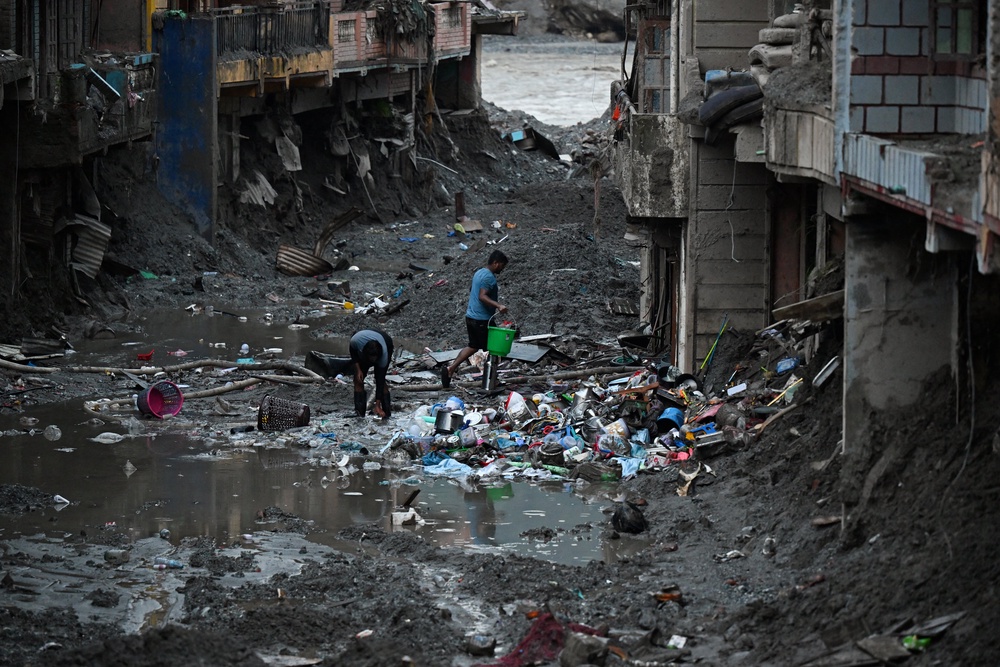
Money for climate “loss and damage” is also under the spotlight following this year’s flooding disaster in Nepal, which caused an estimated $4.8bn in damage and killed thousands, after a piece of melting glacier dislodged high up in the mountains. A climate loss and damage fund that was established at Cop27 in Egypt in 2022 has so far secured just $822m in pledges, and countries affected by climate disasters are limited to apply for only $20m per disaster – less than half a per cent of Nepal’s needs.
“Nepal did not create the climate problem. But we keep being hit by massive floods, not just this year but also in 2025, 2022 and other years,” says Bisesh Sangat, a Nepali attendee of COP31 who works for the NGO Practical Action. “There’s a lot of big infrastructure losses, but also the human losses mean that you go to villages and there are lots of widows and children without fathers, so the losses are very profound.”
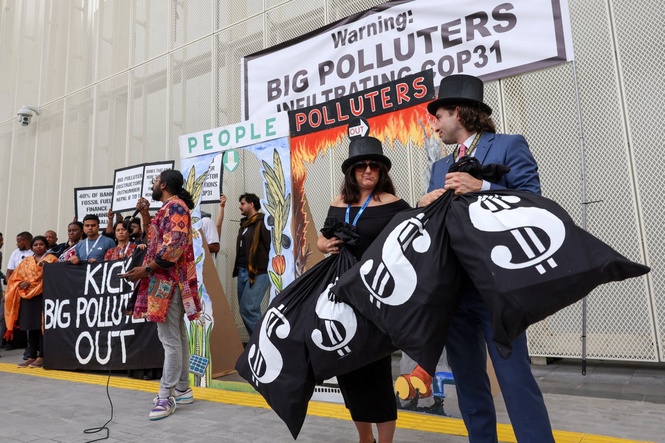
Amid efforts to break the climate finance impasse at the Cop, sources close to negotiations also suggest that there is all tactical play from newly-industrialised countries and petrostates to try to focus on arcane aspects of the climate finance settlement. This is to try to avoid any question of amending the 1992 “Annex II” contributor base for climate finance, and instead keep the focus on laying blame on the handful of wealthy developed countries that actually provide the most.
It all means, says Hillier of Prosper Global, that discussions have a tendency to go “round and round in circles”, with developing countries accusing rich countries of not being faithful to the “common but differentiated responsibilities” clause of the landmark Paris Agreement – which calls for industrialised countries to provide financial assistance to low-income countries. Meanwhile, European countries repeatedly call for countries that have grown wealthy since 1992 to contribute to climate finance.
The good news, according to some, is that climate finance negotiations are on the official Cop31 agenda after a break last year, which could help reach solutions to some of the key questions related to the $300bn target and the adaptation goal. Signs of just how much progress is being made in this negotiating track should become clear after the weekend.
Others, however, think that it is time to move on from dithering around the exact policy structure of how climate finance should be provided – given that some countries are deliberately doing this in order to avoid serious scrutiny – and instead there should be a much greater focus on using the money that is available to implement practical solutions.
“There is certainly an argument that [UN climate negotiations] need reform,” says ODI’s Colenbrander. “Instead of having a small number of countries block the process, you could have a majority vote, which would be able to reflect the desires of the majority who want to be more ambitious on the climate.
“If there will be no evolution of the UNFCCC system to make it fit-for-purpose, another approach is to accept the fact that we now have a completed framework for international climate cooperation under the Paris Agreement. Countries can therefore now focus on constructive cross-border cooperation wherever possible rather than investing time and effort in the deadlocked dynamics at Cop.”
This article has been produced as part of The Independent’s Rethinking Global Aid project
Read MoreThe Super El Niño has arrived - and already brought weather chaos with it
Climate action for the most vulnerable nations has to include farming
How a year of extreme heat around the world is reshaping conversations at Cop31