

MetMalaysia says the North-East monsoon will start in mid-November 2023. Nevertheless, on our land in Kota Bharu, between the Pengkalan Datu River and the South China Sea, it has been windy and rainy all day. There are rain clouds in the distance and the rain is likely to continue all day. Yes, it has been cool and pleasant today, although I suppose somewhere around the world, it must be the hottest day in existence. For others, in the Gaza Strip, all existence is gone.
Dr Hatem Abu Zaydeh, my former PhD student, is in Gaza City, with his wife and five children. “We are still alive”, he says. He is a faculty member of the Islamic University of Gaza, which now lies in ruins. If you google the University, you will see that it is “permanently closed”. The 17,874 students, and 307 faculty are nowhere to be seen, all existence is gone.
When I last messaged Hatem a few days ago, he sent me a stark video clip showing his living room in ruins. He looked like he had not slept in days, his face etched with pain and worry. I could hardly hear him. In the background, was a sound just as horrendous as the beasts responsible for them. These were Israeli fighter jets and their ear-splitting sounds, like thunder arriving from over the horizon, followed by deadly explosions. Hatem, in his video says, “Alhamdulillah, death is close, but for now, we are safe”. For others, all existence is gone.
The need to humanise conflict
In his video clip, Hatem said” In the name of Allah the Merciful, there was a huge bomb for the Muharram family. The bomb was without warning. 12 people died including children and women and caused total destruction of the house. There was a bomb for Abul Aall and teacher Mahir’s family resulting in death of 9 to 10 people. Alhamdulillah. (Edited for clarity and translated from Arabic by Banan and her husband Omar, postgraduate Iraqi students from USM.) Do we need to know who died? When thousands of men, women and children have died in Gaza, do we really need to know their names?
About 1,800km away from Gaza, Dr Dragana, a Serbian forensic anthropologist is identifying victims of the 1995 Srebrenica genocide during the Bosnian War. Of the estimated 8,000 dead in the town of Srebrenica, roughly 1,000 are still awaiting identification. She says, “to find a lost son, father, brother, husband is to rescue the dead from anonymity. There is a name and a grave where families can go to mourn. There is closure." That same need drives a small group of activists in South Sudan that tracks down the names of those killed in a deadly political rivalry. They created a project called “Naming the Ones We Lost”, a memory project not intended for blame but to recognize the losses of lives, and the value they brought to the world.
So, Hatem, while we do not know your neighbours, or your family and friends, we understand the need for them to be recognised, to understand that in the time they were alive, and now in their death, they achieved something tangible. At the very least, they make us stop and think of the futility of such wars. There is a need to humanise conflict, to accept, respect and understand others, to ensure justice, freedom, and solidarity.
The right to self defence?
According to Prime Minister of Israel, Benjamin Netanyahu, Israel as a country had the right to defend itself against the 7th October Hamas attacks. Self-defence law requires a proportional defence. The response must match the threat level in question. A person can only use as much force as required to remove the threat. If the threat involves deadly force, the person defending themselves can use deadly force to counteract the threat. Any use of excessive, disproportionate force against the perpetrator is retaliatory and not self-defence. Sometime during the night of 7th October 2003, things changed, and self defence became lex talionis.
What is lex talionis?
Conflicts between Israel and various Arab forces have been around since 1948. In other words, the conflict of 7th October 2023 was 75 years in the making. Was this a Palestinian response to previous injustice? Or, for the Israelis, surely if attacked, one has the right to self-defence? Either one or the other perspective speaks of lex talionis, the law of retaliation.
Lex talionis takes the view that punishment for crimes must exact “an eye for an eye, a tooth for a tooth.” It is referenced in all three Abrahamic religions and dates as far back as the Code of Hammurabi. In Islam lex talionis is embedded in the law of qisas (retributive justice) but tempered with mercy through diyya (compensation). The general idea of lex talionis,is that punishment should “fit the crime.”
However, at the time of this writing, the Palestinian death toll has reached 10,022 people, including 4,104 children and 2,641 women while the Israeli death toll is 1400, mainly civilians killed during Hamas' initial attack. Where is the proportionality of lex talionis? Right now, there is neither proportionality, nor mercy. When the retribution is disproportionate, there can be nothing but violence.
The crime without a name
In his radio broadcast of 24 August 1941, Winston Churchill talked about the systematic murder of the Jewish people. He announced that Jews had nowhere to run and were being systematically exterminated. He said, “We are in the presence of a crime without a name.”
Fast forward to November 2023 in the Gaza Strip. If Churchill were alive, he would use social media to talk of the systematic extermination of Palestinians but with a difference. This time, thanks to Raphael Lemkin, a Polish-Jewish lawyer, the crime has a name.
In his 1944 book, Axis Rule in Occupied Europe, Lemkin introduced the word genocide. “It comes from the ancient Greek word genos (race, tribe) and the Latin cide (killing)…. It is a coordinated plan of different actions aiming at the destruction of essential foundations of the life of national groups, with the aim of annihilating the groups themselves. Genocide is directed against the national group as an entity, and the actions involved are directed against individuals, not in their individual capacity, but as members of the national group.”
Moshe Feiglin, Israeli politician and former Knesset member, said in an interview with Aljazeera that the only solution is the “complete destruction of Gaza, before invading it… Destruction like Dresden and Hiroshima, without a nuclear weapon.”
Mr Churchill, this is the word you were looking for: genocide. It is as relevant in1944 as it is today in Gaza, 2023. In the face of overwhelming evidence, this is the word the world knows but refuses to use: genocide.
The land between the river and the sea
Against a backdrop of incessant bombings, his house in ruins, his children “safe” at a UN school that was bombed literally hours after he sent the message; Hatem and those like him, survive another day. They send out similar messages like Hatem’s “The situation is very miserable. No water, no food, no medicines. More than 4000 children killed”.
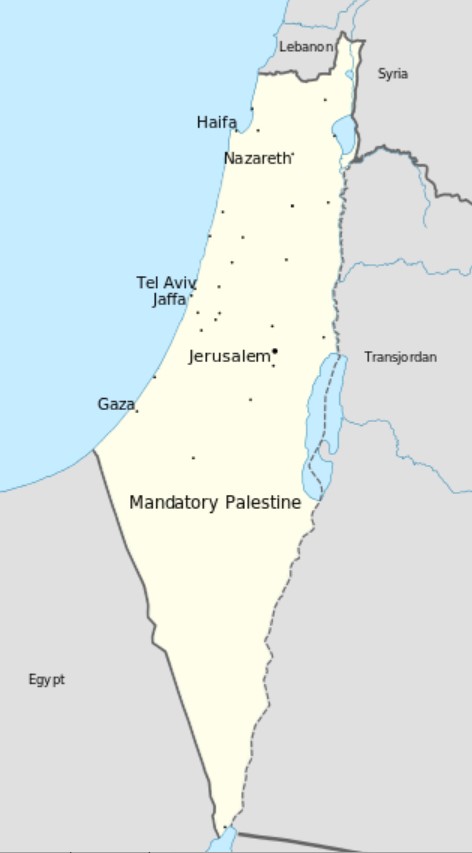
Unlike my small riverine land within the mangroves of Pengkalan Datu that feeds into the South China Sea, my former student Hatem, lives on a tiny sliver of land nestled between the River Jordan and the Mediterranean Sea.
This contentious land is now part Israel, part Gaza, part West Bank. It is the land of Jesus, Moses, and Muhammad, of Christians, Jews, and Muslims. It is the confluence of the three Abrahamic religions. It is where the ongoing genocide of Palestinians is happening. Does anyone really care?
Zalina Ismail is a content creator under the Newswav Creator programme, where you get to express yourself, be a citizen journalist, and at the same time monetize your content & reach millions of users on Newswav. Log in to creator.newswav.com and become a Newswav Creator now!
The User Content (as defined on Newswav Terms of Use) above including the views expressed and media (pictures, videos, citations etc) were submitted & posted by the author. Newswav is solely an aggregation platform that hosts the User Content. If you have any questions about the content, copyright or other issues of the work, please contact Newswav.

