
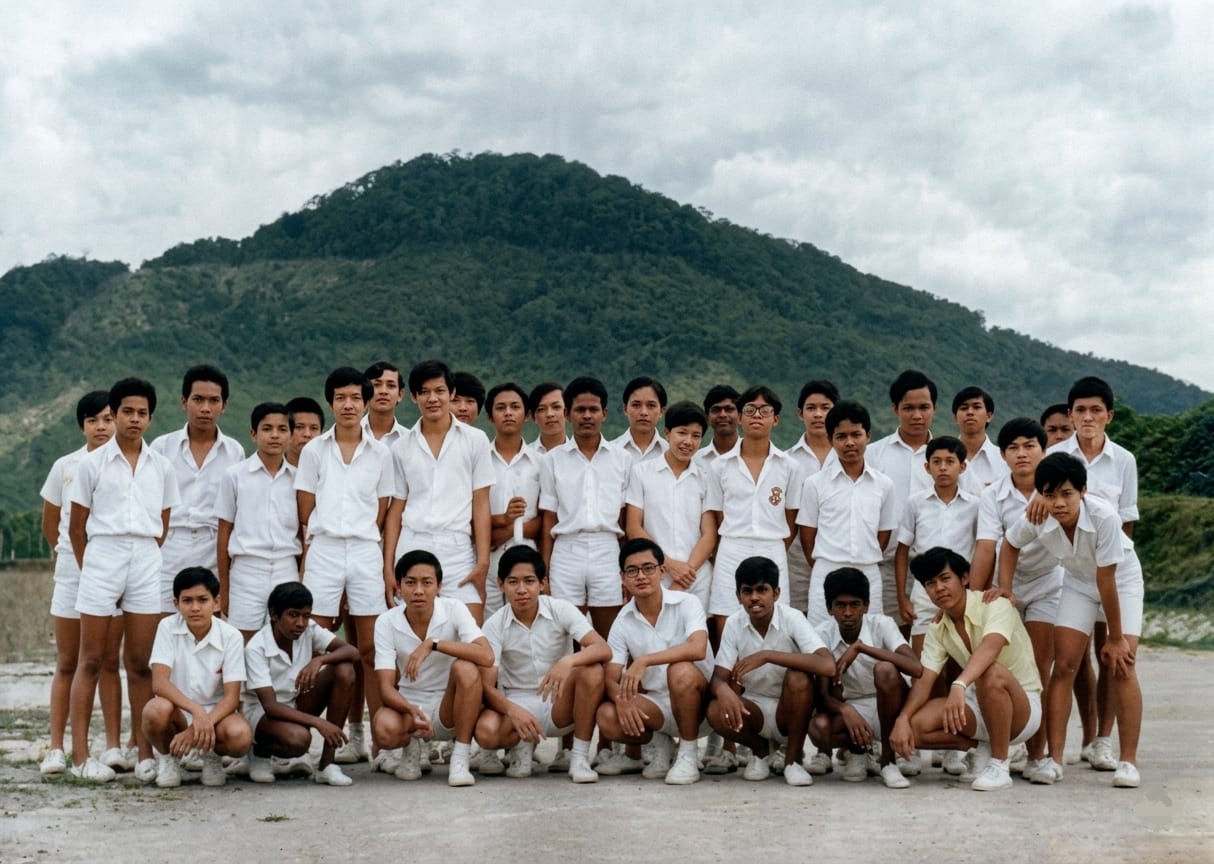
Echoes of '76: Brotherhood and the LCE Gauntlet in Bukit Mertajam. The year is 1976. The air in Bukit Mertajam, a bustling town nestled in the heart of Penang, Malaysia, hums with the vibrant energy of youth. Against the majestic backdrop of the famed Bukit Mertajam hill, a group of Form 3 boys stands united, captured in a photograph that transcends time. Dressed in crisp white shirts and shorts, their faces reflect a mosaic of Malaysia's rich cultural tapestry Malay, Chinese, and Indian boys, all bound by the shared experience of adolescence and the looming shadow of the Lower Certificate of Education (LCE) examination.
This photograph is more than just a snapshot; it's a portal to an era when life moved at a different pace, and the challenges of growing up were met with a unique blend of camaraderie and resilience. For these boys, Form 3 was a pivotal year, a crossroads where their academic futures hung in the balance. The LCE, was not merely an exam; it was a rite of passage, a gateway to Form 4 and, for many, the continuation of their secondary education in a high school like the esteemed High School Bukit Mertajam (HSBM) Failure meant a detour, perhaps to vocational training, or an early entry into the workforce. The stakes were undeniably high, yet amidst the pressure, life was also filled with moments of unadulterated joy, mischief, and the forging of lifelong bonds.
School days in 1976 Bukit Mertajam were a far cry from the digitally-driven world of today. Imagine a classroom where the internet was a futuristic fantasy, and calculators were still a luxury. Assignments were meticulously handwritten, often leading to cramped fingers and smudged ink. The concept of Google providing instant answers was unimaginable; instead, the school library was the hallowed ground where knowledge was painstakingly unearthed. Students spend up to ten hours poring over journals just to find a single reference for an essay, a stark contrast to the swift digital searches of today. This dedication to manual research fostered a deeper engagement with their studies, even if it meant more effort.
Beyond academics, school life was a vibrant tapestry woven with shared experiences. The multiracial composition of the classes, as evident in the photograph, meant that boys from Malay, Chinese, and Indian backgrounds learned, played, and grew up together. This daily interaction fostered a unique understanding and appreciation of each other's cultures, laying the foundation for a truly Malaysian identity.
Breaks were a sensory delight, with the aroma of Nasi Lemak wrapped in banana leaves wafting from the school canteen, accompanied by the clinking of glasses filled with iced syrup. These simple pleasures were often punctuated by games of 'tikam-tikam,' a popular form of lottery among school children, adding a dash of excitement to their otherwise structured days.
Transportation to school was an adventure in itself. Many boys cycled, their bicycles a symbol of newfound independence, while others relied on the ubiquitous school bus, a hub of chatter and camaraderie. The journey to and from school was often an extension of their learning and social lives, filled with shared jokes, whispered secrets, and the occasional prank. These were the moments that truly defined their youth, far removed from the pressures of examinations.
However, life wasn't without its challenges. The education system of the 1970s, while robust, presented its own set of hurdles. This bureaucratic maze, though frustrating, taught them patience and perseverance, qualities that would serve them well in adulthood.
Discipline was also a cornerstone of the education system. The 'rotan' (cane) was a familiar sight, and corporal punishment, though now largely frowned upon, was then a common method of enforcing rules. While it instilled a certain fear, it also, for many, reinforced the importance of respect and adherence to authority.
Yet, even within this strict environment, humor found its way. The legendary story of the 1970 UFO incident at Stowell Primary School, where boys claimed a soup-plate sized flying saucer landed near them, became a local legend, a testament to the vivid imaginations and playful spirit of the youth in Bukit Mertajam.
The LCE exam itself was a formidable beast. It was the first major public examination these boys would face, a true test of their knowledge and understanding across a range of subjects. The pressure to perform was immense, not just from parents and teachers, but also from within. Passing meant progress, a step closer to higher education and a brighter future.
Failing, however, could mean a significant setback, potentially altering the course of their lives. The year 1972 saw a particularly low passing rate of only 30% for the LCE, highlighting the rigorous nature of the examination and the challenges students faced. This historical context underscores the gravity of the LCE for the Form 3 class of 1976.
Preparation for the LCE was an all-consuming affair. Evenings were spent poring over textbooks, often under the dim glow of a single light bulb. Study groups formed, with brighter students patiently explaining complex concepts to their peers. The air was thick with the scent of old paper and youthful ambition. Teachers, too, played a crucial role, often going above and beyond to ensure their students were well-prepared. They were mentors, disciplinarians, and sometimes, even confidantes, guiding these young minds through the labyrinth of academic challenges.
But it wasn't all about studying. These boys, like all teenagers, found ways to inject humor and light heartedness into their demanding routines. Pranks were common, a way to release tension and assert their burgeoning independence. Perhaps it was a well-timed joke during a quiet study session, or a mischievous act that left teachers scratching their heads. These moments of levity were essential, providing a much-needed respite from the academic grind and strengthening the bonds of friendship.
The photograph, with the majestic Bukit Mertajam hill standing sentinel in the background, captures a moment of innocence and anticipation. Each face tells a story of dreams, anxieties, and the unspoken hopes for the future. They stand on the cusp of adulthood, ready to face the LCE gauntlet, armed with their textbooks, their friendships, and a healthy dose of youthful optimism. The LCE was a hurdle, but it was also a shared experience that would forever bind them, a testament to their resilience and the enduring spirit of a generation that navigated the complexities of a rapidly changing Malaysia.
Looking back, the experiences of these boys in 1976 Bukit Mertajam offer a poignant glimpse into a bygone era. It was a time when education was a privilege, hard work was a given, and community was paramount. The LCE exam, while a source of stress, ultimately served as a unifying force, pushing them to strive for excellence and preparing them for the challenges that lay ahead. Their story is a reminder that even in the face of academic pressure, the human spirit finds ways to connect, to laugh, and to create memories that last a lifetime.
ENDS
By
Sam Trailerman
Nganasegaran (tapessam@gmail.com) is a content creator under the Newswav Creator programme, where you get to express yourself, be a citizen journalist, and at the same time monetize your content & reach millions of users on Newswav. Log in to creator.newswav.com and become a Newswav Creator now!
The User Content (as defined on Newswav Terms of Use) above including the views expressed and media (pictures, videos, citations etc) were submitted & posted by the author. Newswav is solely an aggregation platform that hosts the User Content. If you have any questions about the content, copyright or other issues of the work, please contact creator@newswav.com.