By Dr. Amarjeet Singh @ AJ | 24 October 2026
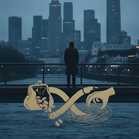
We have more information than any generation before us. We have smartphones, artificial intelligence, instant news, online education and access to knowledge from almost every corner of the world. Yet one question continues to trouble me: Are we becoming wiser, or merely better informed?
Today, people listen without verifying, read headlines without understanding, judge without investigating and share opinions without considering the consequences.
We are quick to argue, quick to condemn and sometimes painfully slow to admit we are wrong.
Is techNology responsible? Is social media destroying our ability to think critically? Or is technology simply exposing weaknesses that have always existed in human nature?
Perhaps the real problem is not that wisdom has disappeared. Perhaps we have stopped practising it.
“Information tells us what happened. Knowledge helps us understand why. Wisdom teaches us what to do, when to act and when to remain silent.”
1. The Seven Levels of Wisdom
Wisdom is not automatically acquired through age, academic qualifications, wealth, professional status or religious knowledge.
I believe we can understand its development through seven practical levels. These are a framework for reflection, not an established scientific ranking.
Information — Hearing and Receiving
We hear a story, read a headline or receive a WhatsApp message. We know something has been said, but not whether it is true.
Knowledge — Learning the Facts
We investigate, read further, identify sources and separate evidence from rumours.
Understanding — Connecting the Dots
We examine context, causes, consequences and perspectives beyond our own.
Critical Thinking — Questioning Assumptions
We challenge what we hear, including information that confirms our existing beliefs.
Judgement — Making Responsible Decisions
We consider evidence, ethics, timing, risks and the impact on others before acting.
Humility — Recognising Our Limitations
We accept criticism, acknowledge mistakes and remain willing to change our minds.
We use knowledge with compassion, courage, fairness and responsibility, even when nobody is watching.
The tragedy is that many people never progress beyond the first level. They receive information, form an opinion and immediately react.
But receiving information is not the same as understanding it.
2. Technology: The Greatest Teacher or the Greatest Distraction?
Technology has transformed humanity. Artificial intelligence can assist research, doctors can access medical knowledge rapidly, and students can learn from universities thousands of kilometres away.
Yet technology also rewards speed, visibility and emotional engagement.
A sensational headline can travel faster than a carefully researched explanation. A misleading video may attract millions of views while its correction receives little attention.
Algorithms can reinforce what we already believe. Artificial intelligence can generate convincing but inaccurate answers. Images, voices and videos can be manipulated.
Technology itself is not wisdom or foolishness. It is an amplifier of human behaviour.
If we use it to investigate, learn and challenge ourselves, it becomes a powerful instrument of progress.
If we use it merely to attack, imitate and seek validation, it can magnify ignorance.
“The danger is not that machines are learning to think. It is that human beings may become comfortable allowing machines and algorithms to think for them.”
The question is not whether we should embrace technology. We must.
The question is whether our judgement is developing as quickly as our technological capabilities.
3. The Global Crisis of Trust and Thinking
The evidence is increasingly concerning.
The Reuters Institute's 2026 Digital News Report, covering 48 markets, found that social media and video networks had overtaken news organisations' websites as the most widely used online news source.
54% Access online news through social media and video networks
37% Trust news most of the time
62% Concerned about misinformation online
Source: Reuters Institute, Digital News Report 2026. Figures are averages across surveyed markets.
reutersinstitute.politics.ox.ac.uk
These figures do not prove that humanity is becoming less intelligent. They reveal an information environment in which trust, attention and verification face serious challenges.
UNESCO has similarly highlighted the importance of media literacy, reporting that only 43% of countries have integrated elements of it into formal education.
We teach children to use devices. But do we sufficiently teach them to question what appears on those screens?
4. Human Nature: The Enemy Within
Technology did not invent arrogance, jealousy, prejudice, gossip or the desire to be right.
These existed long before smartphones.
Human beings naturally seek acceptance. We enjoy hearing information that supports our opinions. We may reject uncomfortable facts because accepting them requires changing our position.
This is where ego becomes dangerous.
Consider a disagreement between two friends. One makes an accusation, the other becomes defensive, and both begin arguing.
Neither listens to understand. Both listen to respond.
Eventually, the original issue becomes less important than winning the argument.
The same happens in marriages, workplaces, community organisations and governments.
“When protecting our ego becomes more important than discovering the truth, wisdom has already left the conversation.”
Wisdom requires emotional discipline. It means asking whether we are defending a principle or merely protecting our pride.
5. Real-World Examples: Where Wisdom Matters
Malaysia: When One Person's Actions Threaten Community Harmony
Consider the recent reported vandalism involving a mosque in Kelantan and an individual bearing a Sikh name.
Such incidents require investigation, accountability and lawful action.
But should an entire religious community be judged by the alleged or proven wrongdoing of one individual?
For generations, Sikhs have contributed to Malaysia through policing, military service, railways, medicine, education, law and commerce.
Wisdom means distinguishing individual responsibility from collective identity.
Before forwarding an inflammatory message, ask whether it promotes justice or encourages hatred.
Entertainment: Public Humiliation Is Not Accountability
The recent controversy surrounding singer Daler Mehndi raises another important question.
Conflicting accounts circulated about his performance, personal circumstances and professional conduct.
Before reaching conclusions, we must establish what actually happened.
Even when someone performs below expectations, does paying their professional fee give an organiser the moral right to humiliate them publicly?
Accountability can be exercised with dignity.
Wisdom is not merely knowing who is right. It is knowing how to treat people when something goes wrong.
Corporate Leadership: Renovation Without Transformation
In my experience across corporate management, automotive operations, hospitality and attractions, I have observed organisations investing heavily in buildings, equipment, branding and restructuring.
Yet some overlook leadership culture.
What happens when a company spends millions renovating its premises but refuses to address micromanagement, delayed decisions, weak recruitment and poor communication?
The building changes. The problems remain.
An effective leader listens to operational feedback, welcomes criticism, delegates authority and holds people accountable.
An unwise leader treats every disagreement as disloyalty.
“A company does not become better simply because its walls are repainted. Transformation begins when its leadership is prepared to change.”
Automotive: Marketing Excitement Versus Informed Judgement
Malaysia's growing selection of automotive brands, particularly emerging electric vehicle manufacturers, gives consumers more choices.
But attractive prices, futuristic dashboards and promotional campaigns should not replace proper evaluation.
We must examine safety records, after-sales support, parts availability, warranties, service networks and long-term ownership costs.
A vehicle may look impressive during a showroom visit, but what happens when an essential replacement part takes weeks to arrive?
This is why I often advocate examining proven models and established support networks rather than buying purely on excitement.
Wisdom is understanding the difference between what we desire and what we can responsibly maintain.
Global Conflicts: Facts Before Allegiance
Across international conflicts, political disagreements and humanitarian crises, images and claims can provoke immediate emotional reactions.
Some material is authentic. Some is outdated, miscaptioned, manipulated or entirely fabricated.
Compassion for victims should never disappear. But compassion and verification must work together.
We can condemn suffering without sharing unverified allegations.
6. Why Education Alone Does Not Produce Wisdom
We sometimes assume that highly educated individuals are naturally wise.
Unfortunately, intelligence and wisdom are different qualities.
A person may possess multiple degrees yet struggle to accept criticism. A successful entrepreneur may understand financial statements but fail to understand employees.
A religious leader may know scripture yet lack compassion.
Conversely, a person with limited formal education may demonstrate extraordinary patience, fairness and judgement.
Education provides tools. Experience provides lessons. Reflection transforms those lessons into wisdom.
And humility allows wisdom to continue growing.
The European Commission's education platform has highlighted concerns that generative AI may encourage excessive reliance on automated answers rather than independent reasoning.
European Education Area
We should use AI to expand our thinking, not surrender our thinking.
7. Wisdom in Relationships, Religion and Everyday Life
In relationships, wisdom means understanding that not every disagreement requires a winner.
Sometimes we must apologise. Sometimes we must forgive. Sometimes we must establish boundaries.
Within religious communities, wisdom requires looking beyond rituals, appearances and titles.
Guru Nanak Dev Ji's teachings emphasise truthful living, humility, honest effort, compassion and service.
These values remain relevant regardless of one's religious background.
What is the value of reciting prayers if we continue spreading gossip, humiliating others or refusing to acknowledge our mistakes?
Spiritual knowledge becomes meaningful when reflected in daily conduct.
Similarly, parents must recognise that children need more than academic achievements. They need the confidence to ask questions, accept mistakes and understand consequences.
We should raise thinkers, not merely followers.
8. Ten Questions We Should Ask Ourselves
Before reacting to information, making a judgement or criticising another person, consider these questions:
1. Have I verified the information, or am I simply repeating something?
2. Have I read the full story or only the headline?
3. Am I listening to understand or preparing to argue?
4. Could there be another explanation that I have overlooked?
5. Am I defending the truth or protecting my ego?
6. Would I make the same judgement if the person involved were my family member?
7. Have I considered how my words might affect others?
8. When was the last time I admitted that I was wrong?
9. Am I willing to change my opinion when credible evidence challenges it?
10. Is my response making the situation better, or am I adding to the problem?
These questions are simple.
Answering them sincerely is considerably more difficult.
9. How Do We Rebuild Wisdom?
We can begin with everyday discipline.
Read beyond headlines. Compare credible sources. Verify photographs and videos before forwarding them.
Learn to distinguish facts, opinions, assumptions and allegations.
In meetings, allow opposing views to be heard without immediate interruption.
At home, teach children that asking respectful questions is not disobedience.
At work, encourage constructive criticism instead of surrounding leaders with people who always agree.
When emotions become overwhelming, allow yourself time before responding.
Most importantly, recognise that changing our minds is not necessarily weakness.
It can be evidence of intellectual maturity.
“A foolish person believes changing an opinion means losing. A wise person understands that refusing to learn may cost far more.”
10. Final Reflection: Are We Becoming Smarter but Less Wise?
We live in an extraordinary period of human progress.
Technology has expanded access to knowledge, improved communication and created opportunities previous generations could scarcely imagine.
But progress must be measured by more than processing speed, artificial intelligence, wealth or academic achievement.
We must also examine how we treat people, resolve disagreements, make decisions and respond to uncomfortable truths.
I believe wisdom is not disappearing. Rather, the modern world often rewards behaviours that compete with it: impatience, outrage, certainty and instant gratification.
That makes wisdom even more valuable.
A wise person does not need to know everything.
A wise leader does not need to win every argument.
A wise parent does not need to control every decision.
And a wise society does not need everyone to share the same opinion.
What we need is the willingness to listen, verify, understand, reflect and act responsibly.
Perhaps the greatest measure of wisdom is not how much we know, but how willing we remain to learn what we do not know.
And perhaps our greatest question should be:
“With all the knowledge available to us today, why are we still allowing ignorance, ego and assumptions to determine so many of our decisions?”
The answer begins with each of us.
Dr. Amarjeet Singh @ AJ
Business Consultant | Strategist | Writer | Leadership & Organisational Development
© 2026 Dr. Amarjeet Singh @ AJ. All rights reserved.
Amarjeet Singh Sran (amarjeetsinghsran5@gmail.com) is a content creator under the Newswav Creator programme, where you get to express yourself, be a citizen journalist, and at the same time monetize your content & reach millions of users on Newswav. Log in to creator.newswav.com and become a Newswav Creator now!
The User Content (as defined on Newswav Terms of Use) above including the views expressed and media (pictures, videos, citations etc) were submitted & posted by the author. Newswav is solely an aggregation platform that hosts the User Content. If you have any questions about the content, copyright or other issues of the work, please contact creator@newswav.com.