
Columnist’s note: This column begins a three-part series drawn from a keynote lecture, “Meaning on the Move: Migration, Lexicon and the Oxford English Dictionary,” which I delivered at the Intercultural Semantics conference at Aarhus University from Aug. 19 to 21, 2026, organized by Professors Susana Fernández and Carsten Levisen. Parts 2 and 3 will follow in the coming weeks.
THERE is a cartoon that has been circulating online for a decade now, drawn by the architect and satirist Karl Sharro. It shows six figures, each carrying a suitcase or a child or a mop, and each labeled with a different word: émigré, global nomad, expat, immigrant, asylum-seeker, migrant. The joke, if we can call it that, is that all six people are doing exactly the same thing — crossing a border in search of a better life — and yet English refuses to call them by the same name.
This is not an accident of vocabulary. It is one of the clearest illustrations I know of a principle that sits at the heart of migration linguistics, the field I have spent much of my career trying to build: language does not simply describe migration. It helps produce the social order that migration moves through.
Consider how differently we speak about the movement of the wealthy and the movement of the poor. A banker relocated by his firm from London to Tokyo is an expatriate. A domestic worker recruited from Manila to care for someone else’s children in Hong Kong is a migrant, or more specifically, in the language of Hong Kong’s own immigration bureaucracy, a “foreign domestic helper.” Both have moved. Both have left home, learned new customs, sent money back to family, built lives in unfamiliar cities. But one is folded into the vocabulary of cosmopolitanism, expertise and choice; the other into the vocabulary of labor, temporariness and need.
This is what I call, following the migration scholar Brenda Yeoh, a lexical bifurcation of migrant labor. And it is not confined to casual speech. It is written into law. If you compare the official visa categories of destination countries around the world — the United Kingdom, the United States, Australia, Singapore, Japan, the United Arab Emirates — a striking pattern emerges. At one end of the spectrum, governments reach for words like “global talent,” ”high potential,” ”special highly skilled,” even “golden,” as in Portugal’s now-discontinued Golden Visa or the UAE’s Golden Visa. These are words of value and welcome. At the other end, the vocabulary shifts to “temporary,” ”seasonal,” ”domestic helper,” ”confinement nanny,” ”technical intern trainee.” These are words of function, duration and utility. The privileged migrant is described by what she possesses — talent, potential, expertise. The less privileged migrant is described by what she does, where she came from, or how long she is permitted to remain.
Japan’s own visa nomenclature offers a case in point, one I have come to know rather intimately these past months as I navigate my own naturalization application here. On one side sit categories such as “highly skilled professional” and “special highly skilled professional,” carrying with them fast-tracked residency and a certain institutional embrace. On the other side sit categories like “specified skill worker” and “technical intern trainee” — the latter a euphemism that has drawn considerable international criticism precisely because “trainee” obscures what is, for many, several years of low-wage labor with limited mobility. Two people might cross into Japan on the same flight, headed for very different rooms in the same national house, and the government will have already decided, lexically, which room each belongs in before either has said a word.
What makes this worth a sociolinguist’s attention, rather than simply an economist’s or a lawyer’s, is that the words are doing real work. They are not neutral labels retroactively applied to preexisting social facts. They participate in creating those facts. To call someone “global talent” is to license certain forms of institutional welcome — streamlined visas, family reunification, pathways to permanent residency, social esteem. To call someone a “migrant worker” or an “overseas domestic helper” is to license a different, thinner set of entitlements, and often a more precarious relationship to the state. Naming, in this sense, is never merely descriptive. It is a quiet form of governance.
This is also why the category “migrant” itself resists easy definition. The International Organization for Migration calls it “an umbrella term, not defined under international law” — which is a very careful way of admitting that migrant is less a stable legal category than a discursive catch basin, into which some border-crossers are placed and from which others — the expat, the global nomad, the international talent — are conspicuously excused. The same physical act, moving from one country to another, is thus split by vocabulary into differently valued forms of mobility, long before any policy is written or any visa stamped.
None of this means we should abandon these words. Languages need to distinguish among different kinds of movement, just as they need to distinguish among different kinds of anything. The point, rather, is that we should read these words with the same scrutiny we would bring to any other instrument of social power — because that is, in a very real sense, what they are.
In two weeks, I will turn from these contemporary categories to history: how the shifting fortunes of words like emigration, immigration, migration and refugee across five centuries of English-language print trace, almost like a seismograph, the great reversals in who has moved where, and why.
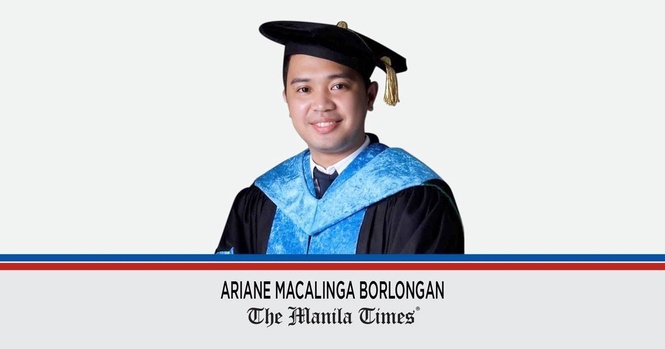
Ariane Macalinga Borlongan is a public intellectual, language scholar and migrant advocate. He is one of the leading researchers on English in the Philippines and one of the pioneers of migration linguistics. He is the youngest to earn a doctorate in linguistics, at age 23, from De La Salle University, and has had several teaching and research positions in Germany, Japan, Malaysia, the Philippines, Poland and Singapore. He is currently associate professor of sociolinguistics at the Tokyo University of Foreign Studies.