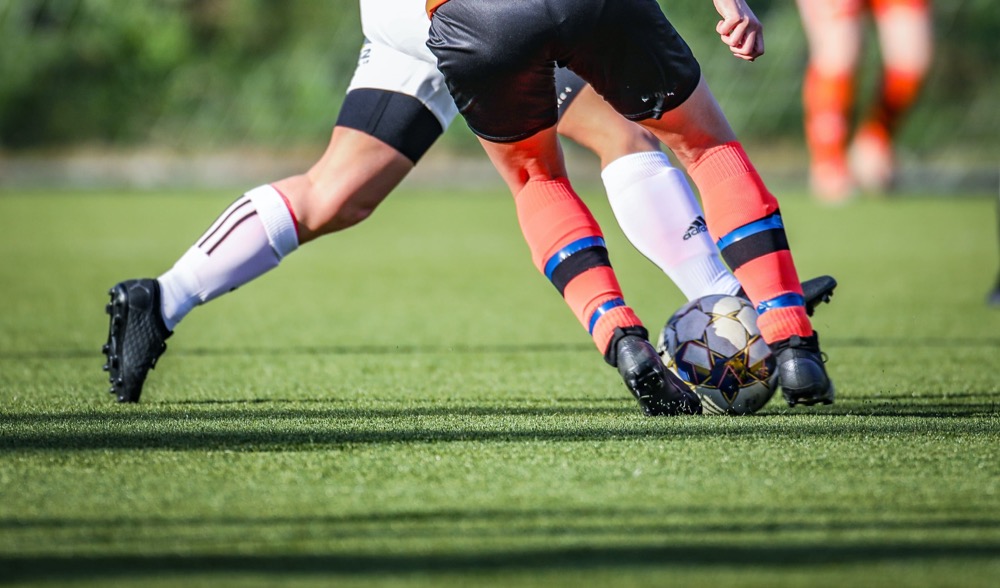
Football is often called “the beautiful game,” and free-kicks are some of the most spectacular moments in the sport. Whether it’s a ball bending around a wall of defenders or dipping suddenly into the net, the physics behind these moments is fascinating. One of the key physical principles at play is the Magnus effect. This article explores what the Magnus effect is and how it is applied in free-kick goals.
What is the Magnus Effect?
The Magnus effect is a physical phenomenon where a spinning object moving through a fluid—such as air—experiences a force perpendicular to its direction of motion. In simple terms, when a ball spins while traveling, the spin interacts with the surrounding air, creating a pressure difference that causes the ball to curve.
- Topspin: Makes the ball dip faster.
- Backspin: Causes the ball to float and slow down its drop.
- Sidespin: Makes the ball curve left or right.
This principle is not limited to football; it is also observed in tennis, baseball, cricket, and even table tennis.
How the Magnus Effect Works in Free Kicks
In football, players exploit the Magnus effect to make their shots unpredictable and difficult for goalkeepers. Here is a step-by-step breakdown:
- Striking the Ball: The player hits the ball off-center. Hitting it slightly to the side imparts sidespin, while striking it higher or lower can add top or backspin.
- Airflow Around the Ball: The spinning motion causes air to move faster on one side of the ball and slower on the other. According to Bernoulli’s principle, faster airflow reduces pressure, while slower airflow increases it.
- Curved Trajectory: The pressure difference pushes the ball sideways, resulting in a curved path around defenders or a sudden dip toward the goal.
The Magnus force responsible for this curvature can be mathematically expressed as:
FM = S (v × ω)
Where:
- v = velocity of the ball
- ω = angular velocity (spin)
- S = a proportionality constant dependent on air density, ball size, and other factors
This equation shows that the direction of the force is perpendicular to both the velocity and the spin of the ball, explaining why free kicks can bend so dramatically.
Techniques in Free Kicks Using the Magnus Effect
1. Curved Free Kicks
- The most common use of the Magnus effect.
- Player strikes the ball with the side of the foot to create sidespin, making it bend around a defensive wall.
- Example: David Beckham’s iconic “banana” free kicks.
2. Dipping Shots
- By adding topspin, the ball drops suddenly after traveling over the wall.
- This is effective for surprising goalkeepers who expect a flatter trajectory.
3. Knuckleball Free Kicks
- Minimal spin produces an unstable airflow around the ball.
- This makes the ball “dance” unpredictably mid-air.
- Example: Cristiano Ronaldo and Juninho Pernambucano have mastered this technique.
Famous Free-Kick Goals Utilizing the Magnus Effect
Several legendary footballers have applied the Magnus effect to score breathtaking goals:
- David Beckham: Known for curling the ball around walls with precision.
- Cristiano Ronaldo: Famous for knuckleball free kicks with sudden, unpredictable movement.
- Lionel Messi: Combines precision and subtle spin for bending shots into tight corners.
These goals demonstrate that understanding and exploiting the Magnus effect can turn a free kick into a game-changing moment.
Conclusion
The Magnus effect is a fascinating example of physics in action on the football pitch. By spinning the ball in different ways, players can manipulate its flight path to curve around defenders, dip suddenly, or even appear to “float” unpredictably. Mastery of this technique requires skill, timing, and a deep understanding of how spin interacts with air. Next time you watch a free kick that bends miraculously into the net, you can appreciate that it’s not just talent—it’s physics at work.
William Lee (kokwei67@gmail.com) is a content creator under the Newswav Creator programme, where you get to express yourself, be a citizen journalist, and at the same time monetize your content & reach millions of users on Newswav. Log in to creator.newswav.com and become a Newswav Creator now!
The User Content (as defined on Newswav Terms of Use) above including the views expressed and media (pictures, videos, citations etc) were submitted & posted by the author. Newswav is solely an aggregation platform that hosts the User Content. If you have any questions about the content, copyright or other issues of the work, please contact creator@newswav.com.