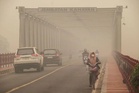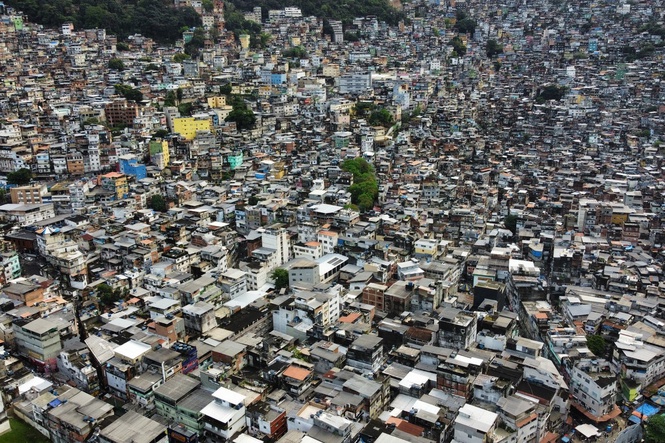
Land in major cities across the world, including Mexico City, Mexico, and Medan in Indonesia is sinking, a new global satellite survey warns.
The findings, published in the journal Nature Cities, can help identify hotspots where action is needed to reduce risks to buildings, infrastructure, and communities.
A growing body of studies has shown that human activity, particularly groundwater extraction, has led to a gradual sinking of the ground surface across major cities.
As large amounts of groundwater gets pumped out in major cities, the underground sediments lose water pressure and get compressed under the weight of buildings above them.
However, information on land subsidence rates remains limited for most countries, making it difficult for policymakers to identify where risks are intensifying.
Country-level studies have shown that Houston and New York City in the US as well as Shanghai and Beijing in China are facing high rates of such land subsidence.
In the latest research, scientists from Peking University in China tracked land subsidence in cities across the globe, which can damage buildings, foundations, and drainage and sewage systems, and also increase flood risks.
Researchers conducted a comprehensive analysis of high-resolution satellite data collected between 2014 and 2023 to measure land movement across 465 cities with populations exceeding one million in 107 countries.
They specifically assessed radar data collected by the European Space Agency's Sentinel-1 satellites at different times, which enabled them to detect small millimetre-level changes in the position of the ground.
They found that parts of Mexico City recorded the fastest local sinking.
Some of these areas of the Mexican capital are sinking at about 217mm per year, though the citywide average sinking rate was 8mm per year.
The most severe sinking rates were found in Asia, with land in Medan, Indonesia, subsiding by about 33mm per year, and in Bandung in the same country by 22mm per year.
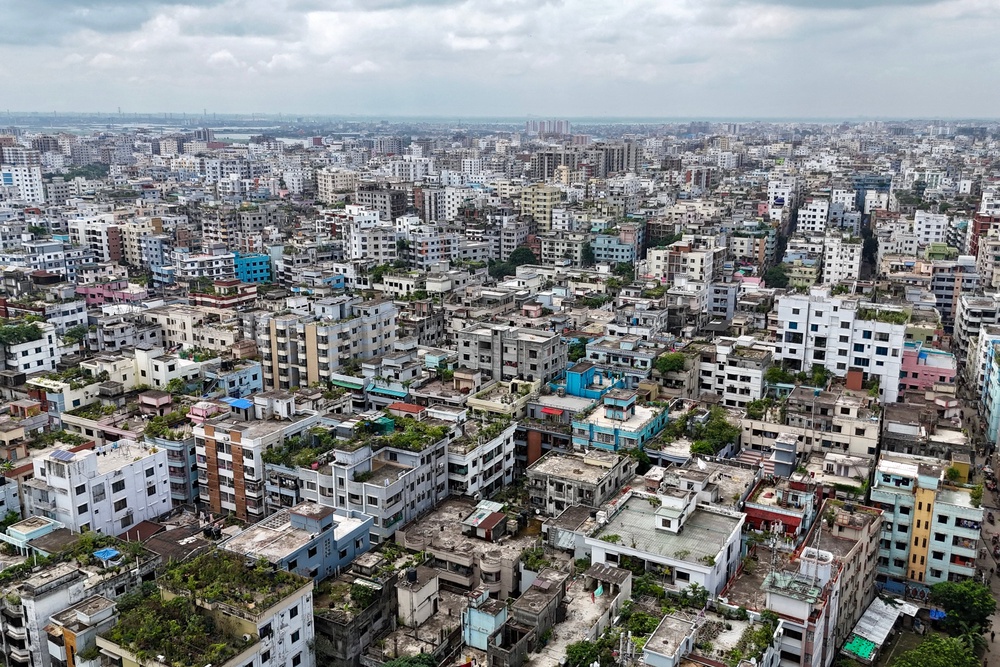
Chittagong in Bangladesh and Rangoon in Myanmar also had some of the highest land sinking rates of all the countries studied.
Iran’s Isfahan city was found sinking by 11mm per year, making it one of the highest citywide median sinking rates.
“Subsidence is most severe in Southeast Asia, West–Central Asia and North America, and is evident in historically under-studied regions, including South America, Africa and Russia,” scientists wrote in the study.
“We further detect marked deceleration across many cities in Southeast and East Asia, while substantial urban areas in these regions continue to show accelerating subsidence,” researchers wrote.
In comparison, land movement was generally stable in Boston, New York City, London, Beijing, Tokyo, Seoul, Sydney, Montevideo, and Naples, researchers say.
Land subsidence rates in these cities were estimated to range from 0.1 to 1.9mm per year.
Cities in developing countries generally seemed to have faster subsidence rates than those in developed countries.
In some cities, including Beijing, replenishing underground aquifers since around 2016 seems to have halted subsidence in several areas, researchers say.
“Our global maps and trend estimates provide a consistent basis for identifying hotspots and prioritizing actions to reduce subsidence-related hazards,” they wrote.
Read MoreClimate change making rainforest restoration ‘more complicated’, expert warns
Indonesian haze makes Singapore the most polluted city in the world
Australia’s top court delivers historic ruling against coal mine expansion
El Nino is now hottest ever recorded and still growing in strength, announces Japan
World’s largest penguin colony loses two-thirds of its population
New Zealand’s climate ‘entering uncharted territory’ as greenhouse gases rise