
“Before we enter the jungle, we ask for permission. This land is not ours. We do not own it. We are simply guests, walking through a place that has existed long before us.”
Fernando, our guide, lays a cloth on the floor of the scrub path – on it, he places a corn seed to signify life, family and community; a gourd once used to carry water; a dog’s skull to remind us of those who came earlier; and a candle to lift us when we get tired.
Our family was about to embark on a three-day section of the Camino del Mayab, a 68-mile (110km) walking and cycling trail near Mérida on Mexico’s Yucatán peninsula.
While the normal walking distance on the Camino del Mayab is around 20km per day, we went in late June, and the guides advised us to limit each day to 10km because of the heat and humidity.
And boy was it hot. A staggering 30C by 9am on the first day. We sweated our way along the poker-straight path; a disused railway that dated back to the Yucatán Peninsula’s 19th-century hacienda era, when the henequen crop (aka sisal) was in high demand for worldwide rope manufacture.
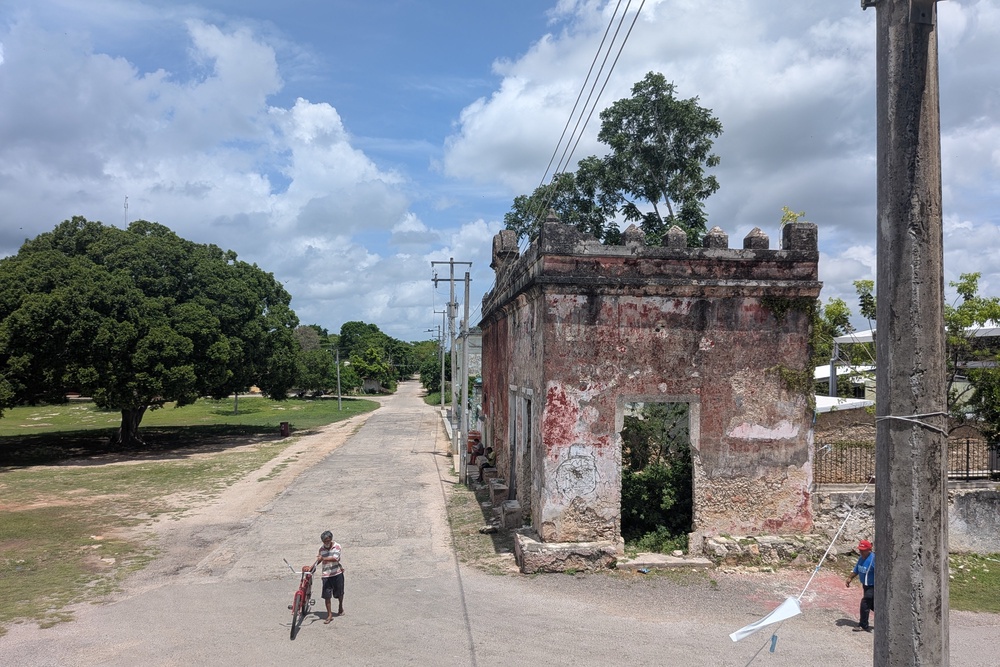
During that time, plantation estates (haciendas) sprang up across the peninsula to meet the booming trade, with some operating under their own laws and currencies. It is a dark past: local hacienda workers (typically of Maya heritage) were essentially enslaved by their hacienda owners, with debts that they could never hope to pay back.
The demand for the henequen crop died out in the 1950s, and a jungle flourished in its place. We saw many crumbling manor houses along the way, while others had been transformed into museums and community spaces.
Our trekking guide, José Luis, stopped periodically to mimic native bird calls, point out alleys trampled through the dense forest by jungle pigs, and tell us about a time he’d come across a rather large snake while guiding and had to move it aside for trekkers to pass.
Camino del Mayab differs from other popular treks such as the Santiago de Compostela or the Inca Trail. It’s only five years old, quiet and built around culture, ecology, and history rather than religion. The small guided groups that walk it connect with rural Mayan communities along the way, and this year the National Fund for Tourism Promotion (Fonatur) named it one of just three community tourism projects across Mexico to receive valuable government funding support. It’s also genuinely regenerative: 80 per cent of the money paid to walk it goes directly to locals, giving them a way to stay in their villages rather than moving to the cities for work.
Read more: The best hotels in Mexico for design, beaches and all-out luxury
Mayan culture was never far away while we walked, whether it was the clouds of butterflies that swirled around us as we walked, believed to be the souls of the dead gathering near their descendants, or the cenotes – water-filled sinkholes that Mayans believed were the gateway to the underworld.
Before embarking on the trek, our family had visited the ancient Mayan city of Chichen Itza, then watched a demonstration of the ancient Mayan ball sport, Pok Ta Pok in the modern city of Mérida in the evening. So we were feeling confident, if a little sweaty, when we arrived in Mola, the first village on our route, and met Angel Moles, the captain of Mexico’s Pok Ta Pok team.
The modern game has evolved and is now played in seven countries. Players hit a heavy rubber ball with their hips, knees or elbows, which, we soon found out, demands a mix of serious agility and strength – along with hip moves Shakira would be proud of.
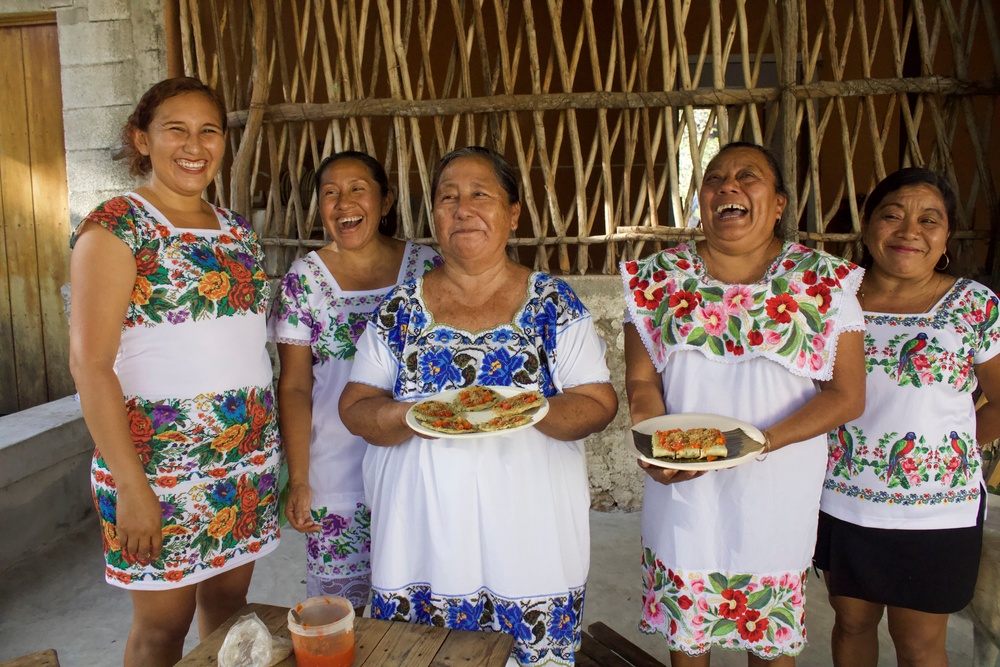
On the first day, we had lunch at the home of a local woman, Doña Lourdes, who earns an income from the Camino del Mayab. We made tortillas together on the outside stove, drank jugfuls of ice-cold horchata (white rice with milk or water, sweetened with cinnamon and sugar) and ate Mayan favourite chicken pibil with refried beans.
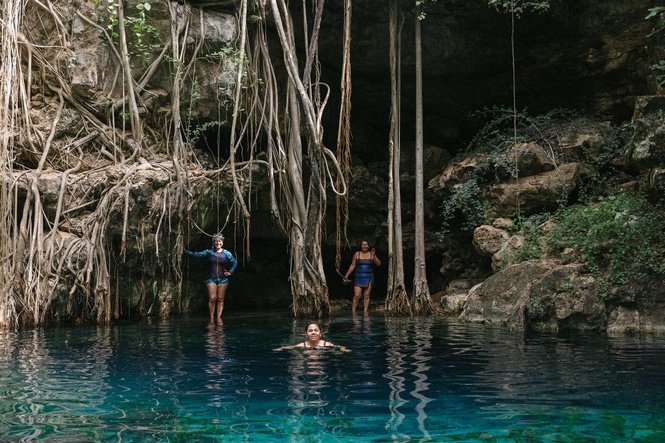
We spent the afternoon in a pair of cooling cenotes deep in the jungle that we never would have found on our own. “Descend the steps backwards as a mark of respect to the gods of the underworld,” José Luis counselled as we approached the first, a beautiful open chasm with twinkly turquoise water and twined tree roots creeping down its edges. The second one was partly closed, and we braved a swim in its chilly darkness while birds and bats flew overhead.
That night we slept in a traditional-style thatched hut at Xuux Eek. Owner Don Julio built the accommodation after the community cleared the nearby cenotes for visitors and locals to use. He understood no one would come this far into the jungle without some form of hospitality.
Read more: Why freedivers take extreme risks to find peace deep under the water’s surface
On days two and three of our unforgettable trek, we saw iguanas and native birds like the pendulum-tailed momotho and the yuya, with its bag-like nest hanging from branches, as well as armadillos, boa constrictors, aguarundi, and tigrillo wildcats that lurked in the green depths.
What I loved most, though, was discovering the communities, their history, and the challenges they face today. A highlight was chatting with Don Arsenio, now in his sixties, who’d worked at his local hacienda since he was seven, spending his days in a scorching hot basement collecting up henequen ready to be dried.
We spent the last night of our trip back in the city at the Fiesta Americana Mérida hotel, close to Paseo de Montejo, lined with elaborate villas built by hacienda bosses made rich by the henequen trade.
Read more: Inside the carefree Mexico City dance parties where alcohol is banned
It felt odd to check into a big hotel after the trek, but we had a reason: the hotel runs local experiences for guests, from beach cleans and cenote visits to historical tours and – in our case – breakfast at a beautifully refurbished hacienda. As we sat on the veranda of Hacienda San Antonio Hool, sipping a chilled glass of hyacinth water and eating local speciality huevos moteluños, we felt a world away from the Camino, but the history of the haciendas is a shared one.
José Luis had told me: “The mindset is still very fixed from hacienda days; you work hard, you accept your lot, and you have no power.”
An important part of the Camino del Mayab’s mission is proving to local communities that opportunities do exist. It’s gratifying that part of the money you pay as a trekker funds community libraries, helps young people apply for university, gives women financial independence through work, and keeps Mayan culture alive.
Rachel Ifans was a guest of Camino del Mayab, who sponsored her three-day trek. Her family, who travelled with her, were not sponsored.
How to get there
Virgin Atlantic started a new direct route to Cancun from London Heathrow in 2025. Hire a car for the 3.5-hour drive to Mérida.
How to do it
Run by an organisation called Ecoguerreros Yucatán, the Camino del Mayab was set up to conserve the area’s natural and cultural heritage through sustainable tourism. You can do the full five-day hike, or the team can tailor a shorter experience to your needs.
The price for the full, five-day Camino del Mayab trek is $14,900 MXN (approx £623) per person. The three-day option is $11,500 MXN (approx £480) per person, including transportation, guides, accommodation and meals.
Where to stay
Hotel Casa del Balam
A local hotel in the historic centre of Merida with big rooms around a central courtyard. It’s well-located for the free weekly Pok Ta Pok show on Friday nights in the Plaza Principal.
Fiesta Americana Mérida
A large four-star hotel with a pool, offering fantastic curated experiences for guests to enjoy local food, drink, history, and culture, with transport to and from the hotel.
Read MoreI’ve been visiting Mexico City for 25 years – this is why it’s the greatest city in North America
Exploring Mexico City in the footsteps of Frida Kahlo
Why Mexico’s culture-filled former capital should be your next getaway
The best hotels in Cancun, from all-inclusives to wellness escapes
Best hotels in Tulum, from jungle escapes to adults-only hideaways and all-inclusive resorts