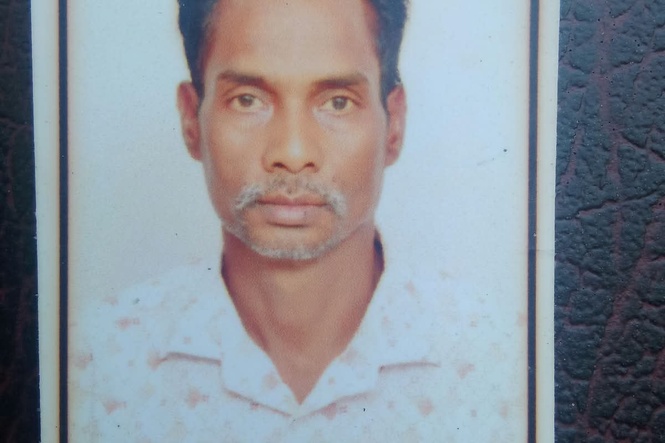
Simla Thappa didn’t go with the men who took her father’s body from the village. By then, she recalls, her family had spent most of the day resisting a crowd that kept making the same demand: "Exhume! Exhume! Exhume!"
Her father, Patiram Thappa, 50, a farmer, died in hospital on 10 August 2023. The family brought him home to Iradah in Kanker district of the central Indian state of Chhattisgarh, and buried him early the next day. They wanted to do it a little later, but their friends had urged them to be quick, Thappa says, because some villagers were conspiring to stop the burial.
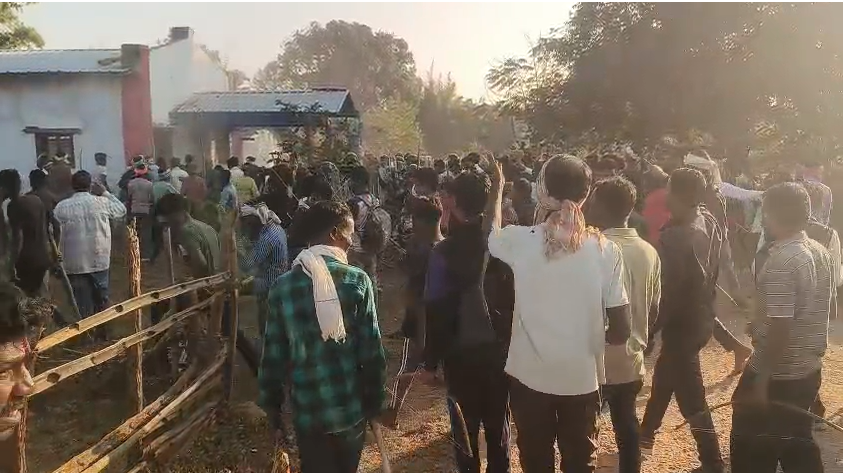
It wasn’t long before villagers began arriving, to threaten them. “The entire village came, 200-250 people," she tells The Independent. They wanted the body exhumed and buried outside the village. Because the family had converted to Christianity.
“Burying the body was not an issue because everyone in our tribal community is buried,” Thappa says. “The real reason was our conversion.”
Inside the house, 20-25 people stood confronted the family of four, including Thappa’s minor sister and a brother serving in the Border Security Force paramilitary.
The villagers, she alleges, tried to hit her relatives and some women "misbehaved" with her mother. At about 5pm, after a day of resisting the stream of villagers thronging their house, the family gave in. Not because they were convinced, but because they feared for their safety.
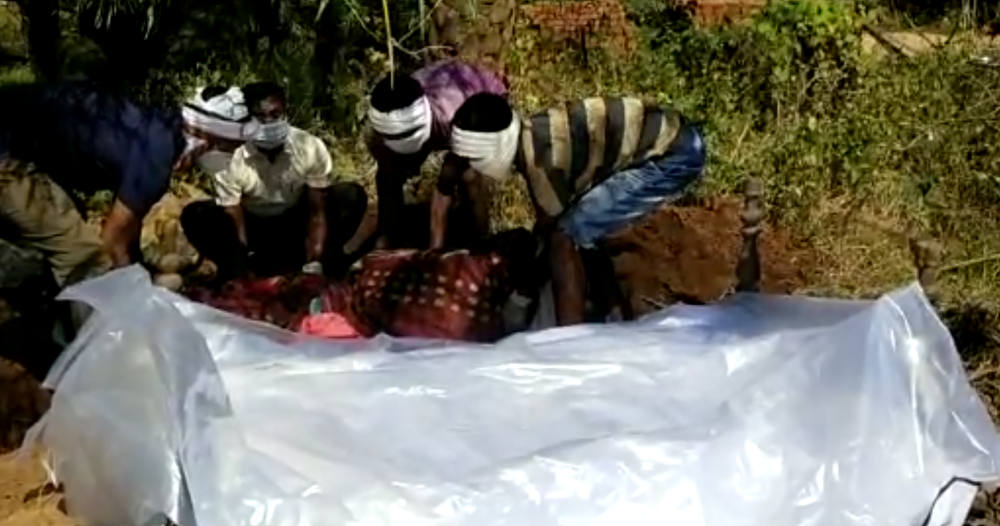
They hired a vehicle and took the body to the nearest town of Kanker. "We were just afraid that the villagers would turn on us and beat or lynch us. So we just took out the body."
Thappa, 22, says her family converted to Christianity in 2016, drawn by how people in the local tribal Christian community lived. "It is not like we lived a violent life. But it felt more peaceful."
Her grandfather and other relatives lie in the Iradah graveyard. "It had never happened that a villager was forced to be buried outside the village premises."
She says that at least 19 of the village's 105-110 families are Christian. Two more converts have died since her father passed and both have been buried outside the village. Out of fear, she claims. The Independent hasn’t been able to verify these deaths.
The family went to police and found little help. "There was hardly any support. Otherwise we wouldn’t have had to bury him outside the village,” Thappa says. “He would be lying in peace alongside our other relatives."
Some local officials were present when the body was taken away. A statement by Thappa’s mother, Mangotin Thappa, filed in the Supreme Court, says police wouldn’t allow burial even in the Christian cemetery of Kanker town. So her husband’s body was instead buried on the Dudh river bank, some 15km away.
The Independent contacted the Kanker police for comment but did not receive a response.
The plight of the Thappa family is illustrative of the growing persecution of religious minorities under the rule of Narendra Modi’s BJP party, a critical component of a sprawling Hindu nationalist ecosystem. India Hate Lab, a project of the Center for the Study of Organized Hate, Washington, recorded more than 1,300 in-person hate speech events against religious minorities across India in 2025, almost all targeting Muslims but over 160 involving Christians as well.
Muslims make up 14.2 per cent of India’s population and Christians 2.3 per cent, according to the latest census conducted in 2011. Hindus form a dominant majority of about 80 per cent.
Thappa’s mother is one of the petitioners in a Supreme Court case brought by the Chhattisgarh Association for Justice and Equality, an advocacy group focused on human rights, civil liberties and environmental justice, that draws on the testimonies of over 140 families stopped by village councils and police from burying their dead in local graveyards. The petition includes references to a February 2024 village council resolution from Takraguda in Bastar that prohibited the burial of non-Hindus on village land.
The petitioners claim police are misusing a 2025 Supreme Court ruling in order to side with village councils and deny Christians dignified burials.
That case involved Ramesh Baghel, whose father, a pastor, died in January 2025 and the body lay in a mortuary for three weeks while the family fought to bury him in Chhindawada, Bastar. The two judges who heard the case differed. Justice BV Nagarathna would have allowed burial on the family's private land in their village. Justice Satish Chandra Sharma ruled that burials must occur in places designated by the village assembly. In the end, the court ordered the pastor laid to rest in a Christian cemetery in Karkapal, about 50 km away from his village.
The petitioners accuse the state of misleading the court in the Baghel case, which they say police cite even where nobody objects to a burial. The state's counsel claimed that Karkapal was 20-25km away from the village, according to the petitioners, even though it was at a distance of 60km and impossible to reach when the monsoon rains flooded the route.
The petitioners also rejected the contention that there was a designated burial ground for Christians outside the village. “There is no such thing" the petition says, citing responses received to freedom of information requests filed in 2025 seeking information on “all the public and private caste, religious and community based graveyard related documents, land, plot details in Bastar”.
The petitioners accuse police of playing a “communal role”, arresting and jailing some 50 pastors in the state for performing last rites.
The Independent contacted Chhattisgarh’s home ministry for comment but did not receive a response.
Degree Prasad Chouhan, the association's convener, dates the ongoing pressure campaign against Christians to the 2012 social boycott of non-Hindu places of worship, and that the persecution goes beyond the denial of burials. "Even pastors are disallowed from entering the village.”
And there have been cases, he says, where “the skeletal remains of people buried years ago have been dug up by the villagers and thrown out of the village”, only because they had converted to Christianity.
He argues that the “root cause” of rising animosity against Christians in Chhattisgarh is the “cultural invasion of tribal culture” by Hinduism.
“When a person expresses his faith in any non-Hindu religion and method of worship, he is expelled from the village community by this traditional system,” he says.
“People are evicted from their sources of livelihood, markets, ancestral lands, residences. The dead bodies of their buried relatives are dug out from the graves and thrown outside the boundary of the village.”
On 18 February 2026, Justices Vikram Nath, Sandeep Mehta and NV Anjaria of the Supreme Court ordered that "no further exhumation of buried bodies shall be permitted" till the plea was resolved.
But the dispute isn’t going away.
In July, ETV Bharat reported that Hindu residents of Dhekuna village, in north Bastar, were demanding that the body of a Christian be exhumed and moved to a Christian cemetery elsewhere. This followed a protest over a Christian burial in neighbouring Hatkongera village.
"We are against the burial of a person who had converted to Christianity," village council head Kanchan Lata Salam said at the time after handing over a memorandum with their demand to local officials.
Another villager said people who didn’t follow the traditional faith wouldn’t be allowed burial on village land.
Officials confirmed receiving the memorandum and said they would examine the request and act within the rules.
Nearly three years since her father’s death, Thappa remembers feeling small. “There was a lot of pain and agony."
And all because her family wanted to bid her father goodbye “with due respect and dignity” and bury him “where he belonged”.
Read MoreAt least 19 dead as sudden downpour triggers stampede at Hindu festival
Founder of India’s ‘cockroach’ movement arrested over national flag protest
Police detain founder of India’s ‘cockroach’ movement ahead of planned protest
Bollywood actor moves court after being told to leave India over ‘cockroach’ protests
Why Modi is facing unprecedented youth protests – and what happens next
Indian city’s attempt to create real-life ‘rainbow road’ spectacularly backfires