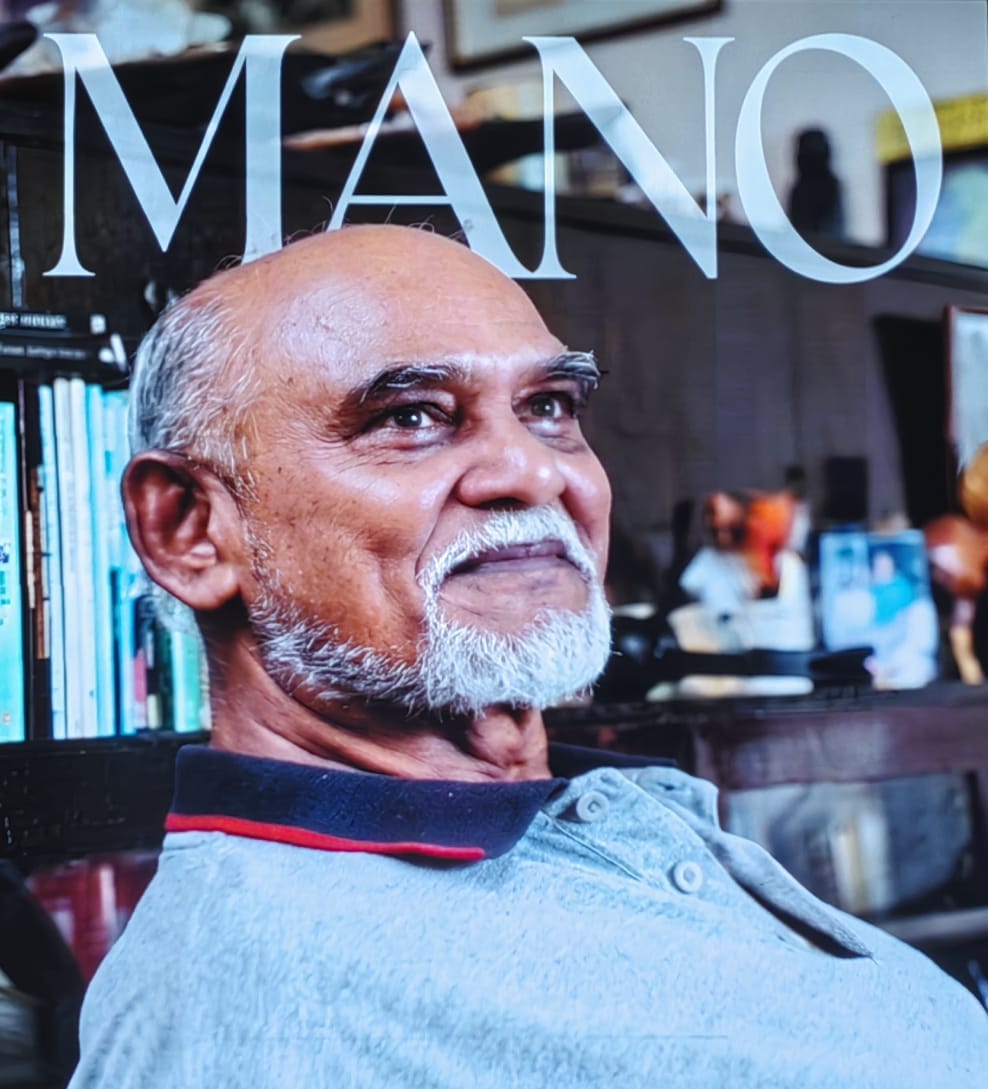
Mano Maniam’s family recently celebrated his legacy during the first anniversary of his passing. He passed away peacefully at the age of 79 on May 30, 2025, at his residence in Brickfields, Kuala Lumpur.
A large group of friends gathered to reminisce about the revered Malaysian actor, director, management guru, and cross-cultural educator. Family members gave moving speeches about a loving uncle, cousin, and brother while a few friends aptly described him as a "man for all seasons."
Mano was a pillar of the Malaysian performing arts, with a career spanning nearly five decades across theatre, television, and film. As I browsed through the pictures and theatre posters on display at the event, I held back a lump in my throat.
Although he was very busy, he gave precious time to friends when they sought for assistance. He listened attentively, analyzing and processing the issues at hand. He didn’t pretend to listen while texting on phone; he didn’t make promises only to forget about them; he didn’t seek any returns but help them to build hopes, selflessly.
Mano had been my North Star for more than three decades.
I graduated from S.I.T. (School for International Training) ten years after Mano. We were the only two Malaysian students to have attended the university. The Dean had referred me to him so that I could find opportunities for a cross-cultural career back home.
In the late eighties, I took a red mini bus to see Mano at MIM (Malaysian Institute of Management), where he was a senior manager.
“Welcome to Kuala Lumpur, Ipoh lang ( Hokkien: person. This phrase has stayed as a common referral to Chinese who were born and bred in Ipoh though most Ipoh Chinese speak Cantonese)!” was the first thing he said, flashing the signature, booming Mano smile.
From then on, he guided me into professional and creative circles where I met many inspirational personalities who shape the Malaysian Story.
He became my ‘go-to wise man’ whenever I was stuck in life or found myself standing against the wind in my career, family, or marriage.
“Do what your heart tells you to do. With open eyes,” he would advise. His gaze, coated with deep empathy, pierced right through me like a steel rod.
Hang onto the rod and find your own footing.
When my daughter, Big R, was diagnosed as “chun” (Mandarin: stupid) by her kindergarten and Year One Chinese school teachers because she couldn't passively mimic lessons like a parrot, Mano took her under his wing. Big R joined his English drama classes for kids.
“She learns from listening, doing, and feeling the experiences. She is your typical S.I.T. student! Miracle will come, don’t worry!” Mano laughed.
He pointed at Big R’s class photograph, where every other student sat uniformly with their feet together just like the teacher—except Big R. “She was born to be different. Let her grow into her own learning! Just stand firm when the teachers tell you she CANNOT. Believe in her, and she will blossom in her own way.”
That million-dollar assessment saved me from wasting precious money on unnecessary tuitions and remedial sessions for attention deficits. I stayed quiet and held my ground, no matter how many times I had to face critical teachers and mocking relatives regarding Big R’s academic performance.
Whenever life’s storms blew me off my feet, my North Star told me never to stop walking forward. So, I stood up and walked, taking it one single step at a time.
Over the last twenty years, I frequently brought young interns to meet “Uncle Mano.” It was in his Brickfields apartment at Crescent Court, or over tables at his favorite South Indian restaurant, Ashoka, that he generously gifted us his time.
“Build a better Malaysia with fairness and governance. Be brave!” All of them—including Big R, who will very soon graduate with her Master’s degree from S.I.T.—still carry his vision.
During these lunches and tea sessions, the history of Brickfields unfolded through Mano’s memories.
After earning his Master's, Mano had moved from Ipoh to Kuala Lumpur for a management career. He lived in Bangsar first before moving to Crescent Court in 1976. Back then, the fancy apartment building was the tallest landmark in Brickfields. The area was a Western expatriate enclave, much like today’s Mont Kiara. When locals like Mano moved in, it began attracting other prominent cultural figures.
Ananda Krishnan, the owner of Maxis, had his family home diagonally across Jalan Berhala from the Buddhist Vihara Temple. Recognized for its distinctive pre-WWII architectural blend of Western and Malay styles, the property remains historically significant as his childhood home.
“The Temple of Fine Arts started in the 80s and early 90s under the spiritual guidance of Swami Shantanand!” Mano would note proudly. “Many of us volunteered. We did what we could for arts in Malaysia!”
Another famous landmark he loved was the Vivekananda Ashrama, built in 1904 by Ceylonese Tamil immigrants in honour of Swami Vivekananda. Mano’s eyes would sparkle with the same pride he had for his theatre days as he described it:
“The design features Ceylonese and North Indian influences. Look at the arches, the swan, the flowing water, the lotus, the rising sun, and the serpent!”
“This is also Malaysian history! Know the history before you build the future!” He looked at Big R fondly. “If you haven’t been there, I will take you!”
He made Big R promised to go for a walking tour with him when she finished university.
That promise was made during our final lunch at Ashoka. He ordered his usual healthy portion of banana leaf rice, vegetables, and fish, just as he had done countless times before. As he ate, I watched him navigate his food with the same deliberate care he used to navigate life.
Over the decades, Brickfields grew rapidly around him. Crescent Court transformed from a fancy high-rise into an aging building. Yet Mano kept walking the same narrow, congested streets from his apartment to the restaurant even when he was in his seventies. For the ordinary residents living in these small lanes, the heartbeat of the neighborhood remained unchanged.
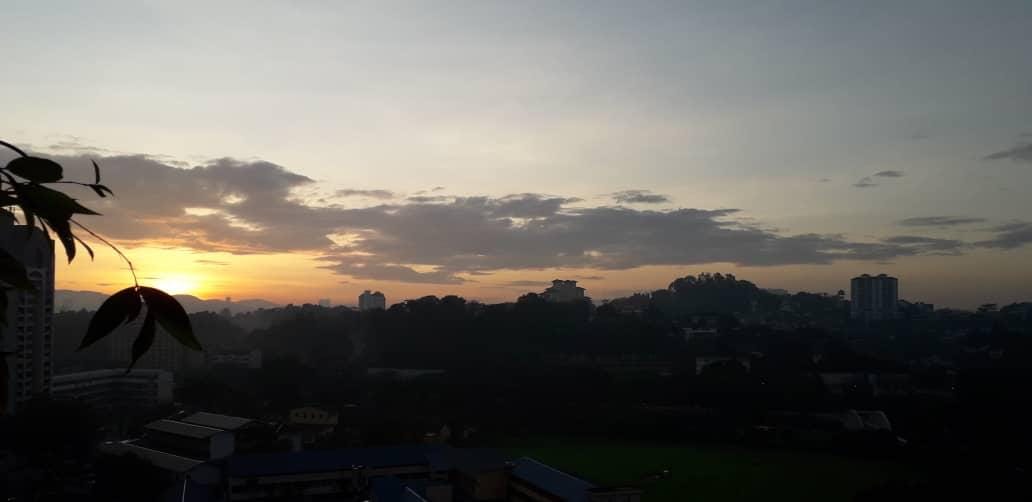
He took immense pride in the view from his balcony. “This is the best view in Kuala Lumpur! You see history, you grow more memory even while you wonder what the future will bring.”
But his eyes would darken whenever he pointed toward the horizon.
“In the old days, this view fueled my creative flow. Now, you see less and less of the green rolling hills, and more and more concrete. And the air does not smell fresh like in those days.”
Mano was also a fierce warrior for the Earth with several environmental NGOs. Today, some of the green spaces he fought to protect have been swallowed by concrete. He was deeply exasperated by the way development was carried out—the endless influx of mega-malls, high-rises, and suffocating gridlock alongside cases of structural negligence, environmental hazards, and developer misconducts.
Eventually, the traffic and broken pavements made it increasingly difficult for him to navigate his beloved neighborhood with his walking cane. I was deeply anxious about the buzzing traffic on the tarmac road during our last lunch walk as his hearing had begun to fail him.
Several weeks after his anniversary memorial, I took the MRT and LRT back to Ashoka Restaurant. The scenery was reassuringly identical: the same old tin roof, the sprawling parking space, the big shady tree, the outdoor sinks to wash your hands, and the brick-room toilets at the back. An elderly Indian couple and a younger man in front of my table were eating their meals with their hands, conversing as they moved their heads slightly – the familiar Indian gesture of agreement.
Same. Same.
Charming. Intriguing.
But, outside this small sanctuary, the concrete continues to swallow the green spaces I saw from the train windows.
If we are to save what is left of this piece of living Malaysian history, we will need to look to these very streets to find stories, film scripts, documentaries, unsung songs, paintings and dances that no one ever experience, yet !
But, how do we find our footing when the ground beneath us is constantly being paved over?
When the hill slopes are eroded by rampant development and the rolling green hills vanish, who will remind us to look up?
Will the ordinary elderly patrons of these neighborhood joints become the new North Star? Can they inspire a new generation to stand on the balconies, look past the smog, and reclaim the brave, green cultural heritage Mano always believed we could save?
Chong Sheau Ching (sheauchingc@gmail.com) is a content creator under the Newswav Creator programme, where you get to express yourself, be a citizen journalist, and at the same time monetize your content & reach millions of users on Newswav. Log in to creator.newswav.com and become a Newswav Creator now!
The User Content (as defined on Newswav Terms of Use) above including the views expressed and media (pictures, videos, citations etc) were submitted & posted by the author. Newswav is solely an aggregation platform that hosts the User Content. If you have any questions about the content, copyright or other issues of the work, please contact creator@newswav.com.