
For the average Malaysian navigating the current socio-economic landscape, the daily reality is shaped by structural adjustments and immediate economic pressures. From the recent rationalisation of fuel subsidies implemented under Prime Minister Anwar Ibrahim's administration to the persistent rise in the local cost of living, household budgets are tightly constrained. Families across the nation are learning to do more with less, stretching every ringgit to cover groceries, education, and transport. The prevailing national mood is one of cautious resilience a collective understanding that the country must pay its debts and reform its structural inefficiencies to secure a sustainable financial future.
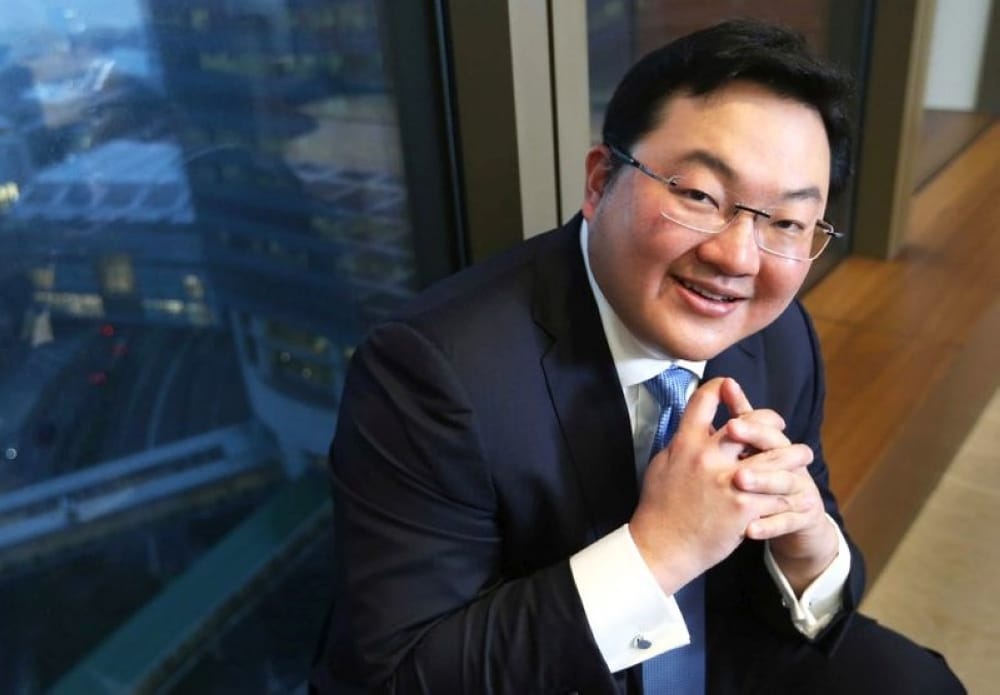
Yet, while everyday citizens adjust to these stringent domestic realities, a starkly contrasting narrative continues to unfold on the global stage. Halfway across the world, the ghosts of Malaysia's financial past continue to manifest in the form of ultra-luxury assets. The United States Department of Justice (DOJ) recently secured a court order forfeiting a luxury condominium unit in New York City, valued alongside accumulated rental yields at over US$6 million (approximately RM23.87 million). According to international investigators, this high-end apartment was purchased using funds siphoned directly from 1Malaysia Development Berhad (1MDB). It was not acquired to advance national infrastructure or sovereign wealth; instead, it was allegedly bought for the explicit benefit of May Ling Catherine Tan, a personal assistant to the elusive fugitive financier Low Taek Jho, universally known as Jho Low.
For Malaysians watching from coffee shops in Kuala Lumpur or rubber smallholdings in rural states, this latest development evokes complex emotions. The news serves as a sharp reminder of a deep systemic betrayal. It highlights a painful dichotomy: while local communities absorb structural economic reforms to stabilize public finances, millions of ringgit originating from the public purse remain frozen in the luxury real estate markets of Manhattan and Beverly Hills. This enduring contrast underscores why the legacy of the 1MDB scandal continues to shape the contemporary Malaysian consciousness.
Anatomy of an International Shell Game
The civil forfeiture order, formalized in the United States District Court for the Central District of California, marks another successful milestone for the US Kleptocracy Asset Recovery Initiative. The legal mechanics of the case expose a highly sophisticated international money-laundering conspiracy that spanned multiple jurisdictions between 2009 and 2015. During this period, high-level officials within 1MDB, operating alongside Jho Low and a network of close associates, systematically diverted billions of dollars intended for strategic national investments.
The siphoned capital did not merely sit in offshore bank accounts; it was rapidly converted into tangible luxury assets to obscure its illicit origins. The financial trail reveals a pattern of extravagant spending that included high-end residential properties in London, Beverly Hills, and New York, a 300-foot superyacht, and masterpieces by Claude Monet and Vincent van Gogh. Furthermore, vast sums were funneled into major commercial ventures, including the Hollywood production company responsible for The Wolf of Wall Street, the extensive redevelopment of the Park Lane Hotel in Manhattan, and significant corporate shares in the music publisher EMI.
In this specific case, the DOJ's Public Affairs office detailed how millions of dollars in siphoned funds were redirected to purchase the luxury New York condominium for Jho Low's assistant, who subsequently profited from the asset by collecting and retaining its rental proceeds. The successful forfeiture order ensures that both the physical property and the accumulated rental income are officially surrendered to the United States government, paving the way for eventual repatriation to Malaysia. The complex multi-year investigation was spearheaded by the Federal Bureau of Investigation's (FBI) International Corruption Squad in New York, working in close coordination with prosecutors from the Money Laundering, Narcotics, and Forfeiture Section.
The Cultural Friction of the 'Helper' Elite
From a cultural and social perspective, this asset seizure reveals a particularly unsettling dimension of the kleptocratic structure: the enrichment of an insular, unelected intermediary class. In traditional Malaysian society, public service and leadership carry a deep moral expectation of stewardship, often rooted in traditional concepts of trust and community welfare. The 1MDB framework systematically subverted these values. The fact that a personal assistant could hold a multi-million-dollar property in one of the world's most expensive real estate markets highlights how far the circle of unearned privilege extended.
An analysis of this dynamic suggests that the scandal created an artificial parallel economy. In this insular ecosystem, proximity to power and financial complicity replaced merit, professional capability, and public accountability. While ordinary Malaysian civil servants, teachers, and healthcare professionals worked within rigid institutional budgets to serve the public, a select group of intermediaries enjoyed access to vast, unaccountable wealth. This stark disparity has inflicted lasting damage on the national psyche, fostering a sense of cynicism regarding institutional fairness and eroding public trust in traditional governance structures.
Institutional Vulnerabilities and the Long Road to Reform
The successful execution of this latest forfeiture underscores both the strength of international legal cooperation and the historical vulnerabilities of Malaysia's domestic institutions. The DOJ explicitly acknowledged the critical assistance provided by multiple Malaysian agencies, including the Attorney General’s Chambers (AGC), the Royal Malaysia Police (PDRM), and the Malaysian Anti-Corruption Commission (MACC). This cross-border collaboration involved a wide network of international regulatory bodies across Singapore, Switzerland, the United Kingdom, Luxembourg, Indonesia, Latvia, and France.
However, institutional analysis indicates that the necessity of relying on foreign judicial systems to recover national wealth is a direct consequence of historical domestic oversights. The period during which 1MDB funds were siphoned exposed critical gaps in Malaysia's internal financial oversight, parliamentary checks, and regulatory independence. The sovereign fund, originally established to drive economic growth and improve public well-being through strategic foreign direct investments, was vulnerable to exploitation due to a concentration of executive authority and a lack of transparency.
The ongoing asset recoveries serve as a vital case study for current institutional reforms. For the Malaysian public, the steady stream of international seizures emphasizes the absolute necessity of maintaining independent anti-corruption institutions, robust whistleblowing protections, and rigorous parliamentary oversight over state-backed financial entities. It demonstrates that without structural transparency, even the most well-intentioned economic development initiatives can be subverted into vehicles for transnational financial crime.
Global Law Enforcement as the Ultimate Arbiter
The international dimension of the 1MDB recovery efforts highlights a significant shift in how global kleptocracy is policed. Historically, siphoned assets hidden across borders were incredibly difficult to retrieve, often lost in a maze of banking secrecy laws and uncooperative foreign jurisdictions. The persistent, decade-long pursuit of 1MDB assets by the US government and its international partners signals that global financial centers are increasingly hostile to the laundering of stolen state funds.
Yet, this reliance on external legal systems places Malaysia in a unique, somewhat dependent position regarding the repatriation of its own national wealth. While the cooperation between the MACC, the AGC, and the FBI has been exemplary, the actual pace of recovery is dictated by the timelines of foreign courts. This reality serves as an important lesson for developing economies worldwide: once state assets are successfully laundered into western real estate and luxury markets, the process of reclamation is an incredibly slow, complex, and resource-intensive endeavor. It underscores the fundamental principle that prevention, through robust domestic regulatory frameworks, is infinitely more effective than cross-border cure.
What do you think? I’d love to hear your opinion in the comments section.
The forfeiture of a single New York apartment will not instantly solve Malaysia's complex domestic economic challenges, nor will it immediately erase the fiscal burdens born by its citizens. However, its significance extends far beyond the tangible real estate value. Each successful recovery represents a slow dismantling of the infrastructure of impunity that allowed the nation's wealth to be siphoned away. It provides a measure of validation for the millions of Malaysians who have consistently demanded accountability, transparency, and a higher standard of governance.
As the country continues to navigate essential structural reforms and build a more resilient economic foundation, these international legal victories offer a sense of closure. They serve as a enduring reminder that the misuse of public trust carries long-term consequences, regardless of how far the proceeds are hidden. The journey toward full accountability remains long, but each asset recovered brings the nation closer to reclaiming not just its financial resources, but its institutional integrity.
AM World (tameer.work88@gmail.com) is a content creator under the Newswav Creator programme, where you get to express yourself, be a citizen journalist, and at the same time monetize your content & reach millions of users on Newswav. Log in to creator.newswav.com and become a Newswav Creator now!
The User Content (as defined on Newswav Terms of Use) above including the views expressed and media (pictures, videos, citations etc) were submitted & posted by the author. Newswav is solely an aggregation platform that hosts the User Content. If you have any questions about the content, copyright or other issues of the work, please contact creator@newswav.com.