.jpg)
By Mihar Dias March 2025
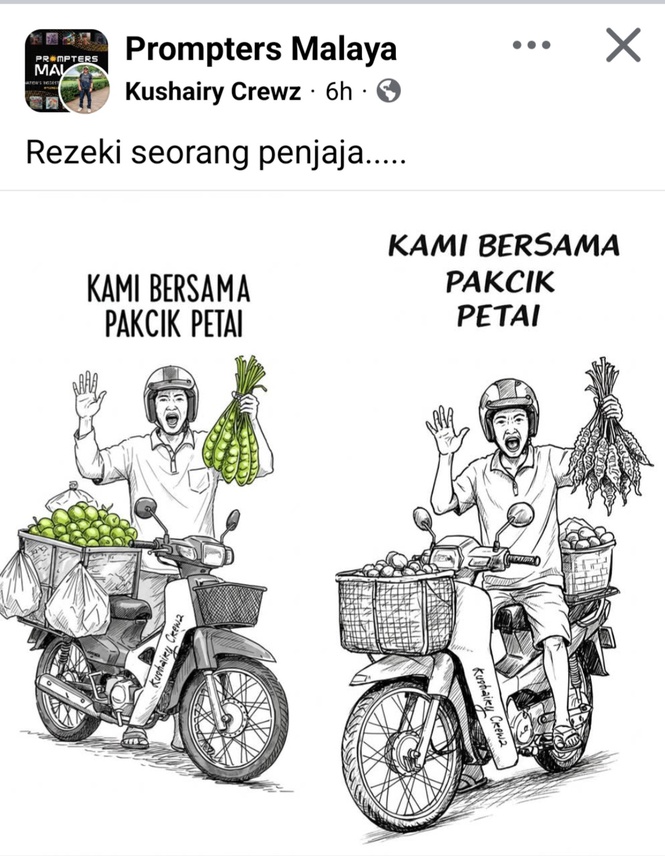
The recent viral video of an elderly Pak Cik being forced off the streets by enforcement officers for selling petai without a permit has once again exposed a long-standing flaw in our governance—our policies are reactive, not proactive. https://newswav.com/A2503_aWp9n7?s=A_jPqLjvx&language=en
The same tired cycle repeats itself: enforcement officers crack down on street vendors, social media erupts in outrage, politicians scramble to save face with damage control, and suddenly, the affected individual is compensated or given an apology. https://www.astroawani.com/berita-malaysia/perselisihan-faham-pak-cik-petai-dengan-mppd-diselesaikan-secara-baik-513506
But what about the countless other Pak Cik Petai and Mak Cik Bazaar vendors across Malaysia who aren’t fortunate enough to go viral?
The Real Problem: Bureaucracy vs. Livelihoods
At the heart of this issue is a fundamental contradiction—our policymakers claim to support entrepreneurship, yet they make it nearly impossible for small traders to operate legally.
Obtaining permits for hawking or street vending is often a bureaucratic nightmare, plagued by red tape, slow approvals, and arbitrary enforcement.
Many peddlers simply do not qualify under rigid licensing schemes designed for larger businesses, forcing them into illegality just to put food on the table.
Yet, when enforcement officers do their job—because technically, these vendors are operating without a permit—public outcry follows.
The real culprits, the policymakers who refuse to address this flawed system, conveniently escape scrutiny. They show up only to hand out token donations and apologies, as if a few hundred ringgit can undo years of systemic neglect. https://www.nst.com.my/news/nation/2025/03/1191607/petai-seller-gets-temporary-licence-viral-clash-local-council-resolved
Why Do We Keep Failing the Small Trader?
Policies that Favour the Big Players
While multinational chains and large businesses get incentives, tax breaks, and streamlined approval processes, the small-time vendor struggles.
If a foreign corporation wants to open a café, approvals come quickly. But if a local Mak Cik wants to set up a stall selling kuih, she must navigate endless forms, local council restrictions, and unpredictable enforcement.
An Outdated Licensing System
Our licensing frameworks are relics of a time when informal trade was seen as a nuisance rather than an essential part of the economy. Many councils still impose archaic restrictions that do not reflect today’s realities, such as requiring vendors to have fixed locations when mobility is key to their business.
A Disconnect Between Policymakers and Reality
Those making the laws are far removed from the struggles of small traders. Many policymakers have never had to earn a living through hawking or street vending, yet they set the rules. Instead of creating policies that empower these entrepreneurs, they prioritise regulations that make life easier for large commercial interests.
Real Solutions, Not Band-Aids
Instead of waiting for another viral incident to remind us of this injustice, policymakers must implement structural reforms:
1. Simplified Licensing for Small Traders
A straightforward, low-cost permit system should be introduced, allowing street vendors to register quickly without excessive paperwork. Why not introduce digital or temporary licenses that are easy to obtain and renew?
2. Zoning for Micro-Entrepreneurs
Instead of banning street vendors outright, local councils should designate legal vending zones in high-footfall areas where small traders can operate safely without fear of enforcement action.
3. Transparent and Fair Enforcement
If enforcement officers must act, their decisions should be guided by fairness, not quotas. A warning system should be in place before drastic measures like confiscation are taken.
4. Inclusive Policymaking
Street vendors should have representation in municipal decision-making. Instead of policies being dictated from above, councils should engage with trader associations to find workable solutions.
Stop Playing the Hero After the Damage is Done
The cycle of oppression, outrage, and compensation must end. Instead of reacting after enforcement officers do their job, why not fix the policies that force these officers into conflict with the people they are supposed to serve?
If we truly care about Pak Cik Petai, then we should ensure that no enforcement officer ever has to kick him off the streets in the first place. Anything less is just political theatre.
Mihar Dias is a content creator under the Newswav Creator programme, where you get to express yourself, be a citizen journalist, and at the same time monetize your content & reach millions of users on Newswav. Log in to creator.newswav.com and become a Newswav Creator now!
The User Content (as defined on Newswav Terms of Use) above including the views expressed and media (pictures, videos, citations etc) were submitted & posted by the author. Newswav is solely an aggregation platform that hosts the User Content. If you have any questions about the content, copyright or other issues of the work, please contact Newswav.