WE live in a hyper-monetised world where everything comes with a tag. We buy clean water bottled in plastic, pay premium prices for organic food and rent physical space just to rest our heads.
For generations, we took solace in the idea that nature’s most fundamental necessity, the air filling our lungs was a divine, untainted gift, freely given and accessible to all.
That comforting illusion has completely shattered. Today, breathing fresh air in Malaysia is no longer a given; it is a luxury.
The price tag on a simple breath of oxygen has become sinfully high, paid not just in the money we spend on air purifiers, high-grade N95 masks and endless clinic visits but in our fundamental quality of life.
Walk down any street in the Klang Valley or talk to residents across northern and southern Peninsular Malaysia and the conversation is invariably the same.
The ambient banter is not about local sports or political drama anymore; it is a grim, collective checking of the Air Pollutant Index.
Friends and family cross-reference numbers like desperate traders looking for a safe haven – “Is Penang lower today?” “Are schools closing in Johor?” “Can we take the kids outside in Petaling Jaya?” – only to find that the thick, acrid veil covers almost every corner, offering no sliver of hope.
This bitter reality is far from new. The crisis first hit Malaysia in 1997, when a catastrophic, climate-fuelled season of slash-and-burn fires forced the country to realise just how fragile our sky truly was.
In the decades since, we have endured agonising cycles of pollution followed by temporary reprieves.
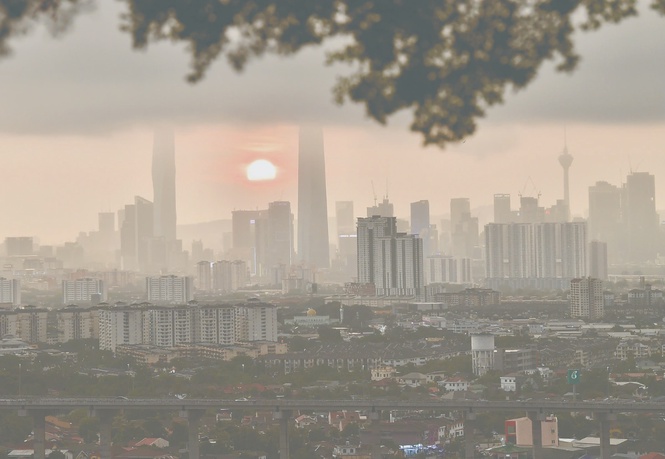
We breathed a sigh of relief during the quiet years, naively hoping the worst was behind us. Yet, here we are again, staring out into an opaque, grey abyss that turns the afternoon sun into a sickly orange smudge.
There is a profound sense of anger and betrayal in knowing that years of technological advancement and international agreements have failed to secure us something as basic as clean air.
The source of this misery is an open secret. While localised urban emissions and open burning play a minor role, the vast majority of this choking haze is transboundary. It is driven by large-scale, illegal land clearing and peatland burning in neighbouring Indonesia, specifically across vast swaths of Sumatra and Kalimantan.
Year after year, sub-contractors and agro-industrial conglomerates burn away carbon-rich peat swamps to clear land cheaply for palm oil and paper pulp plantations. When the dry monsoon winds sweep north, Malaysia becomes the involuntary sink for their toxic smoke.
What does this mean for ordinary citizens? It means our health is actively being mortgaged for corporate greed.
The haze is not just a nuisance or an eyesore, it is a toxic soup of microscopic fine particulate matter that penetrates deep into human lungs and enters the bloodstream. It triggers severe asthma attacks, chronic bronchitis, cardiovascular strain and irreversible long-term organ damage.
Vulnerable populations like children whose lungs are still developing, the elderly and outdoor workers are essentially forced to poison themselves every time they take a breath. Beyond the physical toll lies the mental claustrophobia.
We are trapped indoors, staring out at a landscape stripped of colour, wondering if our children will grow up believing that a grey, hazy sky is normal.
This endless cycle raises a burning question born of pure frustration: How long must millions of people suffer before real action is taken?
Preventing a recurrence does not require a technological miracle, it requires political will.
A country like Indonesia has the capacity to halt this yearly disaster if its leadership truly chooses to prioritise regional health over corporate expediency.
First, the Indonesian government must exercise uncompromising law enforcement against multi-national plantation companies, including those with regional investors that continue to use fire as a cheap land-clearing tool.
Enforcing severe legal liability, confiscating illegal land concessions and levying massive financial penalties would quickly dismantle the economic incentive to burn.
Second, there must be a radical, state-backed commitment to peatland restoration and rewetting. Drained peatlands act like giant tinderboxes. Once ignited, they burn underground for weeks, producing massive volumes of smoke.
Rewetting these lands and banning further drainage is the only permanent ecological barrier against the flames.
Finally, the region must move past diplomatic politeness. Indonesia, alongside its Asean neighbours, must enforce the Asean Agreement on Transboundary Haze Pollution with actual teeth, allowing cross-border legal accountability and real-time satellite sharing to catch perpetrators the moment a hotspot emerges.
To resign ourselves to the idea that haze is simply an inevitable “season” is a dangerous form of defeatism.
We cannot allow clean air to become a luxury reserved only for those who can afford high-end air filters and sealed homes.
Demand for decisive action must outpace the smoke because if we cannot even guarantee the purity of the air in our lungs, our progress as a modern society is nothing more than an illusion.
Dr Bhavani Krishna Iyer holds a doctorate in English literature. Her professional background encompasses teaching, journalism and public relations. She is currently pursuing a second master’s degree in counselling. Comments: letters@thesundaily.com