

Throughout human history, sacred traditions have emphasized the importance of orientation in prayer, both physically and spiritually. The direction of prayer serves as a symbolic act of turning the heart and soul toward the divine. In the Bahá’í Faith, this spiritual practice is embodied in the concept of the Qiblih, which parallels similar traditions in Islam, Judaism, Christianity, Hinduism, and Buddhism. Each tradition, while unique in its theology and symbolism, shares the common theme of anchoring human devotion to a central spiritual point.
In the Bahá’í Faith, the “Qiblih” (also spelled Qiblah or Qiblih) refers to the direction of prayer, and its significance is both spiritual and symbolic.
The Qiblih for Bahá’ís is the Shrine of Bahá’u’lláh, located near Acre (Akka), in present-day Israel. This is the place where Bahá’u’lláh, the founder of the Bahá’í Faith, is buried.
According to Bahá’í law, obligatory prayers (ṣalát) are to be said while facing this shrine. This practice aligns Bahá’ís worldwide toward a single spiritual center during personal worship, similar to how Muslims face Mecca.
The spiritual significance is in the unity of direction facing a single point symbolizes the unity of all believers, reinforcing the Bahá’í teaching of the oneness of humanity.
The Qiblih is not merely a geographical direction but a symbol of divine guidance and presence, as Bahá’u’lláh is regarded as the Manifestation of God for this age.
The continuity with past religions just as Muslims face the Kaaba and Jews once faced the Temple in Jerusalem, the Qiblih establishes a spiritual continuity while highlighting the new divine guidance for this era.
WORLD RELIGIONS QIBLIH
The concept of Qiblih and the direction of prayer in world religions is not new.
In the Bahá’í Faith, the Qiblih is the Shrine of Bahá’u’lláh, located near Acre (Akka) in present-day Israel. Bahá’u’lláh, the founder of the Bahá’í Faith, designated this sacred spot as the direction toward which believers should turn during their obligatory prayers. This command is found in the Kitáb-i-Aqdas, His most holy book of laws. For Bahá’ís, facing the Shrine of Bahá’u’lláh symbolizes not only reverence for the resting place of God’s Manifestation in this age, but also spiritual unity across the globe. The Qiblih thus becomes a powerful expression of the oneness of God, the oneness of religion, and the oneness of humanity—central tenets of the Bahá’í teachings. Bahá’u’lláh, Kitáb-i-Aqdas, paragraph 6: “Turn ye towards the Court of My Most Holy Presence, this Hallowed Spot which God hath… made the Qiblih of the people of the world.” https://www.bahai.org
In islam the Kaaba as a universal center the concept of a single point of devotion is also prominent in Islam, where Muslims are required to face the Kaaba in Mecca during their five daily prayers. This direction, known as the Qibla, was established during the Prophet Muhammad’s lifetime and is mentioned in the Qur’an (Surah 2:144). Originally, Muslims faced Jerusalem, but the direction was later changed to Mecca. The Kaaba, considered the first house of worship established for humanity, represents the unity of God and the unity of the Muslim ummah (community). Like the Bahá’í Qiblih, the Islamic Qibla is a physical expression of spiritual centrality and obedience to divine command.
Reference in the Qur’an, Surah Al-Baqarah (2:144): “So turn your face toward al-Masjid al-Haram. And wherever you are, turn your faces toward it.” https://quran.com. https://www.alquran.my
In Judaism, the traditional direction of prayer is toward Jerusalem, specifically the site of the ancient Holy Temple on Mount Moriah. This practice continues today, even though the Temple no longer stands. Jews around the world orient their prayers toward this sacred site, as a symbol of their covenant with God and hope for messianic restoration. The Temple was seen as the earthly dwelling place of God's presence (Shekhinah), and facing it during prayer evokes a deep yearning for spiritual return and renewal. Reference in the old testament, Kings 8:29–30 – King Solomon’s prayer at the dedication of the First Temple, also codified in Mishneh Torah, Hilchot Tefillah 5:3 by Maimonides. https://www.sefaria.org
While Christianity does not prescribe a strict direction of prayer, many early Christian communities and churches adopted the tradition of facing East during worship. The East, associated with the rising sun, symbolized resurrection, renewal, and the Second Coming of Christ. Church buildings were often constructed with altars at the eastern end, guiding the congregation’s gaze toward this symbol of divine hope. Unlike the specific geographical focus in the Bahá’í and Islamic practices, Christian orientation is more symbolic, reflecting theological meaning rather than strict ritual law. Though not mandated in the New Testament, but supported by early Church practice (e.g., Apostolic Constitutions, Book 2, Section 57). The Catechism of the Catholic Church (paragraph 2771) also refers symbolically to facing the East.
In Hinduism, orientation and prayer direction varies depending on regional customs, auspiciousness the deity being worshipped, and ritual traditions. However, facing East is generally considered auspicious, as it is associated with the sun, purity, and enlightenment. Devotees may face a household altar or a temple’s sanctum sanctorum (garbhagriha), which houses the image or symbol of the deity. Unlike the fixed Qiblih of the Bahá’í Faith, Hindu practice allows for diversity and flexibility, emphasizing personal connection and inner devotion. Reference in Agni Purana, Manusmriti, and Vastu Shastra literature recommend facing East or North during prayer for auspiciousness.
Buddhism does not mandate a specific direction of prayer, rather mainfulness over orientation. Devotion is often focused toward a Buddha statue, stupa, or sacred object rather than a geographic location. In some traditions, rituals may face East, in alignment with spiritual symbolism, but the essence of Buddhist practice lies in mindfulness, intention, and inner awakening. Thus, while orientation may be used ritually, it is not central to the faith’s spiritual framework, no universal requirement, often toward a Buddha image or stupa. There are reference found in Vinaya Pitaka and temple architecture; based on cultural and ritual traditions rather than scriptural command.
https://www.buddhanet.neth https://www.wisdomlib.org/buddhism
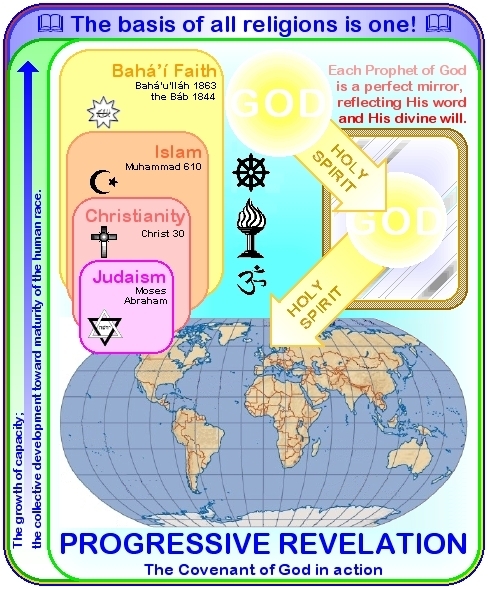
The common threads and unique distinctions, despite their differences, these traditions share the idea of aligning the physical act of prayer with a deeper spiritual truth. The Bahá’í Qiblih, like the Islamic Qibla and Jewish orientation toward Jerusalem, emphasizes a fixed sacred center as a means of fostering spiritual focus, obedience, and unity. Christianity, Hinduism, and Buddhism, while more symbolic or flexible in practice, also use orientation to convey reverence, aspiration, and inner harmony.
What sets the Bahá’í Qiblih apart is its conscious emphasis on global unity. Bahá’u’lláh’s Shrine as the Qiblih represents a spiritual axis for the emerging global civilization the Faith envisions. By facing this single point, Bahá’ís affirm not only their individual devotion but their place in a worldwide community united by a common spiritual purpose.
With the Ascension of Bahá’u’lláh on May 29, 1892, a moment of immense spiritual and historical significance unfolded. His resting place at Bahjí, near Akka in present-day Israel, became the focal point of prayer for Bahá’ís around the world—the divinely designated Qiblih. Though the command had been revealed earlier, its full meaning was deeply felt upon His passing.
In the Kitáb-i-Aqdas, Bahá’u’lláh had proclaimed, “When ye desire to perform this prayer, turn ye towards the Court of My Most Holy Presence, this Hallowed Spot which God hath... made the Qiblih of the people of the world. Kitáb-i-Aqdas, paragraph 6
This injunction transformed the Shrine of Bahá’u’lláh into more than a tomb; it became the spiritual heart of the Bahá’í world—a center around which the prayers, hopes, and unity of the believers revolve.
Historically, this marked the beginning of a new stage in the Bahá’í Faith. Under the stewardship of ‘Abdu’l-Bahá, the son and appointed successor of Bahá’u’lláh, the Covenant was upheld, and the community, though grieving, found new strength and direction. Pilgrims came from East and West to pray at the sacred Threshold. Through their devotion, the spiritual potency of the Qiblih radiated outward, and the Faith began to spread across continents.
Later, during the Guardianship of Shoghi Effendi, the Bahá’í administrative order began to take shape. The Qiblih stood not only as the physical point of orientation during obligatory prayer but as a symbol of constancy, spiritual authority, and the unity of the Bahá’í world—a fixed point in a rapidly expanding global community.
To this day, when Bahá’ís turn toward the Shrine of Bahá’u’lláh, they align their hearts with the source of divine guidance for this age. The Qiblih is both a spiritual compass and a tangible reminder of the presence of the Manifestation of God—an enduring center from which flows the vision of unity, justice, and peace for all humanity.
K.T.Maran Social, environmental & Animal Activist
K.T. Maran is a content creator under the Newswav Creator programme, where you get to express yourself, be a citizen journalist, and at the same time monetize your content & reach millions of users on Newswav. Log in to creator.newswav.com and become a Newswav Creator now!
The User Content (as defined on Newswav Terms of Use) above including the views expressed and media (pictures, videos, citations etc) were submitted & posted by the author. Newswav is solely an aggregation platform that hosts the User Content. If you have any questions about the content, copyright or other issues of the work, please contact creator@newswav.com.