In the ever-evolving landscape of the finance sector, one story stands out as both captivating and transformative – the journey from conventional banking to the realm of interest-free finance, or Islamic Banking.
At its core, this narrative is about safeguarding the interests of the Muslim community, and it's anchored in the visionary policies of Tun Dr Mahadhir Mohamad.
Unlike Anwar Ibrahim's approach, Mahathir's strategy has not only protected the Muslim agenda but also spurred Malaysia's diversified economic growth.
The idea of Islamic Banking didn't emerge in isolation as reported by bankislam.com. It was born out of intense discussions during the Bumiputra Economic Congress in 1980, followed by a seminar on Islamic development in 1981.
The unwavering dedication of organizations like Tabung Haji and Perkim played a crucial role. Their mission? To look after the welfare of Muslims nationwide.
The stage was set, and the National Steering Committee for Islamic Banking was formed without further delay.
With the government's blessing, the Islamic Bank officially came into being an important entity on July 1, 1983.
Bank Islam Malaysia Berhad (BIMB) took the pioneering role, providing banking services that adhered to Shariah principles during the early days of operation.
In an interview with Harian Metro, Dato Dr. Abdul Halim Ismail, the first Managing Director of BIMB, shed light on the motivation behind this initiative.
He pointed out that Malay Muslims were seeking banking facilities free from riba (usury) to integrate into their economic lives.
This need led to the establishment of the National Steering Committee, backed by the government with an initial capital infusion of RM80 million.
This is where Tun Dr Mahathir, Malaysia's Prime Minister at the time, stepped onto the stage as a visionary leader and policymaker to ensure the Muslim agenda became a reality.
His role, along with that of Anwar Ibrahim in a supporting role as the Finance Minister, and executor of policies through the Central Bank (BNM), was pivotal in guiding and charting the Islamic Banking concept heading in the right direction.
Together, they worked tirelessly to champion the economic well-being of Malays and Muslims. Their partnership laid the foundation for remarkable economic growth in Malaysia.
From its humble beginnings, BIMB, as the sole Islamic bank, made remarkable strides. After seven years, it held only 1.6% of total banking assets compared to conventional banks.
However, a decade into its journey, BNM as the supervisory role in the banking industry granted licenses to a majority of commercial banks and institutions to venture into interest-free banking, side by side with their existing conventional banking outlets.
BNM's ultimate aim is to create competitiveness among the participating local and foreign Islamic banks and draw a much bigger share in Islamic Banking products and business from various entities and market segments across society.
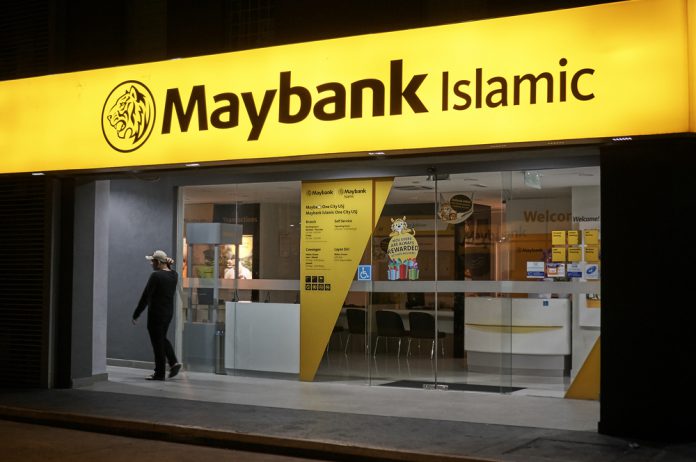
Arising from this competition and good governance, Maybank, one of the main local banks has emerged as the best Islamic Bank in the country as quoted by euromoney.com, ahead of its rivals in terms of market share, assets, financing, deposits, and unrestricted investment accounts.
Bloomberg ranked it fifth among global market leaders, with $67 billion in assets.
Despite these accolades, challenges remain. Mahathir once questioned whether the prohibition of usury was hindering the growth of Islamic finance, despite the vast resources of Muslim-majority countries.
In his speech as filed by BNM at Islamic Financial Summit -New Hope of the Future in Manama, Bahrain, he pointed out that the total Islamic assets worldwide have exceeded US$1 trillion.
Islamic assets under management by Islamic banks and conventional banks offering Islamic banking services are reported to exceed US$500 billion.
Islamic mutual funds are estimated to exceed US$300 billion, while Takaful or Shariah-compliant insurance is estimated to be more than US$5 billion.
The overall growth rate of Islamic finance is about 15% - 29% per annum. But Islamic finance is still very tiny compared with the conventional and he is opportunistic that the development in Islamic Banking could be enhanced further.
The underutilization of Islamic financial institutions suggests a need for more knowledge and will in wealth management.
NST in 2019 commended Mahathir's leadership and their influence was recognized worldwide. In just a year as Malaysia's seventh prime minister, he earned accolades such as the Muslim Man of the Year by The Muslim 500 and a spot among the 100 most influential individuals globally by 'Time magazine.
Fortune ranked him 47th among the 'World's 50 Greatest Leaders,' solidifying his legacy as a transformative leader.
In conclusion, the journey from conventional to interest-free banking in Malaysia is a riveting tale of visionary leadership, spearheaded by Tun Dr. Mahathir.
His policies not only safeguarded the interests of the Muslim and Malay communities but also propelled Malaysia to the forefront of Islamic finance on the global stage.
Azad Khan is a content creator under the Newswav Creator programme, where you get to express yourself, be a citizen journalist, and at the same time monetize your content & reach millions of users on Newswav. Log in to creator.newswav.com and become a Newswav Creator now!
The User Content (as defined on Newswav Terms of Use) above including the views expressed and media (pictures, videos, citations etc) were submitted & posted by the author. Newswav is solely an aggregation platform that hosts the User Content. If you have any questions about the content, copyright or other issues of the work, please contact Newswav.