Few people get to watch their own word being pushed out of use in real time. Fewer still celebrate. "I regret coining the phrase 'carbon neutral'," says Dan Morrell, "so I'm absolutely delighted that my word has been banned, which is an extraordinary feeling. I ended up with it in the Oxford English Dictionary and now to see it finally pass away is fantastic."
Since the end of September, under the EU's Empowering Consumers for the Green Transition Directive, businesses selling to EU shoppers can no longer call a product "carbon neutral", "climate neutral" or "climate compensated" because they have bought offsets outside of the supply chain needed for the product itself. Vague words like "eco-friendly" and "green" are on borrowed time too. For a fashion industry fond of a leafy logo, it is the biggest shake-up of green marketing in years.
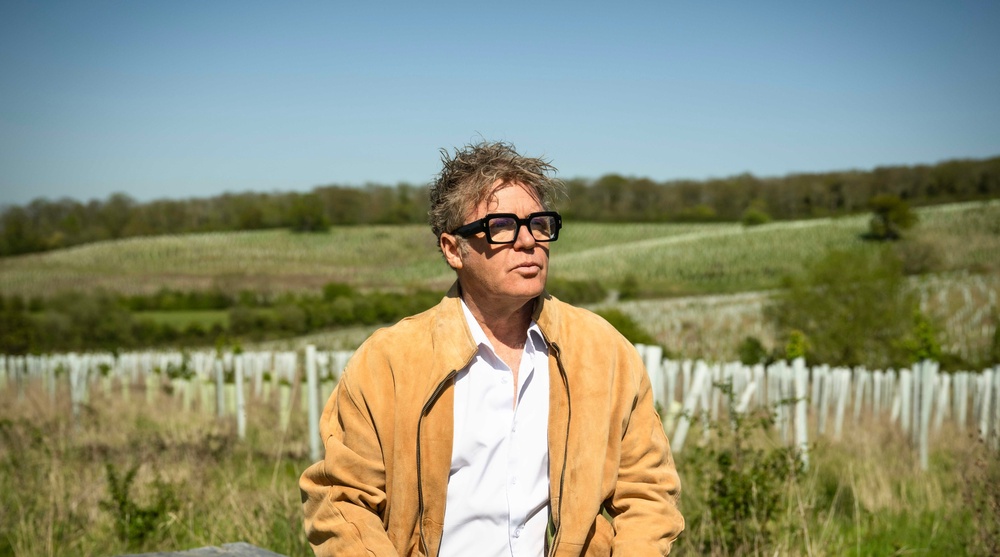
Morrell traces the term “carbon neutral” it back to 1988 and a simple ambition to fight climate change while creating wildlife habitat and jobs for local people. Selling that was hard. "People didn't understand CO2, and they really didn't know that climate change was an issue," he recalls. Explaining "this weird, terrible thing looming in the future" got him nowhere. "What they did get, eventually, was trees." The tree-planting idea became Future Forests, which "was a movement, not a brand".
His first pitches, to the AA, Virgin Atlantic and British Airways, went nowhere: "Nobody ever said no, but nobody ever said yes." Then Joe Strummer said yes at Glastonbury Festival. "And boom, off we went." Pink Floyd and The Foo Fighters followed, then Damien Hirst and the Warhol estate. "It was all very cool." Then the chairman of Mazda UK rang, "I want to go carbon neutral because the Rolling Stones are." Morrell and his teams went on to work with more than 250 big companies, from Avis to HSBC and Google.
But the flaw was built into the model. "People were saying, 'I can plant some trees and carry on polluting as normal.' That was not the intention." Some planting turned ugly. Morrell describes an energy company clearing rainforest for fast-growing eucalyptus, planted purely to soak up carbon. "I was like, hang on a minute, they're doing it wrong, all I want to do is plant beautiful tree systems."
Environmental groups then turned on him. "I've got a movement to plant trees, and they don't like me anymore," Morrell says, still sounding faintly baffled.
Then came the money. "Like an idiot, I took on venture capital... We put the wellbeing of the planet in the hands of the financial services community,” Morrell says. |”Now, what could possibly go wrong with that?"

--
What the new rules say, in plain English
The directive updates existing EU consumer law. The main points:
- No neutrality claims based on offsets. A product can't be sold as having a neutral, reduced or positive climate impact because of offsets bought elsewhere. Claims based on the product's own measured footprint are still allowed.
- No vague green claims without proof. "Eco-friendly", "green" and "climate friendly" need recognised excellent environmental performance, at the level of the EU Ecolabel. Otherwise, be specific, "packaging made from 80 per cent recycled material" is fine if it's true.
- No home-made eco labels. A sustainability label must come from a certification scheme with independent checks, or from a public authority. Even a green leaf in a frame can count as a label.
- No net-zero promises without a plan. "Net zero by 2040" needs a detailed, realistic plan with measurable targets, checked regularly by an independent expert.
- UK brands are covered if they sell to EU consumers. Fines must reach at least 4 per cent of annual turnover in the countries concerned. In the UK, the Competition and Markets Authority can now fine companies up to 10 per cent of global turnover for misleading consumers, green claims included.
For stock already in shops, regulators expect good-faith fixes, such as correcting websites or adding stickers.
--
Morrell is no fan of carbon credits – where a credit represents the reduction, avoidance, or removal of one metric ton of carbon dioxide or its equivalent in other greenhouse gases from the atmosphere. "Not as they are," Morrell says.
His problem is time. Credits often protect a forest for around 40 years, but CO2 keeps warming the planet for a century or more. "Failure is written into the old system," Morrell adds. The credit schemes, he admits, have cleaned up their act, after "being very naughty children and being told by the teacher to go and stand in the corner. They're now sort of sneaking back out again."

Morrell’s answer, through his current company, Balance Eco, is to stop treating carbon on its own, and work with the entire landscape. "Mother Nature didn't say socioeconomics, climate and biodiversity are separate. You can't say, 'I'm going to destroy this bit of land here, but it's okay because I've replanted over there,'" he says.
Sometimes the best thing is not to plant at all, restore the water, let the old rootstock come back, thin it and wait. "Then the elk, the deer and the bison come back," Morrell says. People matter just as much. "If people are poor they're going to fell the forest anyway," he says, so local communities should share in both the money and the decisions "not 'this is what you must do', but 'what do you think?'"
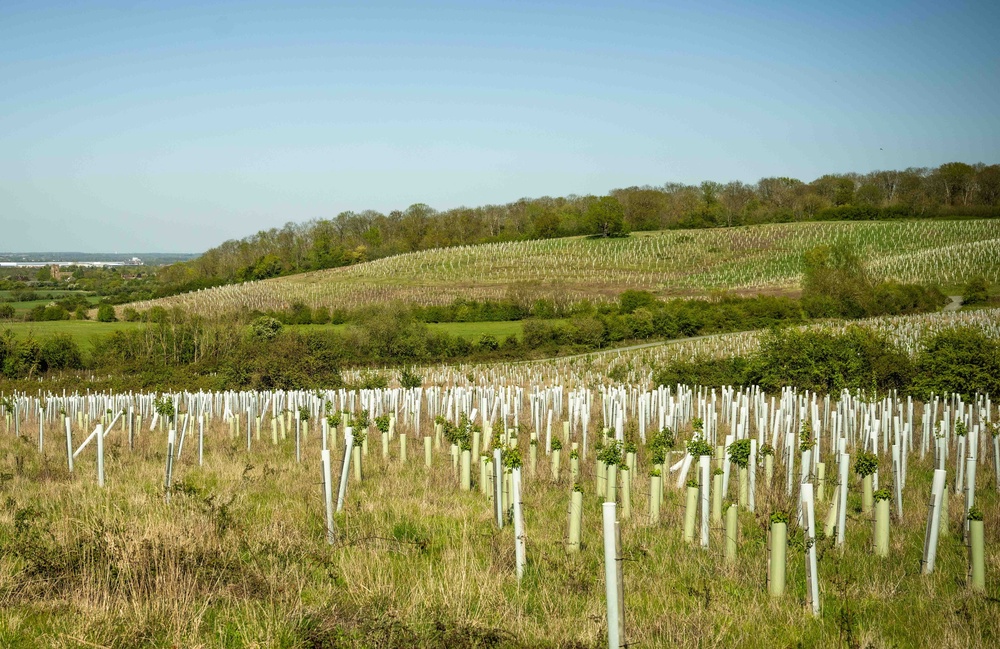
Closer to home, he points to the Forest of Marston Vale in Bedfordshire. A 20-year study credits it with bringing £12.5m a year in value for the local community, along with beekeeping and fewer sick days for people with a lovely forest to walk in. Project teams, he says, "spam us with pictures of robins and squirrels and foxes".
Morrell says Balance Eco clients stay within the new rules because they claim to have funded nature, people and climate, never to have offset. Balance also gives clients a mark and the line "we're balanced", and says the mark is deliberately not a certificate. Their client guidance explicitly advises against carbon neutrality or offsetting claims. It requires the mark to appear alongside the three pillars of biodiversity, social economics and climate, the relevant year, and the named forest or project. That is the delicate part. The EU directive bans labels that aren't based on a certification scheme, and regulators judge what a word implies as well as what it says. Whether a shopper reads "balanced" as "neutral" is exactly the question enforcers will now be asking of every brand.
Morrell's bigger fear is silence, as the rules become stricter. "The danger is that business hears this and goes quiet. That would be the worst outcome for the planet." His order of play is to become more efficient first, then cut emissions, which "saves your business money", and then look hard at the supply chain, "the most complicated area in any type of impact assessment".
Fashion, he says, needs this more than most. "The fashion industry is one of the most polluting things on the planet. And what do we have? Fashion influencers with the 'confetti culture', encouraging us to consume more and more." He sees luxury leading the way. "High fashion is all about integrity and art and doing it properly, and there are ways the high-street brands can follow suit."
For shoppers, the new test is simple, a specific claim you can check. For the man who started it all with Joe Strummer in a field in Somerset, the proof is still being built, one bird at a time. "We're an early-stage organisation, but we're digitising our downstream reporting at the moment," Morrell says. "There'll be a news board for each client on our website that they can mirror onto theirs. So rather than us giving an annual report, we can tell them when a robin has laid an egg and when it hatched."
Read MoreProfits of European oil giants doubled this year amid Middle East war, report finds
UK extreme weather shows why Cop31 is vital, says minister
2026 could be hottest year on record. Is a 'super' El Niño to blame?
How close are we to a long-term breach of critical 1.5C global warming limit?
Dozens of pilot whales die in mass stranding on New Zealand coast
Delhi air pollution tracker: Why is winter haze so bad in India’s capital?