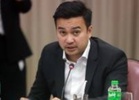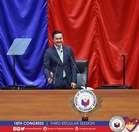
THIS week, much to the consternation of the public, news emerged that former House speaker Lord Allan Velasco abruptly left the country after allegations were made of his involvement in the transfer of P100 million in cash, and possibly more, representing kickbacks from contractors in the ongoing flood control scandal. Velasco is the latest in a string of legislators and other high-profile officials to have made themselves scarce with ease once they come under suspicion.
It must be emphasized that the accusations against Velasco still require investigation; he is not charged with any crime, and he remains under the presumption of innocence until proven otherwise. Be that as it may, the Marcos administration must understand that its constant protestations of powerlessness to stop political figures under suspicion or actual charges from fleeing the country is feeding rapidly growing public skepticism of its sincerity in rooting out systemic corruption.
The allegations against Velasco, who served as speaker from October 2020 to June 2022, came from a detailed affidavit by a former Philippine National Police (PNP) officer, Rodolfo Gracioso Jr., whom the PNP confirmed was once assigned as part of Velasco’s security detail. In his affidavit, Gracioso alleged that he participated in the delivery of kickback money, totaling at least P100 million in cash, to Velasco’s house in the upscale Valle Verde neighborhood in Pasig, naming a number of other already well-known personalities in the flood control scandal as being part of the operation.
Velasco’s disappearance follows other politicians involved in the flood control or other scandals. These include former lawmaker Elizaldy “Zaldy” Co, who is under multiple charges and the subject of an arrest warrant; Sen. Loren Legarda and her son, Rep. Leandro Leviste, facing fraud charges in connection with solar power service contracts; Sen. Ronald “Bato” dela Rosa, who is in hiding following the issuance of an arrest warrant for him by the International Criminal Court in connection with the bloody “drug war” during the term of former president Rodrigo Duterte; and former Public Works secretary Manuel Bonoan, who spent several months on the lam after being charged as a key figure in the flood control scandal, and only returned after he was assured — in what we consider one of the grossest miscarriages of justice in the country’s history — of immunity from those charges by the Ombudsman in exchange for his testimony.
Co has inexplicably found a way to render himself untouchable somewhere in Europe, reportedly in France. Legarda is in the United States at last reporting for “medical treatment,” with her son tagging along to help care for her, according to his own explanation; and dela Rosa is believed to be hiding out somewhere in Mindanao with the aid of Duterte supporters.
We appreciate that there are tricky legal questions involved with all of these “disappearances.” In the case of Velasco, for instance, he has only been accused of but not charged with any wrongdoing, and thus could not be stopped from leaving, in the absence of a legal issuance to the contrary from a court. It is also a bit of a complication in that sense that Velasco is not now an elected or appointed official; after having been term-limited in the House, he ran for governor of Marinduque in 2025, but lost, and so is at least temporarily a private citizen.
Nevertheless, there must be some middle ground between protecting personal freedoms of individuals, and assuring accountability of public officials, whether current, or whether they are the subject of investigation for issues that occurred while they were still in office. It is not unreasonable to hold elected or appointed officials to a somewhat higher standard than an ordinary citizen, by the simple fact that they are servants of those ordinary citizens. Thus, we would propose some new rules governing their travel outside the country, and outside the jurisdiction of our legal system.
First, if one is no longer in office, but is subject to an investigation that encompasses the period the subject was in office, then restrictions should be applied. These might include securing a travel clearance — with the destination, purpose and duration of the travel being made available to the public — from the National Bureau of Investigation, Office of the Ombudsman, or other relevant agency; and for elected or appointed officials, securing a travel clearance under the same terms from the offices of the House speaker, Senate president, the president, or the Department of the Interior and Local Government, as the case may be.